


Coffee around the world: how it is prepared and drunk in different countries
Introduction: coffee beyond espresso and the bar
In Italy, when we think of coffee, we almost immediately think of espresso and the bar: a small cup served at the counter and drunk in a few sips.
Elsewhere in the world, coffee is prepared, served and shared in many other ways, each linked to the habits of the people who drink it.
The tools, the grind, the cups and even the time of day for a coffee break all change.
In this guide we take a short tour of some well-known preparations: the pot used in Turkey, Greece and the Balkans, the filter coffee of Northern Europe and the table-side coffees of Vienna, Spain and Portugal.
We then talk about the metal filter of Vietnam and the clay pot of Mexico, before looking at what we can try at home.
These are general descriptions: every country has many different habits, which vary from family to family and from café to café.
We do not want to say which is the best way to drink coffee, because each tradition reflects the tastes and rhythms of the people who live it.
If another coffee culture interests you, you can read our guide to coffee culture in Ethiopia.
And if you are curious about how people start the day, we have explored the topic in our article on coffee at breakfast and how habits compare.
Turkey, Greece and the Balkans: coffee prepared in a small pot
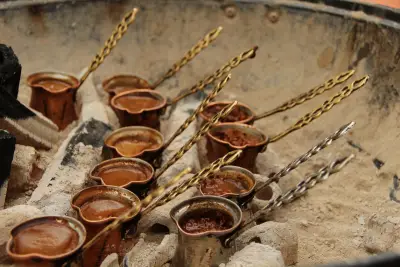
In Turkey, in Greece and in many Balkan countries, coffee is often prepared in a small pot with a long handle.
The pot has different names depending on the area: cezve in Turkey, briki in Greece, ibrik in other places.
The coffee is ground very finely, so as to obtain a fine powder.
The powder is heated in the pot together with water and, depending on taste, with sugar as well.
The coffee is then poured into the cup without being filtered.
For this reason the grounds slowly settle at the bottom of the cup, where they are usually left.
The drink often has a thicker texture than filter coffee and is usually sipped in small mouthfuls.
Everyone prepares it their own way: some prefer it with a little sugar and others without, and habits change from home to home.
The coffee is often accompanied by a glass of water, which can be drunk before or together with the coffee.
On many occasions a small sweet also arrives at the table, such as Turkish delight (lokum).
If you like to serve coffee with something sweet, in our delights and sugar department you can find several specialities.
Northern Europe: filter coffee and the shared break
In Northern European countries, filter coffee is very common in homes, offices and cafés.
It is prepared by letting hot water pass through ground coffee and collecting the drink in a carafe.
It is often served in cups larger than our small espresso cup and accompanies different moments of the day.
In many homes coffee is drunk several times during the day, calmly and in small sips.
A carafe makes it possible to prepare several cups together, and for this reason filter coffee suits shared breaks well.
In Sweden this moment even has a name: fika.
Fika is a break generally taken in company, with a coffee and something sweet.
It can take place at home, at work or in a café, among friends, colleagues or family.
The sweet that goes with the coffee is often something baked, such as a sweet cinnamon bun.
What characterises fika is above all the time set aside to be together.
In Italy too, coffee is often an occasion to stop with someone, and fika shows how widespread this gesture is across many cultures.
Vienna, Spain and Portugal: coffee at the table and at the counter
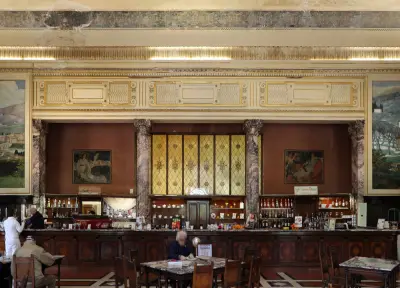
Vienna is known for its coffee houses, places where people often sit down calmly at a table.
In many of these places coffee is served together with a glass of water.
Visitors can often stay to read a newspaper or a book, or to chat, without hurry.
Coffee is therefore linked also to the time spent sitting, as well as to the drink itself.
In Italy too, many people choose to sit at a table when they have more time and to drink coffee at the counter when they have less.
In Spain coffee is often drunk at the counter or at a table, at breakfast or during a break.
Among the best-known preparations is the cortado, an espresso with a small amount of milk.
Then there is the café con leche, a coffee with more milk, generally served in a larger cup.
In Portugal espresso is very common and in Lisbon it is often called bica.
In Spain and Portugal many drinks start from espresso, as we do in Italy, but the name, the milk added and the way of serving them change.
Those who know our caffè macchiato may find the cortado similar, even though the name and the habits differ.
Vietnam and Mexico: the metal filter and the clay pot
In Vietnam coffee is often prepared with the phin, a small metal filter.
The phin is placed directly on the glass or the cup.
Hot water is poured over the ground coffee and the drink falls slowly, drop by drop, into the container below.
It is a preparation that takes patience, and the coffee is often enjoyed unhurriedly.
Very well known is the version with condensed milk, which in many recipes is put at the bottom of the glass before the coffee drips down.
Condensed milk is sweet, so this drink has a sweet, full taste.
Naturally everyone can adapt these recipes to their own taste, for example with more or less sugar.
In Mexico a traditional preparation is café de olla.
Olla means pot, and it is a clay vessel in which coffee is heated together with water.
Cinnamon and piloncillo, an unrefined cane sugar, are often added to the pot.
Café de olla is therefore also a sweet, spiced drink, whose taste depends on the spices and the amount of sugar chosen.
Condensed milk contains milk and sugars, so in case of allergies or intolerances it is always advisable to read the product label.
These are two preparations quite different from each other, which show how tools and ingredients can change the character of coffee.
And in Italy? How to explore other flavours at home
In Italy espresso is the best-known preparation and is part of daily life, at the bar and at home.
If you are curious about how we arrived at the small cup we know, you can read our article on the history of espresso coffee.
At home too we can discover different flavours without changing everything we use.
A first way is to change the coffee: among our coffee beans and ground coffee you will find options with different characteristics.
A different blend and a grind suited to the chosen tool can change the taste in the cup, and which one you prefer depends on personal taste.
A second way is to use the moka pot, which many Italian families already have at home.
Among the products of the Bialetti brand you will find the moka, a tool that prepares coffee with a character different from espresso at the bar.
The cup also changes the experience: a small cup for espresso, a larger mug for filter coffee, a glass for drinks with milk.
In the accessories and cups section you can find several options for serving coffee the way you prefer.
You can also set aside an afternoon for a shared break inspired by fika, with a coffee and something sweet.
In short, coffee changes name, tools and habits from one country to another, but in many places it is an occasion to stop and be together.
If you would like advice on coffee, grind or accessories to try new flavours at home, contact us: the Maracatú team is always happy to help you choose.
Popular products
All products
More


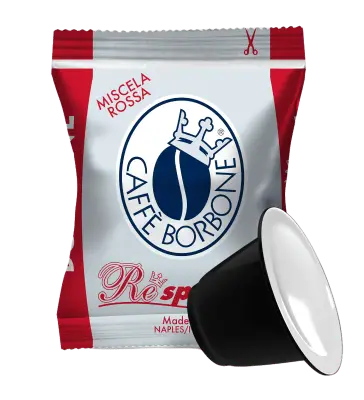 100 Capsules BORBONE Respresso RED Blend Nespresso Compatible
21,90 €


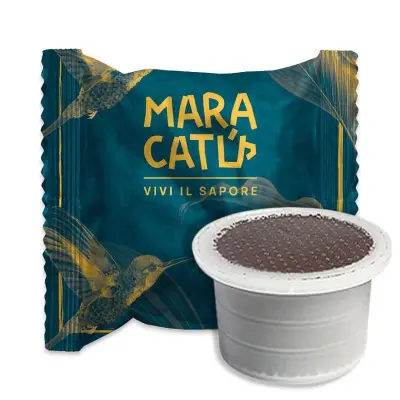 100 Maracatú Coffee Capsules Gran Crema Uno System Compatible
19,90 €
 100 Capsules Maracatú Decaffeinated Uno System Compatible
23,90 €
 80 Maracatú Coffee Capsules Gran Crema Lavazza Blue In Black Compatible
18,90 €
More on this topic
More

Coffee Capsules Guide: How to Choose Your Perfect Taste
Read article


5 myths about capsule coffee
Read article
How to properly store coffee and coffee capsules: expert advice
Read article
Are you a reseller? Access the Maracatú B2B price list in just a few steps!
Read article
Capsule systems compared: Nespresso, Dolce Gusto, A Modo Mio, ESE and Caffitaly — which to choose
Read article
How to descale your coffee machine: a practical guide from over 15 years in coffee
Read article
Caffè Borbone: a guide to the Rossa, Nera, Blu, Oro and Dek blends
Read article
The coffee intensity scale: what the numbers on capsules really mean
Read article
The origins of coffee: myths, legends and the road to the Italian cup
Read article
Coffee roasting: the levels, and how each one changes the cup
Read article
Espresso: how the Italian classic was born
Read article

Water and the taste of coffee: the ingredient nobody talks about
Read article