





Espresso: how the Italian classic was born
A machine invented out of impatience
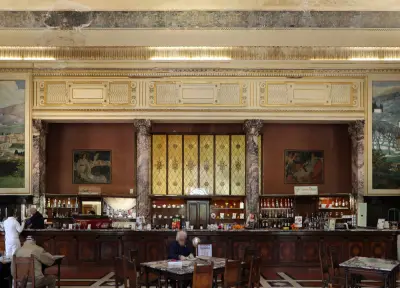
In the early twentieth century, coffee in bars was brewed in quantity and left over the heat. Whoever arrived late drank what was left.
The problem was commercial before it was culinary. What was needed were cups on demand, one at a time, with nobody waiting. Out of that need came the first counter-top steam machines, and with them the word we still use: espresso, made on the spot for the person who ordered it.
Those first machines pushed water through with steam. They worked, but the temperature ran too high and the result was often scorched.
The lever, and the crema nobody expected
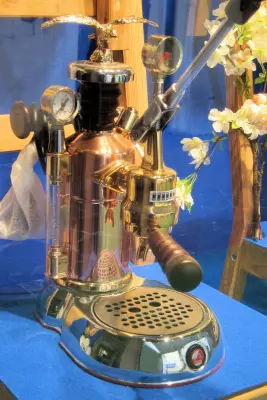
The turning point came mid-century, when steam was replaced by a spring driven by a lever. The barista pulls the arm down, the spring loads, and it pushes water through the coffee at far higher pressure but a more sensible temperature.
The result surprised even the people who designed it. A dense golden layer appeared on the surface that had never been there before.
Customers were suspicious at first. It looked like foam, and foam in coffee was not considered a good sign. It took a while for crema to become what it is today, the first thing anyone uses to judge a cup.
Why the Italian cup is so small
Anyone arriving in Italy from abroad notices immediately. The coffee placed in front of them barely covers the bottom of the cup.
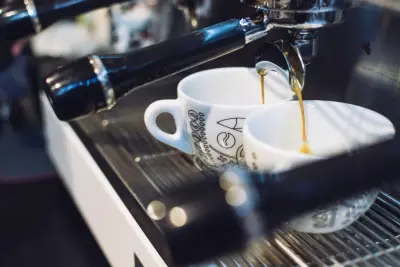
This is not stinginess. With very little water and twenty-five seconds of extraction you take the sweet, aromatic part of the coffee and leave behind the bitter part, which comes out later. Making it longer would mean bringing along exactly what you do not want.
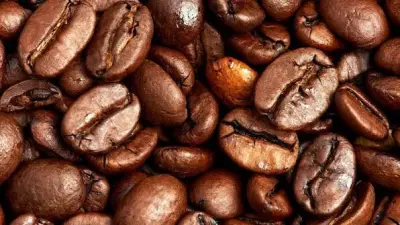
Everything else follows from that choice: the darker roast of Italian blends, the fine grind, the fact that espresso is drunk standing up in two minutes. The Italian ritual is not slow. It is frequent.
What is left of all this at home
Today's machines do almost everything the barista's arm once did. What they cannot do is choose the blend for you.
If you are after the profile of the bar, look towards the darker roasts among our whole-bean and ground coffees. If convenience matters more, capsule and pod systems already have dose and grind fixed at the factory.
One thing applies to every machine, from lever to capsule: water. It is more than ninety per cent of the cup, and limescale changes temperature and pressure without warning. Our descalers and filters section covers what is needed to keep it in check.
If you are unsure what suits your machine, contact us. The Maracatú team is here to help.
Image: La Pavoni lever espresso machine, Stefan Oemisch, CC BY-SA 4.0 (Wikimedia Commons).
Popular products
All products
More


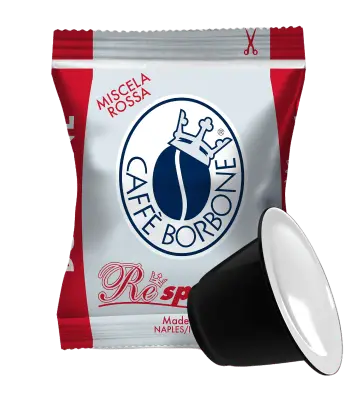 100 Capsules BORBONE Respresso RED Blend Nespresso Compatible
21,90 €


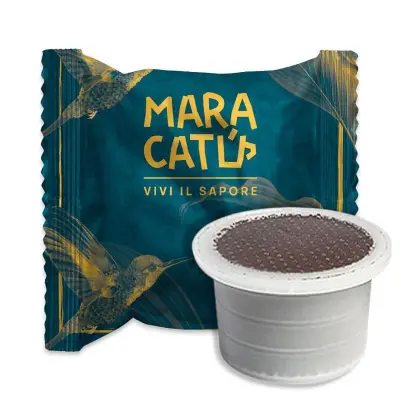 100 Maracatú Coffee Capsules Gran Crema Uno System Compatible
19,90 €
 100 Capsules Maracatú Decaffeinated Uno System Compatible
23,90 €
 80 Maracatú Coffee Capsules Gran Crema Lavazza Blue In Black Compatible
18,90 €

More on this topic
More

Coffee Capsules Guide: How to Choose Your Perfect Taste
Read article


5 myths about capsule coffee
Read article
How to properly store coffee and coffee capsules: expert advice
Read article

Are you a reseller? Access the Maracatú B2B price list in just a few steps!
Read article
Capsule systems compared: Nespresso, Dolce Gusto, A Modo Mio, ESE and Caffitaly — which to choose
Read article
How to descale your coffee machine: a practical guide from over 15 years in coffee
Read article
Caffè Borbone: a guide to the Rossa, Nera, Blu, Oro and Dek blends
Read article
The coffee intensity scale: what the numbers on capsules really mean
Read article

The origins of coffee: myths, legends and the road to the Italian cup
Read article
Coffee roasting: the levels, and how each one changes the cup
Read article

Water and the taste of coffee: the ingredient nobody talks about
Read article
Coffee grind size: how to choose the right one
Read article