






How to descale your coffee machine: a practical guide from over 15 years in coffee
Why descaling matters more than you think
For over fifteen years we have helped our customers choose their coffee and look after their machines. One of the sentences we hear most often is: “The coffee isn't what it used to be, they must have changed the blend.” Nine times out of ten it isn't the blend. It's limescale.
The water we use every day leaves mineral deposits (mainly calcium and magnesium salts) inside the boiler, the tubing and the valves: a thin layer that spoils extraction long before it causes an actual breakdown.
Limescale creates three problems, in this order. First it changes the taste: the espresso can turn sharper or less aromatic, and the crema collapses quickly. Then the machine starts working harder, because water struggles to flow properly and the temperature becomes less stable. Finally, when the problem is ignored for too long, real faults appear: the pump runs dry, or the heating element fails. We have seen excellent espresso machines go in for repair barely two years after purchase, simply because they had never been descaled.
The good news is that all of this is preventable with very little effort: use a dedicated descaler and keep to a regular routine. This is the guide we give our customers every day to keep a machine efficient and the coffee consistently good.
How to tell when it's time (and how often to do it)
A machine usually gives you signals before the descaling light ever comes on. The ones we always say not to ignore: coffee running slower than usual or unevenly, a lower brewing temperature, a pump that sounds louder than normal, or visible scale in the tank and around the nozzles.
Many De'Longhi and Krups machines have a dedicated indicator, but it is better not to wait for it: by the time it lights up, scale has been building for a while.
How often you need to descale depends mainly on two things: the hardness of your water and how many coffees you make each day. In many areas the tap water is moderately hard to hard, so we recommend descaling every 2-3 months for normal home use, and every 1-2 months with heavy use — an office, for example, or a large household. Filtered water lengthens the intervals, but it does not remove the need for maintenance.
One small tip we often share with customers: look at your kettle or your taps. If they scale up quickly, exactly the same thing is happening inside your coffee machine.
Descaling step by step
The principle is always the same: circulate a solution of water and descaler through the whole circuit, then rinse thoroughly with plenty of clean water. How the programme is started varies from model to model, so our first piece of advice is always to check the manual and use only a descaler made for coffee machines, liquid or sachet.
For capsule machines (Nespresso®, Dolce Gusto®, A Modo Mio®, Caffitaly®): remove any capsule, empty the drip tray and fill the tank with water and the amount of descaler stated by the manufacturer. Start the descaling programme if there is one, or simply run water through without a capsule until the tank is almost empty. Then run at least two full rinse cycles with clean water only.
For 44 mm ESE pod machines and many traditional espresso machines the process is very similar: put the solution in the tank, run part of it through the brew group and part through the steam wand (if fitted), let it work for a few minutes, then finish the cycle. Rinse thoroughly with plenty of clean water and pull one blank shot before making your first coffee.
If any parts are removable, take the opportunity to wash them properly: clearing coffee residue from the group, the spout and the capsule or pod holder keeps the machine working well for longer.
The mistakes we see most often
The most common mistake is using vinegar. It is a remedy that has been passed down for years, but today we strongly advise against it. It does dissolve limescale, yet it can leave a lingering smell, it is not compatible with some materials used in modern machines, and it is not approved by most manufacturers. That is why we always recommend a dedicated descaler, following the stated doses carefully.
The same goes for citric acid used without the correct dilution: the wrong dosage can be less effective, or cause problems of its own.
The second mistake is skimping on the final rinse. If your coffee tastes odd after descaling, in most cases it simply means some solution is still in the circuit. Always run at least two full rinses and throw away the first coffee.
Finally, some people wait far too long, while others descale far more often than necessary. Sticking to the recommended intervals is the best way to keep a machine efficient over the years.
Filters and water quality: prevention pays off
The best way to limit scale is to start with the right water. Limescale does not originate in the machine: it comes straight from the tap. A softening filter compatible with your machine, or a filter jug, can noticeably reduce deposits and also improve the taste of your coffee.
Distilled water, on the other hand, is not recommended: it lacks the minerals needed for proper extraction, and some machines may not work correctly on fully demineralised water.
Remember to replace the filter as the manufacturer specifies: once the cartridge is exhausted it stops doing its job. Check the tank, the seals and the accessories you use every day, too — keeping them clean means the whole machine works better.
The quick routine we recommend to everyone
Daily maintenance really does take just a few minutes, and over time it makes a big difference.
Every day, empty the drip tray, rinse the tank, refill it with fresh water and, at the end of the day, run a little water through without coffee to flush the circuit.
Once a week, thoroughly wash the capsule or pod holder, the spout and the drip grid.
Every 2-3 months — or more often if your water is very hard or you make a lot of coffee — run a full descaling cycle.
Always keep a good descaler for coffee machines at home: having it on hand is what stops you putting maintenance off.
In over fifteen years we have learned something very simple: maintenance takes a few minutes, while a repair can cost a great deal more. Looking after your machine means better coffee every day and a machine that lasts longer.
If you are unsure which descaler to use, or how to maintain your machine properly, our team is always happy to help.
Image: Bialetti Moka Express — Jcmontero, CC BY-SA 4.0.
Popular products
All products
More


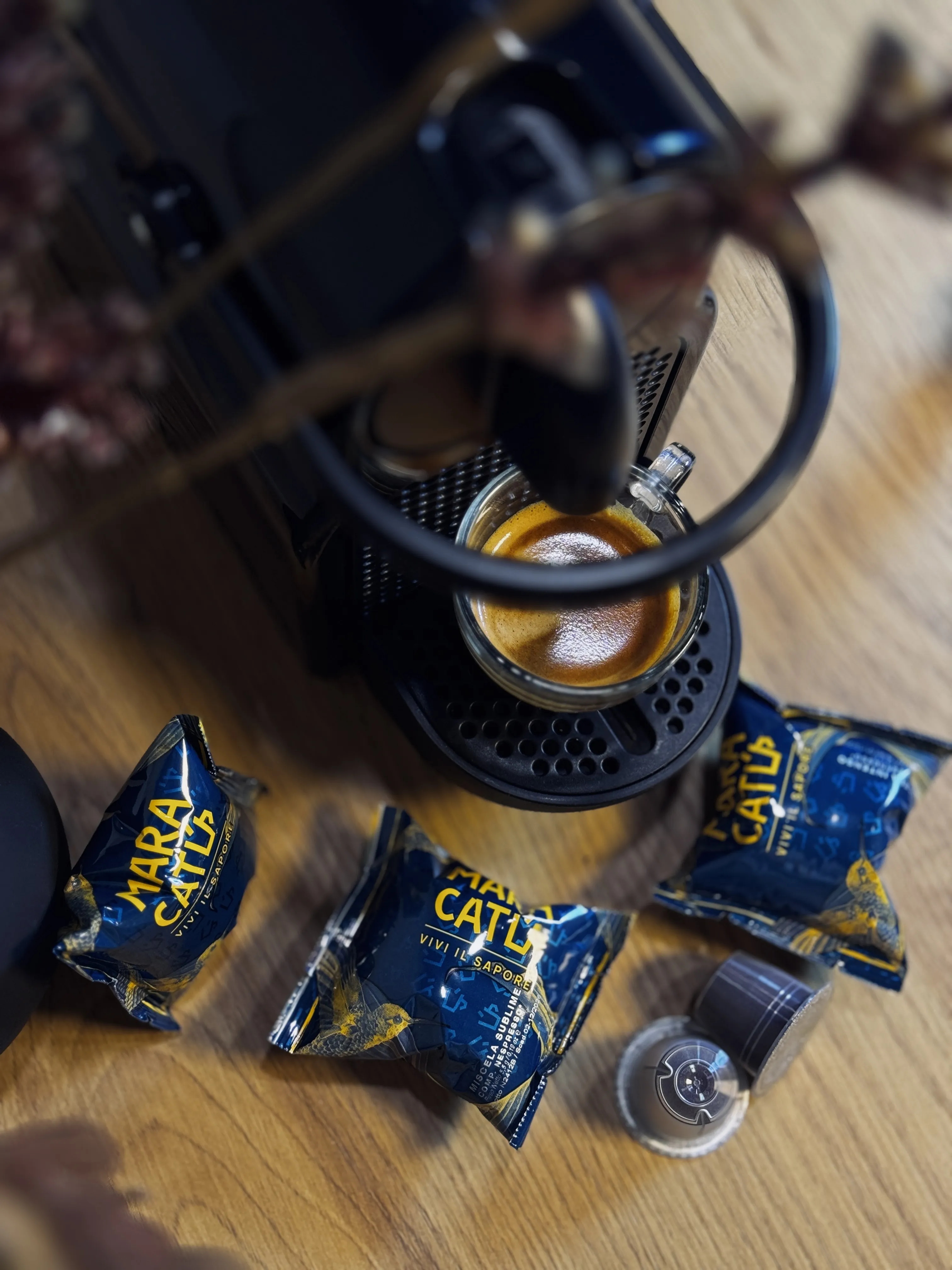
 100 Maracatú Coffee Capsules Gran Crema Uno System Compatible
19,90 €


 100 Capsules Maracatú Decaffeinated Uno System Compatible
23,90 €
 80 Maracatú Coffee Capsules Gran Crema Lavazza Blue In Black Compatible
18,90 €


More on this topic
More

Coffee Capsules Guide: How to Choose Your Perfect Taste
Read article


5 myths about capsule coffee
Read article
How to properly store coffee and coffee capsules: expert advice
Read article

Capsule systems compared: Nespresso, Dolce Gusto, A Modo Mio, ESE and Caffitaly — which to choose
Read article
Caffè Borbone: a guide to the Rossa, Nera, Blu, Oro and Dek blends
Read article

The coffee intensity scale: what the numbers on capsules really mean
Read article

Are you a reseller? Access the Maracatú B2B price list in just a few steps!
Read article

The origins of coffee: myths, legends and the road to the Italian cup
Read article
Coffee roasting: the levels, and how each one changes the cup
Read article
Espresso: how the Italian classic was born
Read article

Water and the taste of coffee: the ingredient nobody talks about
Read article
Coffee grind size: how to choose the right one
Read article