






Capsule systems compared: Nespresso, Dolce Gusto, A Modo Mio, ESE and Caffitaly — which to choose
Fifteen years of experience and the same question every week
We have worked in coffee for more than fifteen years, and there is one question our customers ask us every single week: “Which system is right for me?”
There is never a single answer. Each system was designed around different needs: some people drink one short espresso in the morning, others love making cappuccinos and hot drinks for the whole family, and some have to satisfy a whole office. Before choosing a coffee machine, it is worth understanding your own habits.
In this guide we compare the five most requested systems: Nespresso Original and its compatible capsules, Lavazza A Modo Mio, Nescafé Dolce Gusto, ESE pods and Caffitaly. We share what we have learned so you can work out which solution fits you best.
Nespresso Original and compatibles: the great classic
Nespresso is the system that brought capsules into millions of homes, and it is still one of the most widespread. We are talking about the Original format, the classic aluminium capsule: an open system, which means you can choose not only the original capsules but a wide range of compatibles from brands such as Borbone, Kimbo, Lavazza and many others.
There is one important thing to remember: Nespresso Original and Nespresso Vertuo are not the same. The Vertuo system uses its own capsules and is not compatible with the Original format. For anyone who wants the widest possible choice of blends, Original remains the most versatile option.
Pros: a short, creamy espresso, a huge choice of aromas and blends, a compact machine.
Cons: the crema is generally lighter than a bar espresso, and aluminium capsules need to be collected separately for recycling. A tidy capsule holder helps keep the worktop in order.
Lavazza A Modo Mio: the Italian tradition
A Modo Mio is the system Lavazza designed for anyone who wants an espresso with a distinctly Italian character. The capsule is easy to handle and gives a full-bodied cup, with dense crema and an intense taste that comes close to the bar.
It is a more closed system than Nespresso Original: compatible capsules do exist, but the choice is narrower. For many households this is not a problem, because the Lavazza A Modo Mio range already covers a wide variety of blends.
One important piece of advice concerns maintenance: A Modo Mio machines are reliable, but they need regular descaling, especially where the water is particularly hard. Proper maintenance keeps performance at its best and extends the life of the machine.
Nescafé Dolce Gusto: not just coffee
Dolce Gusto is the ideal system for anyone who wants to make not just espresso but also cappuccino, latte macchiato, hot chocolate, tea and many other drinks. Families particularly appreciate it for exactly that versatility.
The other side of the coin is that, for someone who only ever wants a short, intense espresso, it may not be the ideal choice.
Contrary to what many people think, Dolce Gusto is not a completely closed system: alongside the original capsules there are plenty of compatible ones, which widen the choice of available drinks considerably.
One last tip: if you are choosing Dolce Gusto mainly for the variety, bear in mind that some drinks take two capsules, and that the indulgent ones disappear remarkably fast in a house with children.
ESE pods: the choice for lovers of traditional espresso
44 mm ESE pods are a different proposition from capsules. They hold pressed ground coffee wrapped in a paper filter and, used with a good machine, they produce an espresso very close to what you get in a bar.
They are also available in a compostable version and are made by a great many roasters, including Bialetti, Borbone and Kimbo.
The trade-off is simple: they need a compatible machine and a little care in preparation, but in return they deliver very high quality in the cup.
Caffitaly: reliability and consistency
Caffitaly is a system that is particularly appreciated in offices and professional settings. It delivers a consistent, clean extraction and a reliably even quality in the cup.
Although it is less widespread than some other systems, it is a dependable choice for anyone who wants ease of use and repeatable results. Before buying, it is still worth checking that your machine is compatible, since several machines use the same system under different brand names.
How to choose well (without regretting it)
After more than fifteen years, the rule we always share with our customers is very simple: start from your own habits, not from the machine.
If you want maximum freedom in choosing capsules, Nespresso Original is probably the most versatile system.
If you prefer an espresso with a distinctly Italian character, A Modo Mio is an excellent solution.
If your household often makes drinks other than coffee, Dolce Gusto offers the greatest variety.
If your goal is an espresso as close as possible to the one in a bar, ESE pods are one of the most highly regarded alternatives.
And for anyone looking for a reliable, consistent system — particularly suitable for offices and workplaces — Caffitaly remains a high-quality choice.
Finally, three things that often get underestimated: water quality, regular descaling, and using the right cups. Good maintenance and small habits can make a surprising difference to the quality of your coffee.
One last tip: always keep a moka pot or a pack of ground coffee at home. Capsules are practical and quick, but there are moments when taking your time over a coffee still has all of its charm.
If you are unsure which system to choose, come and see us or get in touch: we will be glad to help you find the solution that suits you best.
Image: Caffè Storico Tettuccio — Sailko, CC BY-SA 4.0.
Popular products
All products
More


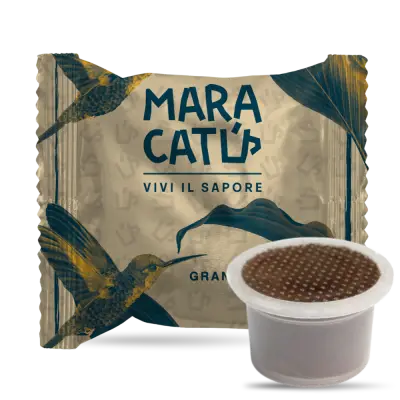 100 Maracatú Coffee Capsules Gran Crema Uno System Compatible
19,90 €


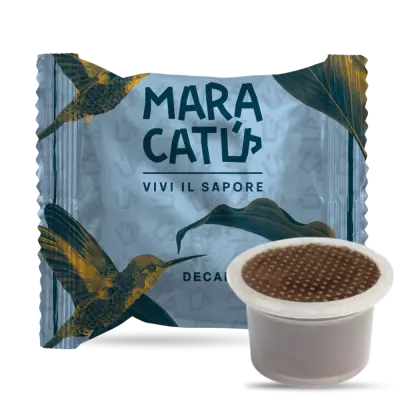 100 Capsules Maracatú Decaffeinated Uno System Compatible
23,90 €
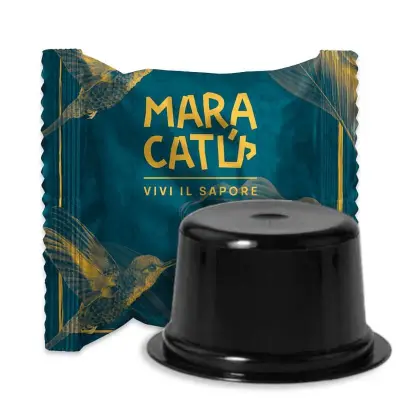 80 Maracatú Coffee Capsules Gran Crema Lavazza Blue In Black Compatible
18,90 €
More on this topic
More

Coffee Capsules Guide: How to Choose Your Perfect Taste
Read article


5 myths about capsule coffee
Read article
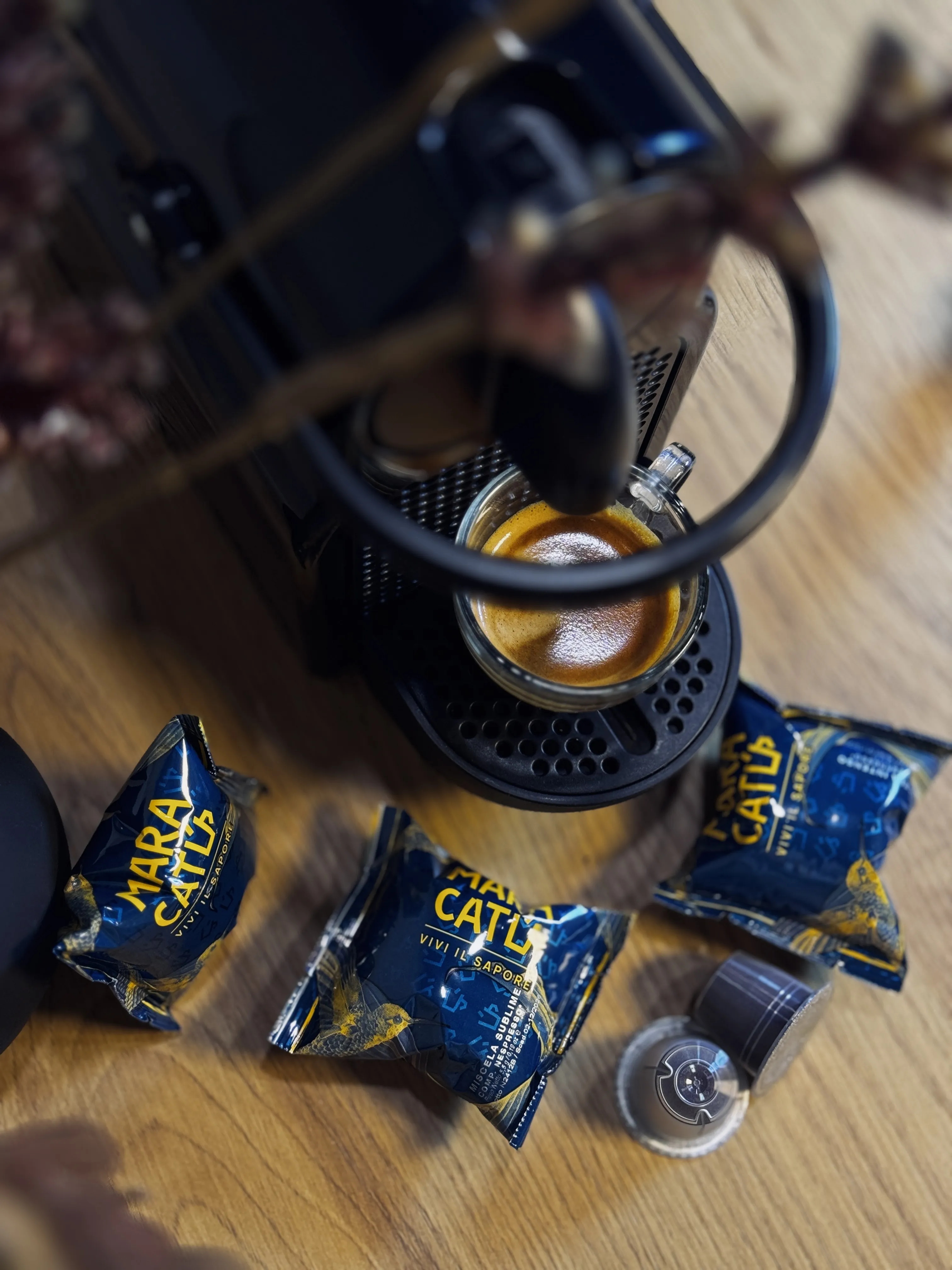
How to properly store coffee and coffee capsules: expert advice
Read article

How to descale your coffee machine: a practical guide from over 15 years in coffee
Read article
Caffè Borbone: a guide to the Rossa, Nera, Blu, Oro and Dek blends
Read article

The coffee intensity scale: what the numbers on capsules really mean
Read article

Are you a reseller? Access the Maracatú B2B price list in just a few steps!
Read article

The origins of coffee: myths, legends and the road to the Italian cup
Read article
Coffee roasting: the levels, and how each one changes the cup
Read article
Espresso: how the Italian classic was born
Read article

Water and the taste of coffee: the ingredient nobody talks about
Read article
Coffee grind size: how to choose the right one
Read article