





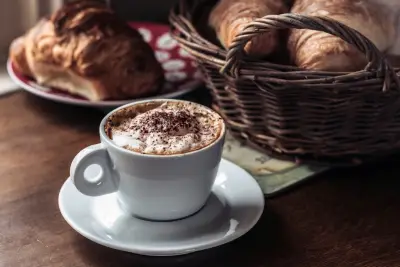
Coffee at breakfast: Italian and foreign habits compared
A short, thoroughly Italian breakfast
We have been working with coffee for more than fifteen years, and one of the differences we notice most easily between Italian habits and those of other countries concerns the very first cup of the day.
A traditional Italian breakfast is generally simple and quick: an espresso or a cappuccino, often with something sweet on the side. At the bar it can be over in a few minutes, sometimes standing at the counter, while at home it tends to become a calmer moment.
The cornetto, Italy's answer to the croissant, along with biscuits, fette biscottate (crisp, lightly sweet rusks) and other sweet baked goods have long been the stars of the Italian breakfast, and they pair naturally with the taste of coffee.
The size of the drink itself is also typical of our habits. Italian espresso is short, concentrated and meant to be finished in a few sips, quite unlike the large mugs of coffee found in the traditions of other countries.
Of course there is no single Italian breakfast: habits, timing and preferences change from person to person. That is exactly what makes it interesting to compare the way we start the day with the way other cultures do.
The cappuccino tradition
Whenever Italian habits come up, sooner or later someone mentions the famous "rule" that cappuccino should not be drunk after eleven in the morning.
More than an actual rule, it is a cultural habit. In Italy cappuccino is traditionally tied to breakfast, so it is mostly enjoyed during the first hours of the day.
After lunch or in the afternoon, it is far more common to order an espresso, a caffè macchiato (an espresso with a dash of milk) or other smaller drinks. This does not mean, of course, that a later cappuccino is forbidden: at the bar you are welcome to order one whenever you like.
From the point of view of taste, milk changes the perception of coffee considerably. A more intense, full-bodied blend generally holds on to its character better once milk is added.
That is why, if you regularly prepare both cappuccino and espresso at home, you may also choose different blends depending on the drink you want to make.
If you would like to improve your cappuccino at home, we have gathered some advice in our dedicated guide.
How the rest of the world has breakfast
Looking at other cultures reminds us that there is no single way to have breakfast: the foods change, and so do the portions, the timing and, of course, the way coffee is drunk.
In several countries of Central Europe, larger breakfasts are common and may include savoury foods as well. Coffee is often served in bigger quantities than our espresso and enjoyed at a slower pace.
In the Nordic countries, filter coffee plays an important part in daily habits and may be drunk several times over the course of the morning. Roasting profiles can also differ from those traditionally associated with Italian espresso.
In the English-speaking world, very different habits live side by side: tea, filter coffee, espresso and large milk-based drinks are now part of an extremely varied offering.
In Turkey and the countries of the Middle East we find different traditions again, in which tea and coffee take on distinct moments and roles throughout the day.
And that is precisely the interesting point: coffee has adapted to the eating habits of every culture, taking on different forms, quantities and rituals.
What to put next to the cup
Pairing coffee with breakfast is above all a matter of personal taste, but some combinations have become true classics.
The cornetto, plain or filled, is probably the most iconic companion of breakfast at an Italian bar. The contrast between its sweetness and the character of espresso creates a pairing familiar to everyone by now.
At home we often find dry biscuits, fette biscottate and other baked goods, which also suit a longer coffee or a milk-based drink very well.
Hazelnut and pistachio creams, or other particularly rich treats, can instead be paired with a fuller-bodied coffee, one able to hold its own next to very sweet and intense flavours.
In our delights and sugar section you can find several specialities to enjoy with the first cup of the day.
Our breakfasts change during the holidays too: panettone and other traditional sweets often take centre stage at the table, and a good coffee remains one of the most natural companions. You can discover our selection in the section dedicated to panettone and artisan products.
Coffee on an empty stomach
Drinking coffee right after waking, before eating anything, is a very common habit. How the body responds, however, can vary from person to person.
Some people drink coffee on an empty stomach without noticing any discomfort at all, while others may experience a burning sensation, acidity or other digestive complaints.
If you find that coffee on an empty stomach causes you discomfort, you can try having it after eating something, or adjust the quantity and the brewing method to see whether things change.
The characteristics of the coffee and the way it is prepared can also influence individual perception and tolerance, but there is no blend that is universally better suited to everyone.
If the discomfort is frequent or persistent, it is always best to speak to your doctor: general advice about coffee cannot replace a professional assessment.
Building your own breakfast
You do not need strict rules to find the breakfast that best suits your habits. A few simple steps are enough to get started.
First: choose the amount of coffee you prefer. If an espresso feels too intense, you can try a more balanced blend; if, on the other hand, a longer coffee loses too much character, try reducing the amount of water slightly.
Second: experiment with pairings. An intense espresso goes well with a sweeter breakfast, while an aromatic, delicate coffee can be pleasant with simpler foods.
Third: if you love both cappuccino and espresso, you can also keep two different blends at home: a fuller-bodied one that stands out in milk, and a more balanced one to enjoy on its own.
In our coffee beans and ground coffee section you will find several profiles to choose from, depending on your taste and on how you prefer to drink your coffee.
If you would like advice on the blend that best suits your breakfast, please get in touch: the Maracatú team is always happy to help you find the right one.
Popular products
All products
More


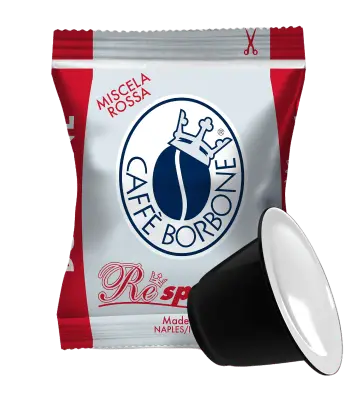 100 Capsules BORBONE Respresso RED Blend Nespresso Compatible
21,90 €


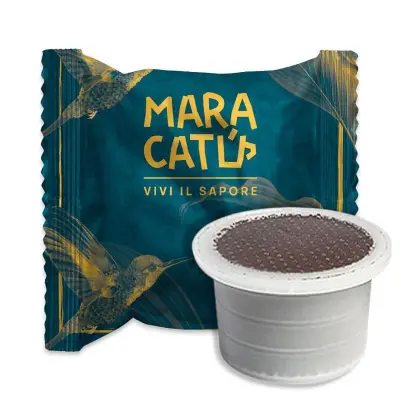 100 Maracatú Coffee Capsules Gran Crema Uno System Compatible
19,90 €
 100 Capsules Maracatú Decaffeinated Uno System Compatible
23,90 €
 80 Maracatú Coffee Capsules Gran Crema Lavazza Blue In Black Compatible
18,90 €
More on this topic
More

Coffee Capsules Guide: How to Choose Your Perfect Taste
Read article


5 myths about capsule coffee
Read article
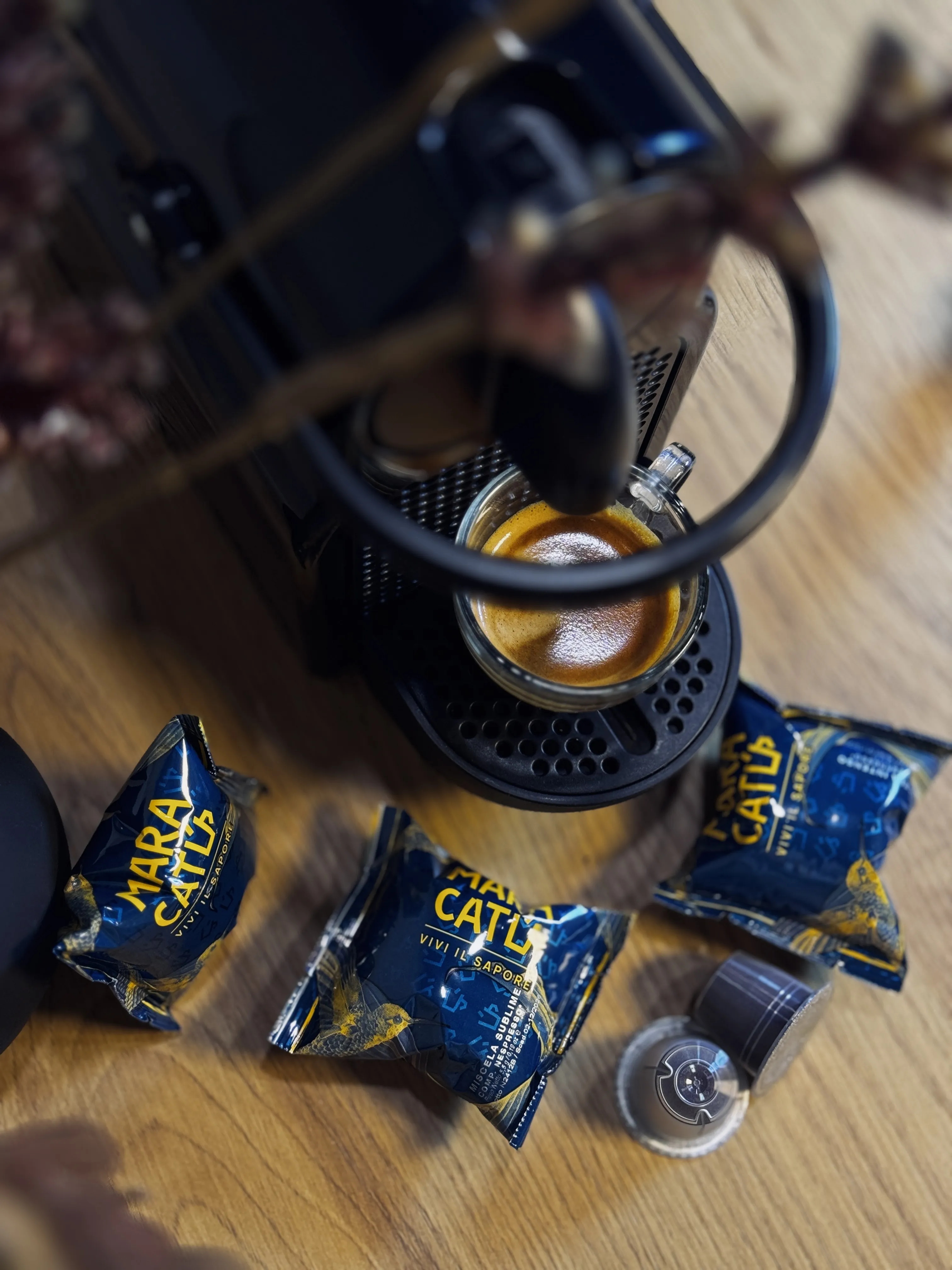
How to properly store coffee and coffee capsules: expert advice
Read article

Are you a reseller? Access the Maracatú B2B price list in just a few steps!
Read article
Capsule systems compared: Nespresso, Dolce Gusto, A Modo Mio, ESE and Caffitaly — which to choose
Read article

How to descale your coffee machine: a practical guide from over 15 years in coffee
Read article

Caffè Borbone: a guide to the Rossa, Nera, Blu, Oro and Dek blends
Read article
The coffee intensity scale: what the numbers on capsules really mean
Read article
The origins of coffee: myths, legends and the road to the Italian cup
Read article
Coffee roasting: the levels, and how each one changes the cup
Read article
Espresso: how the Italian classic was born
Read article

Water and the taste of coffee: the ingredient nobody talks about
Read article