



Coffee and working from home: how to organise the coffee break during the day
Working from home and the role of the coffee break
For many people who work from home, the coffee break still marks the rhythm of the day, just as it did in the office.
This applies to freelancers, to people who collaborate remotely and to those who alternate a few days at home with a few days at a workplace.
Coffee accompanies many moments of the working day, and at home it finds a natural place between one task and the next.
Without the machine in the corridor or the café below the office, coffee is made in the kitchen, with what we have at hand.
There is no single way to organise it: it depends on the space, on personal taste and on the rhythm of each day.
In this guide we look at where it can be convenient to make coffee during the working day and which system may suit each person best.
We then see how coffee can accompany the different parts of the day and how to take a moment for yourself with a cup.
We close with a few ideas on stocks and maintenance, so that what you need is always within reach.
It can be useful to think of the break as a small organised habit, suited to a day spent at home.
These are not rules to follow but common habits, which everyone adapts to their own home and way of working.
Where to make coffee: a dedicated corner away from the desk
People who work from home often have to decide where to make coffee during the day.
A very common solution is to set aside a small corner of the kitchen for the machine, the cups and everything else you need.
Having everything in the same place makes the routine simple and quick, even on days when time is short.
Many people find it useful to keep liquids and cups away from the desk, especially near the computer and cables.
A cup placed next to the keyboard can easily be knocked over, which is why some people prefer to drink their coffee elsewhere.
Getting up and walking to the kitchen thus becomes a short break, a small change of place that interrupts the sequence of tasks.
Even in a small flat, a shelf or a trolley can become the coffee corner.
The return to the desk has its own rhythm too: you finish the cup calmly and then go back to work.
To set up your coffee corner, you can read our guide to the essential accessories for coffee at home, with a few ideas on what to keep within reach.
You do not need much space: a free shelf and somewhere to keep the cups are enough.
Which system to choose when working from home
There are several systems for everyday coffee, and there is no choice that is best for everyone.
It depends on personal taste, on the space available and on how often you stop for a cup.
Capsules can be a good choice for those who want a quick routine and a result that is generally similar from one cup to the next.
ESE pods, which are made of paper, can be a good choice for those who appreciate a simple preparation: in our range you will find ESE 44 mm pods.
The moka pot can be a good choice for those who enjoy a small ritual: it takes a few more steps, which for many people become a moment of calm.
Coffee beans with a grinder can be a good choice for those who like to grind at the moment and spend a little more time on preparation.
None of these systems is better than the others: each suits different habits and different days.
Keeping more than one system at home is also a possibility, for example one for working days and one for the weekend.
If you would like to compare the most common systems, you can read our comparison of capsule systems.
For people who work from home it also matters how much space the system takes up in the kitchen and how much time there is between one task and the next.
The machines in our range can be found in the Espresso Machines section.
Coffee through the day
Many people start the working day with a coffee and have another later on, depending on their own habits.
When working from home the machine is only a few steps away, and it can happen that a coffee is made almost without thinking.
Sensitivity to caffeine varies from person to person, so everyone can observe how they react at different moments of the day.
Some research has observed that caffeine can affect sleep.
This does not prove that it applies in the same way to everyone, nor does it indicate an amount or a time that suits every person.
For this reason some people switch to decaffeinated coffee in the afternoon or in the evening, keeping the gesture and the pleasure of the cup.
Decaffeinated coffee considerably reduces caffeine, but does not eliminate it completely. We explained how it is made in our guide to decaffeinated coffee.
To explore the relationship between caffeine and rest, you can read our article on coffee, caffeine and sleep.
A glass of water next to the cup is a common habit, as in many cafés.
Some people prefer a long coffee and others a short espresso, and this too depends on personal taste.
This is general information, and it does not replace medical advice: if in doubt, it is always advisable to consult a healthcare professional.
The break as a moment for yourself
The coffee break can also be a moment for yourself, away from the day's tasks for a few minutes.
Many people use it to rest their eyes from the screen, perhaps by looking out of the window.
Some open the window and breathe a little fresh air while the machine prepares the coffee.
Others take a few steps around the house or on the balcony, if they have one.
Another aspect is the cup: using one you like can make the moment even more pleasant.
It may be an espresso cup, a larger mug or a small glass, depending on how you prefer to drink your coffee.
In our accessories and cups section you can find cups, mugs and small glasses to choose from according to your taste.
For some the break is quiet, for others it is a chance to listen to a little music or read a few pages.
For some people the break is more pleasant when it is not rushed, and coffee suits this calm rhythm well.
Every habit is legitimate: there is no obligatory way of spending this moment.
Stocks and maintenance: keeping everything in order
Having the coffee we prefer within reach makes it easier to organise the working day at home.
Capsules and pods tend to stay tidier when they have a place of their own, where you can see at once what is there.
In our capsule and pod holders section you will find several solutions for storing them.
Coffee, whether in beans or ground, is generally kept away from light, heat and humidity.
We have written a guide to storing coffee and capsules on this subject.
Another aspect concerns the machine: periodic descaling is part of looking after it, following the manufacturer's instructions.
For this maintenance, the descalers and filters section offers various products.
Organising the coffee break during the working day at home means choosing a corner, a system, a rhythm and a few moments for yourself.
Everyone does it in their own way, and habits may change over time along with the working day.
A small stock of the coffee we prefer allows us to make it when needed, without changing our plans.
There is no need to do everything at once: you can start with a single aspect and add the others over time.
If you would like advice on the system best suited to your day, on stocks or on maintenance, contact us: the Maracatú team is always happy to help you choose.
Popular products
All products
More


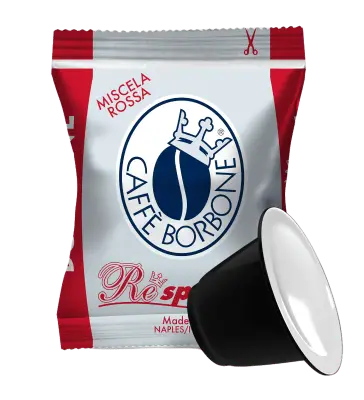 100 Capsules BORBONE Respresso RED Blend Nespresso Compatible
21,90 €


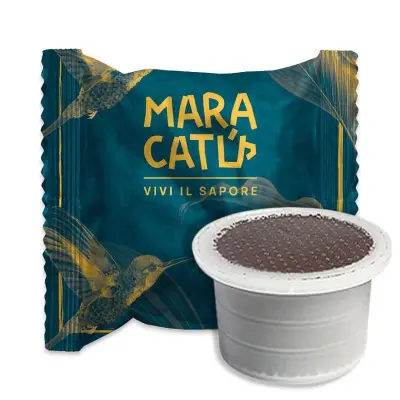 100 Maracatú Coffee Capsules Gran Crema Uno System Compatible
19,90 €
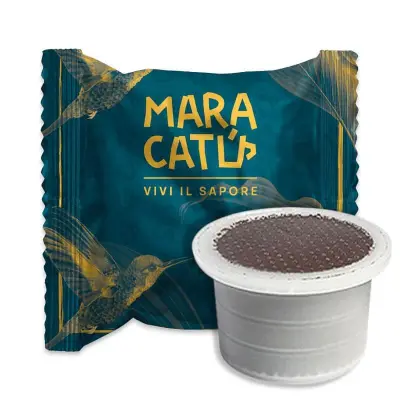 100 Capsules Maracatú Decaffeinated Uno System Compatible
23,90 €
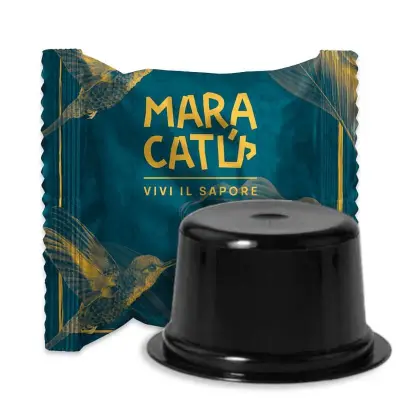 80 Maracatú Coffee Capsules Gran Crema Lavazza Blue In Black Compatible
18,90 €



More on this topic
More

Coffee Capsules Guide: How to Choose Your Perfect Taste
Read article


5 myths about capsule coffee
Read article
How to properly store coffee and coffee capsules: expert advice
Read article

Are you a reseller? Access the Maracatú B2B price list in just a few steps!
Read article

Capsule systems compared: Nespresso, Dolce Gusto, A Modo Mio, ESE and Caffitaly — which to choose
Read article

How to descale your coffee machine: a practical guide from over 15 years in coffee
Read article

Caffè Borbone: a guide to the Rossa, Nera, Blu, Oro and Dek blends
Read article

The coffee intensity scale: what the numbers on capsules really mean
Read article

The origins of coffee: myths, legends and the road to the Italian cup
Read article
Coffee roasting: the levels, and how each one changes the cup
Read article
Espresso: how the Italian classic was born
Read article

Water and the taste of coffee: the ingredient nobody talks about
Read article