





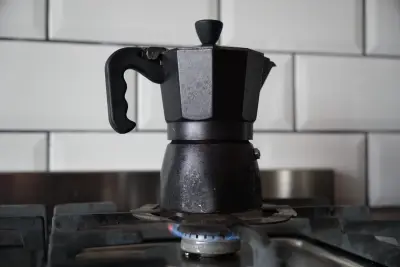
The moka pot: how to make good coffee at home and how to look after it
The moka pot, a familiar presence in many Italian homes
The moka pot is one of the most widespread coffee makers in Italian homes. In many families it accompanies breakfast, the coffee after lunch and the afternoon break.
It was born in Italy in the nineteen thirties and, in its best-known form, has an octagonal body that makes it recognisable at first glance.
Its success is explained by its simplicity: in the classic version it is used on the hob, needs no electricity, takes up little space and, with a little care, can last for many years.
Then there is the taste. Moka coffee has a character of its own, different from the espresso of the bar and from capsule coffee, and for many people it is simply the coffee of home.
Making good coffee with a moka pot does not require any particular skill, but a few small details help to achieve a better result.
In this guide we look at how the moka pot works, which coffee to choose, how to make coffee in it step by step and how to look after it over time.
We also see how it compares with the other ways of making coffee at home, from the Neapolitan cuccumella to pods and capsules.
How the moka pot works: the three parts and the principle
The moka pot is made up of three main parts, which screw together:
The boiler, the lower part, which is filled with water. On its side is the safety valve, a small element that lets excess pressure escape.
The funnel filter, which sits in the boiler and holds the ground coffee. Its central tube reaches down to the lower part of the boiler.
The upper chamber, the top part with the handle and the spout, into which the coffee rises and is collected. Inside it are a second, flat filter plate and the gasket that holds it in place.
The working principle is simple. When the moka pot is put on the heat, the water in the boiler warms up and, in the closed space, pressure builds.
This pressure pushes the water upwards, through the tube of the funnel filter and then through the ground coffee.
As it passes through the coffee grounds, the water extracts aromas and substances and reaches the upper chamber already turned into coffee.
This is why the result in the cup depends on just a few elements: the water, the ground coffee, the heat and the condition of the moka pot itself.
Water also influences the final taste: we looked at this in more depth in our article on water and the taste of coffee.
Which coffee to choose: blend and grind
The choice of coffee is one of the most important aspects for the result in the cup.
The first element to consider is the grind. Ground coffee for the moka pot is generally coarser than coffee for espresso, because the water passes through the grounds at a much lower pressure than in an espresso machine.
For this reason, whenever possible, it is preferable to choose a ground coffee made for the moka pot or, if you grind beans at home, a medium grind.
Coffee ground too fine can make it harder for the water to pass through, while coffee ground too coarse tends to give a lighter cup.
If you want to understand the differences between the various grind sizes better, you can read our guide to coffee grind size.
Those who have a grinder can choose coffee beans and grind them at the moment, shortly before brewing: it is a simple way that helps to preserve part of the aromas.
Those who prefer convenience will find in ground coffee a ready-to-use solution, to be kept well closed after opening.
Then there is the blend, and here there is no best choice for everyone: it depends on personal taste.
Those who love an intense, full-bodied coffee can turn to the bolder blends, while those who prefer a softer taste can choose a more delicate, aromatic blend.
For those who wish to reduce caffeine there is also decaffeinated ground coffee for the moka pot, which greatly reduces the caffeine but does not eliminate it completely.
In our coffee beans and ground coffee department you will find several options, with different blends and grinds, to choose according to your taste and habits.
Among them are also the ground blends for the moka pot by Bialetti, alongside the coffee pots of the same brand, depending on the range of the moment.
Preparation step by step
Making coffee with a moka pot is something many people do every day almost without thinking. It is still worth going over the main steps, because every detail contributes to the result.
The first step concerns the water. The boiler is filled without going above the level of the safety valve, so that it remains uncovered.
Some start with cold water, others prefer to pour it in already hot: these are widespread habits, not rules, and if in doubt the instructions for your moka pot remain the best reference.
Next comes the funnel filter, which is filled with ground coffee and levelled, without pressing the grounds down.
Tamping the coffee, as is done for espresso, is not necessary here: grounds that are too compact can make it harder for the water to pass through.
Before closing, it can be useful to remove any grounds left on the rim of the boiler, so that the gasket seals well. The upper chamber is screwed on with a firm grip, without forcing it.
The moka pot goes on the hob over a moderate flame. Heat that is too strong tends to make the coffee rise too quickly and can affect the taste; whenever possible, the flame should not extend beyond the base of the boiler, partly so as not to heat the handle.
After a few moments the coffee begins to rise into the upper chamber. When the flow slows and the moka pot starts to gurgle, the coffee has come up and it can be taken off the heat.
Taking it off the heat at this point helps to avoid the last part of the extraction, when little water is left in the boiler, which could make the coffee more bitter.
Before pouring, a stir with a teaspoon in the upper chamber helps to even out the coffee, because the first part to rise and the last can differ in intensity.
At this point the coffee is ready to pour into the cup, plain or with sugar, as you prefer. In our accessories and cups department you will find cups of different shapes and sizes.
Cleaning and small maintenance
A well-kept moka pot can stay with us for many years. A few simple steps, repeated regularly, are enough.
After each use, once the moka pot has cooled, it is advisable to empty the grounds from the filter and rinse all the parts with water.
Drying them well and leaving them in the air before reassembling helps to avoid odours and traces of moisture.
A very widespread habit is to wash the moka pot with water only, without detergent, so as not to alter the taste of the coffee. It is not, however, a rule that holds for every model and every material.
Over time some parts wear out. The gasket in particular can lose its elasticity: when this happens the coffee may leak at the join or rise with difficulty.
The gasket and the filter plate are spare parts and can be replaced, choosing the parts suited to the model and size of your moka pot.
Another useful check concerns the safety valve, which should stay clean and free of residue and limescale, so that it can work properly.
Then there is the question of induction hobs. Not all moka pots are suitable: some work only on gas hobs or electric plates, others are designed for induction as well.
Before using a moka pot on an induction hob it is therefore important to check on the packaging or in the instructions that it is compatible. Special adapters also exist, but here too it is worth following the manufacturer's guidance.
According to a widespread tradition, a new moka pot is used once or a few times only to make coffee that is then not drunk, before its first real use. This is not, however, a compulsory rule.
In any case, for cleaning and maintenance it is always preferable to follow the manufacturer's instructions, which can vary from one model to another.
The moka pot and the other ways of making coffee at home
The moka pot is not the only way to make coffee at home, and each method can be a good choice for those looking for a certain kind of result.
A relative of the moka pot is the cuccumella, the Neapolitan coffee pot, which works differently and gives a coffee with a character of its own. We talked about it in our article on Neapolitan coffee and the cuccumella.
Then there are those who, especially in the morning, are looking above all for speed and convenience. In this case pods and capsules can be a good choice: the coffee is already dosed and preparation takes only a few gestures.
Among the formats available in our range are the ESE 44 mm pods, for use with pod machines, and various capsules compatible with the most popular systems.
Each system has its own characteristics and there is no best choice for everyone: it depends on habits, the time available and the taste you are looking for.
The cup has its role too. Shape, thickness and temperature can change how the coffee is perceived, with the moka pot as with espresso. We looked at this in more depth in our article on why the coffee cup matters.
A small gesture that also applies to the moka pot is warming the cup with a little hot water before pouring the coffee.
In conclusion, the moka pot remains one of the simplest and most appreciated ways of making coffee at home. A suitable ground coffee, a little attention during preparation and a few gestures of care over the years can make the difference in the everyday cup.
If you have doubts about the grind, the blend or the moka pot best suited to your kitchen, contact us: the Maracatú team is always happy to help you choose.
Popular products
All products
More


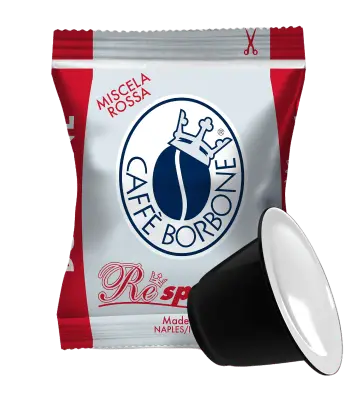 100 Capsules BORBONE Respresso RED Blend Nespresso Compatible
21,90 €


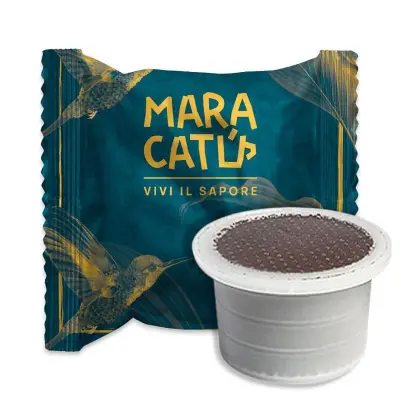 100 Maracatú Coffee Capsules Gran Crema Uno System Compatible
19,90 €
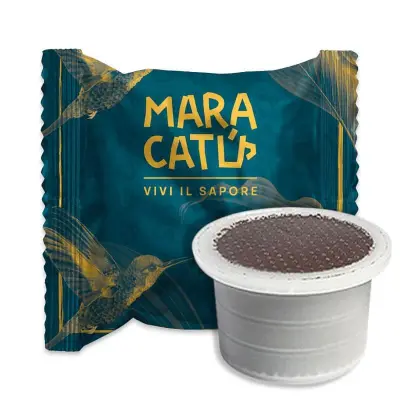 100 Capsules Maracatú Decaffeinated Uno System Compatible
23,90 €
 80 Maracatú Coffee Capsules Gran Crema Lavazza Blue In Black Compatible
18,90 €



More on this topic
More

Coffee Capsules Guide: How to Choose Your Perfect Taste
Read article


5 myths about capsule coffee
Read article

How to properly store coffee and coffee capsules: expert advice
Read article

Are you a reseller? Access the Maracatú B2B price list in just a few steps!
Read article

Capsule systems compared: Nespresso, Dolce Gusto, A Modo Mio, ESE and Caffitaly — which to choose
Read article

How to descale your coffee machine: a practical guide from over 15 years in coffee
Read article

Caffè Borbone: a guide to the Rossa, Nera, Blu, Oro and Dek blends
Read article

The coffee intensity scale: what the numbers on capsules really mean
Read article

The origins of coffee: myths, legends and the road to the Italian cup
Read article
Coffee roasting: the levels, and how each one changes the cup
Read article
Espresso: how the Italian classic was born
Read article

Water and the taste of coffee: the ingredient nobody talks about
Read article