





The origins of coffee: myths, legends and the road to the Italian cup
A drink that crossed a thousand years and three continents
The coffee we drink in the morning has travelled a long and rather winding road. Before it became the small cup we know, it was a chewed berry, an infusion of leaves, a religious drink, a smuggled commodity and, at times, a product banned by law.
We have worked with coffee for more than fifteen years, and we notice that this history interests almost every customer. Not as trivia: understanding where a drink comes from helps explain why it tastes the way it does, and why Italy drinks it in a way that surprises visitors.
In this article we have separated what historical research considers reliable from what belongs to popular storytelling. The two have been mixed together for a long time, and the distinction is worth making.
Kaldi and the goats: the most famous legend, and the least documented
Many people know the story. An Ethiopian herder named Kaldi notices that his goats stay awake and restless late into the night after grazing on certain red berries. Curious, he tries them himself, feels the same effect and takes the discovery to a nearby monastery, where the monks make an infusion that helps them stay alert through night prayers.
It is a lovely tale, and for that reason it deserves caution. It first appears in writing only in the seventeenth century, in a European text, centuries after the events it claims to describe. No contemporary Ethiopian sources confirm it.
That does not make it pure invention. Ethiopia is indeed the home of Coffea arabica, which grows wild on its highlands, and local use of the berries long predates the spread of the drink. The legend compresses into one picturesque episode a process that took generations.
Yemen: where coffee actually became a drink
The decisive step happened not in Ethiopia but across the Red Sea. In Yemen, between the fifteenth and sixteenth centuries, coffee was cultivated systematically, roasted and ground: this is where the dark, hot drink we would still recognise was born.
Sufi brotherhoods did much of the spreading, using it to sustain long night ceremonies. Coffee soon left the religious context and entered civic life: the first public coffee houses opened in cities across the Arab world, places to drink, argue and play.
The port of Mokha on the Red Sea became the centre of this trade, and lent its name to the moka pot that would become an Italian symbol centuries later. To protect the monopoly, the export of fertile plants and seeds was tightly restricted: what was sold was processed coffee, not the ability to grow it.
Venice, coffee's gateway into Europe
Coffee reached Europe through Venetian trade in the second half of the sixteenth century. At first it was an expensive curiosity, sold more as a remedy than a pleasure, and its reputation was unsteady: it was viewed with suspicion precisely because of where it came from.
Legend has it that a pope settled the matter by tasting it and declaring it too good to leave to non-believers. Here too the documentation is late and indirect, and the anecdote is probably a later reconstruction. What is certain is that by the seventeenth century the suspicion had faded and coffee had entered urban habits for good.
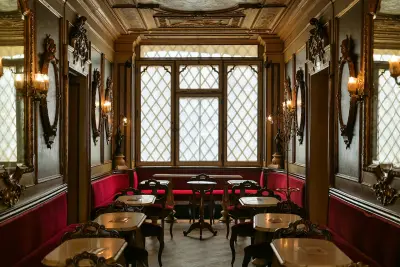
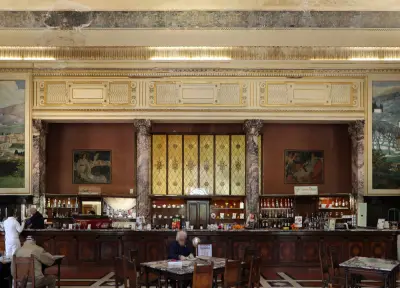
In 1720, under the Procuratie on Piazza San Marco, the shop opened that would become Caffè Florian, today considered one of the oldest cafés in Europe still in business. It was more than a venue: it was the model of a public space where coffee is the excuse to stop, read and talk.
From coffee house to counter: how the Italian ritual took shape
The next leap was technical. Around the turn of the twentieth century, the search was on for a way to serve coffee faster and on demand, without brewing large quantities in advance. The answer was the pressure machine, and from it came espresso: coffee extracted on the spot for one person.
This is a real difference from the rest of Europe. Where elsewhere people drink a large cup sitting down, Italy settled on a small, concentrated serving, often taken standing at the counter in a couple of minutes. The ritual is not slowness; it is frequency.
In 1933 the moka pot brought a similar principle into the home at an accessible cost, and the small cup became a domestic habit as well as a public one. From there the story accelerates: standardised dosing, capsule and pod systems, automatic machines.
Each step simplified preparation, but none changed the substance. The goal is still a small quantity of concentrated drink, with a dense crema and a lasting aroma.
What remains of this history in today's cup
Three things, in our view, have survived intact.
Geographical origin still matters. The two species that dominate the market, arabica and robusta, come from different environments and behave differently in the cup: the first more acidic and aromatic, the second fuller and more bitter, with a more stable crema. Almost every Italian blend combines them, and the proportion is the first thing to look at when choosing whole-bean or ground coffee.
Roasting remains the decisive step. It is the moment the berry becomes aroma, and the point where each roaster signs its work. Two coffees of the same origin, roasted differently, have little in common.
The ritual has stayed social. Whether a sixteenth-century Yemeni coffee house, the Florian in the eighteenth century, or a neighbourhood bar today, coffee is still an excuse to stop with someone.
To find that character at home, the starting point is simple: a blend you genuinely enjoy, and a brewing method that suits it. Our coffee range and our accessories and cups cover both.
If you are unsure which blend fits your method, please contact us, the Maracatú team is always available to help.
Image: interior of Caffè Florian, Venice, Jorge Franganillo, CC BY 2.0 (Wikimedia Commons).
Popular products
All products
More


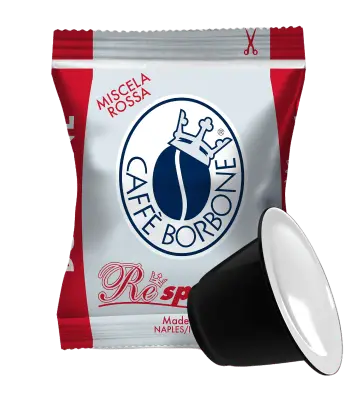 100 Capsules BORBONE Respresso RED Blend Nespresso Compatible
21,90 €


-webp_sm.webp)
-webp_sm.webp)
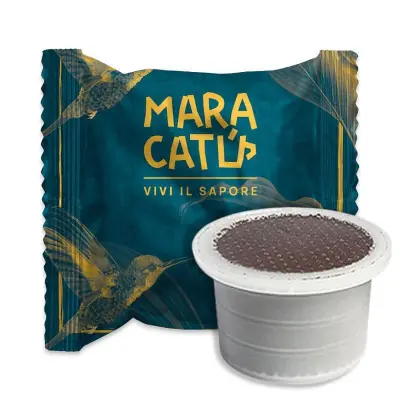 100 Maracatú Coffee Capsules INTENSO Uno System Compatible
19,90 €
 100 Maracatú Coffee Capsules Gran Crema Uno System Compatible
19,90 €
 100 Capsules Maracatú Decaffeinated Uno System Compatible
23,90 €
 80 Maracatú Coffee Capsules Gran Crema Lavazza Blue In Black Compatible
18,90 €
 16 Coffee Capsules Nescafè Dolce Gusto Espresso ARDENZA
4,99 €
More on this topic
More

Coffee Capsules Guide: How to Choose Your Perfect Taste
Read article

5 myths about capsule coffee
Read article
How to properly store coffee and coffee capsules: expert advice
Read article

Are you a reseller? Access the Maracatú B2B price list in just a few steps!
Read article
Capsule systems compared: Nespresso, Dolce Gusto, A Modo Mio, ESE and Caffitaly — which to choose
Read article
How to descale your coffee machine: a practical guide from over 15 years in coffee
Read article
Caffè Borbone: a guide to the Rossa, Nera, Blu, Oro and Dek blends
Read article
The coffee intensity scale: what the numbers on capsules really mean
Read article
Coffee roasting: the levels, and how each one changes the cup
Read article
Espresso: how the Italian classic was born
Read article
Water and the taste of coffee: the ingredient nobody talks about
Read article