





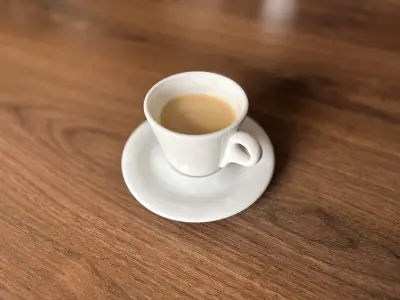
The chemistry of coffee: what happens in the cup
What a bean contains
We have been selling coffee for over fifteen years, and the most frequent question about taste rests on a misunderstanding: people assume bitterness comes from caffeine. It does not.
A roasted bean is about half insoluble fibre, which never enters the cup. The rest is a set of acids, caramelised sugars, oils and aromatic compounds, over a thousand of them identified.
Caffeine accounts for a little over one per cent of the weight and is only one of the bitter substances. Perceived bitterness comes mainly from compounds formed during roasting.
The acids present in the green bean, chlorogenic acids in particular, change with heat: some become sweeter, others sharper if the roast is pushed too far.
The oils, finally, do not dissolve in water but stay suspended in it. They give body and sustain the crema, and they are the first to oxidise as coffee ages.
In our beans and ground coffee these differences show when two blends are compared side by side: what changes is the ratio of acids to caramelised sugars, not only the stated intensity.
Roasting is a reaction, not heating
A green bean does not smell of coffee: it smells of grass and legumes. Everything we recognise is created in a few minutes of heat.
The engine is the Maillard reaction, the same one behind bread crust, in which sugars and amino acids combine and generate hundreds of aromatic compounds. Caramelisation of sugars works alongside it.
Around two hundred degrees the bean gives a first crack: internal water evaporates and the structure opens. This is where the roaster decides what coffee they will have.
Stopping early leaves more acids and floral notes. Going further degrades the acids, brings out chocolate and toast, and finally smoke covers everything else.
On how roast levels change taste in practice we have written a dedicated guide.
Extraction has an order
When water meets ground coffee, the substances do not come out together. They come out in sequence, and that is the key to almost every fault in the cup.
Acids and fruity notes come first, then sugars and the compounds we read as sweetness, and finally bitter substances and tannins.
An extraction that is too short stops at the first stage: the coffee tastes sour and hollow, not because the bean was wrong but because the sweet part has not arrived yet.
An extraction that runs too long reaches the third stage and takes what would be better left in the filter: hence the dry, astringent bitterness.
Grind size governs this speed more than any other parameter. We covered it in our guide to grinding.
Crema: what it actually is
Crema is not milk foam, nor an automatic sign of quality. It is an emulsion: microbubbles of carbon dioxide wrapped in coffee oils and proteins.
The carbon dioxide forms during roasting and stays trapped in the bean. Over the following weeks it escapes slowly, which is why very fresh coffee can give an exaggerated, unstable crema.
Pressure is required for the emulsion to form: that is why espresso has crema and filter coffee does not, with the same beans.
A crema that vanishes within seconds usually points to stale coffee or the wrong grind; a pale, thin crema often signals an extraction that ran too fast.
Robusta produces more crema than arabica because it contains more surface-active compounds: in Italian blends this is one of its jobs.
Anyone using Nespresso® capsules or other closed systems finds the crema already calibrated: pressure and grind were decided upstream.
Water is the invisible ingredient
A cup is over ninety per cent water, and water is not a neutral container: it takes part in the chemistry of extraction.
Dissolved minerals, magnesium and calcium in particular, bind aromatic compounds and carry them into solution. Water that is too pure extracts poorly and gives a flat cup.
Water that is too hard does the opposite: it saturates the extraction, dampens acidity and deposits scale in the machine, which then shifts temperatures.
Temperature counts as much as composition. Above ninety-six degrees more bitter compounds are extracted; below eighty-eight the sweet part lags behind.
We devoted a whole article to this, water and the taste of coffee, with practical guidance for home use.
Three practical conclusions
First: if the coffee tastes sour, the answer is not a darker roast. Slow the extraction down, by grinding finer or extending the time slightly.
Second: if it is bitter and dry, do the opposite. Coarser grind, slightly smaller dose, and check that the water is not too hot.
Third: freshness is not a cosmetic detail, it is chemistry. Oils oxidise and carbon dioxide escapes, and body and crema leave with them.
With capsules these parameters are fixed at the factory, which is why they give a consistent result: what remains to choose is intensity, explained in our guide to the intensity scale.
If you would like help matching a profile to your machine, our team is always available: get in touch.
Popular products
All products
More


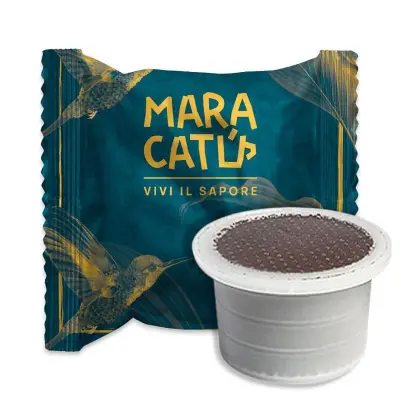 100 Maracatú Coffee Capsules Gran Crema Uno System Compatible
19,90 €


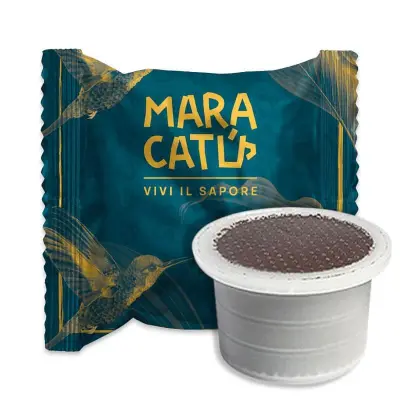 100 Capsules Maracatú Decaffeinated Uno System Compatible
23,90 €
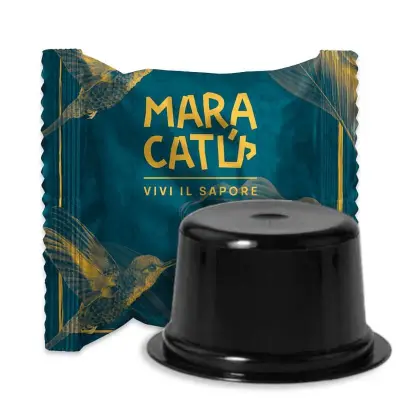 80 Maracatú Coffee Capsules Gran Crema Lavazza Blue In Black Compatible
18,90 €
More on this topic
More

Coffee Capsules Guide: How to Choose Your Perfect Taste
Read article


5 myths about capsule coffee
Read article
How to properly store coffee and coffee capsules: expert advice
Read article

Are you a reseller? Access the Maracatú B2B price list in just a few steps!
Read article

Capsule systems compared: Nespresso, Dolce Gusto, A Modo Mio, ESE and Caffitaly — which to choose
Read article
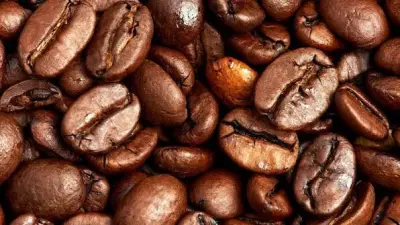
How to descale your coffee machine: a practical guide from over 15 years in coffee
Read article
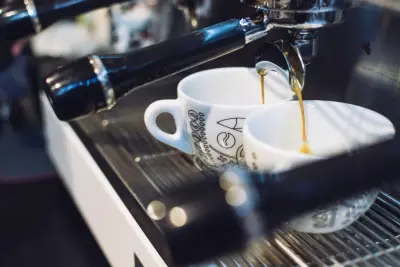
Caffè Borbone: a guide to the Rossa, Nera, Blu, Oro and Dek blends
Read article
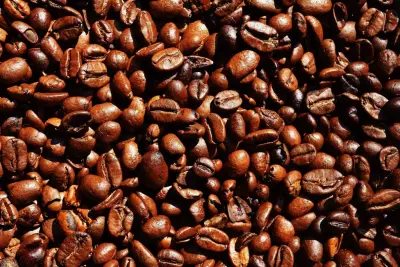
The coffee intensity scale: what the numbers on capsules really mean
Read article

The origins of coffee: myths, legends and the road to the Italian cup
Read article
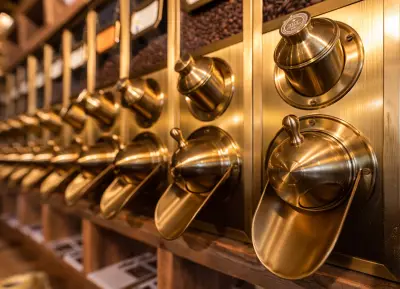
Coffee roasting: the levels, and how each one changes the cup
Read article
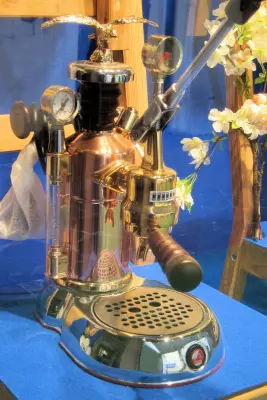
Espresso: how the Italian classic was born
Read article
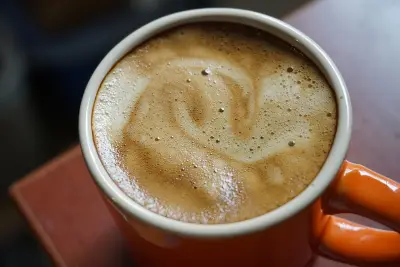
Water and the taste of coffee: the ingredient nobody talks about
Read article