






Caffeine and sleep: how to enjoy coffee without giving up your rest
A pleasure that runs through the whole day
We have been selling coffee for over fifteen years, and among our customers' questions one never goes out of fashion: how to enjoy the afternoon cup, or the one after dinner, without paying for it at night.
The topic concerns every coffee lover, because the day is often built around it: an espresso in the morning, another after lunch, a mid-afternoon pause, and at times a cup to close the evening meal.
At the same time rest has become a subject people take seriously, and some give up their evening coffee entirely for fear of a bad night.
The good news is that the two can live together. It takes understanding how caffeine works, knowing your own rhythm, and spreading the cups through the day with a little judgement.
We write from behind the counter, with the experience of advising people whose schedules and habits differ enormously.
In this article we describe what studies suggest and which habits we recommend in the shop. We stay on informational ground: for particular needs, your doctor remains the reference.
What caffeine does in the body
During waking hours the brain accumulates adenosine, a molecule that signals tiredness: the more of it builds up, the stronger the pull towards sleep.
Caffeine resembles adenosine closely enough to occupy its receptors. The tiredness signal does not vanish, it simply arrives muffled, which is why a coffee leaves us feeling sharper.
The effect is not eternal. The liver clears caffeine gradually, and studies suggest the process generally takes several hours, with remarkable differences from person to person.
Much of that speed is written in the genes. Some people metabolise quickly and sleep soundly even after a coffee with dinner, others still feel the lunchtime cup when they switch off the light.
Age, certain medications and habit play their part too: daily drinkers generally develop a degree of tolerance to the most visible effects.
This is why we distrust universal advice. The most honest starting point is to observe calmly how your own body responds, ideally over a full week rather than a single night.
The timing of the last cup
On the question of timing, research offers cautious guidance rather than iron rules.
Studies suggest that caffeine taken in the hours close to sleep can lengthen the time it takes to drift off and lighten the deepest phases of rest.
A simple principle follows: it is wise to leave several hours between the last caffeinated coffee and bed, and many people find it natural to stop in the early afternoon.
There is a detail we often mention at the counter, though. Someone who falls asleep easily after an evening espresso is not necessarily fooling themselves: falling asleep is simply not the whole story.
Some research indicates that sleep quality can shift even when nodding off is no problem, with a night that runs a little lighter and more fragmented than usual.
Caffeine also lives outside the coffee cup: tea, cola and chocolate carry smaller amounts, which still count towards the evening total.
The most practical way to find out remains a small personal experiment: a few days with the last cup moved earlier, then an honest comparison of how the mornings feel.
Decaf and the evening alternatives
Giving up the evening ritual is not necessary: the cup after dinner can change its contents without changing the gesture.
The first route is decaf. The modern kind concedes little to classic coffee, because today's methods remove nearly all the caffeine while respecting the aromas: we described the process in a dedicated article on decaf.
Its taste, it must be said, has improved markedly in recent years, and many customers who try it in the evening happily keep it for the afternoon as well.
The second route is orzo, the Italian barley coffee, a tradition that deserves more attention than it gets: naturally caffeine free, warm and mellow, well suited to family evenings.
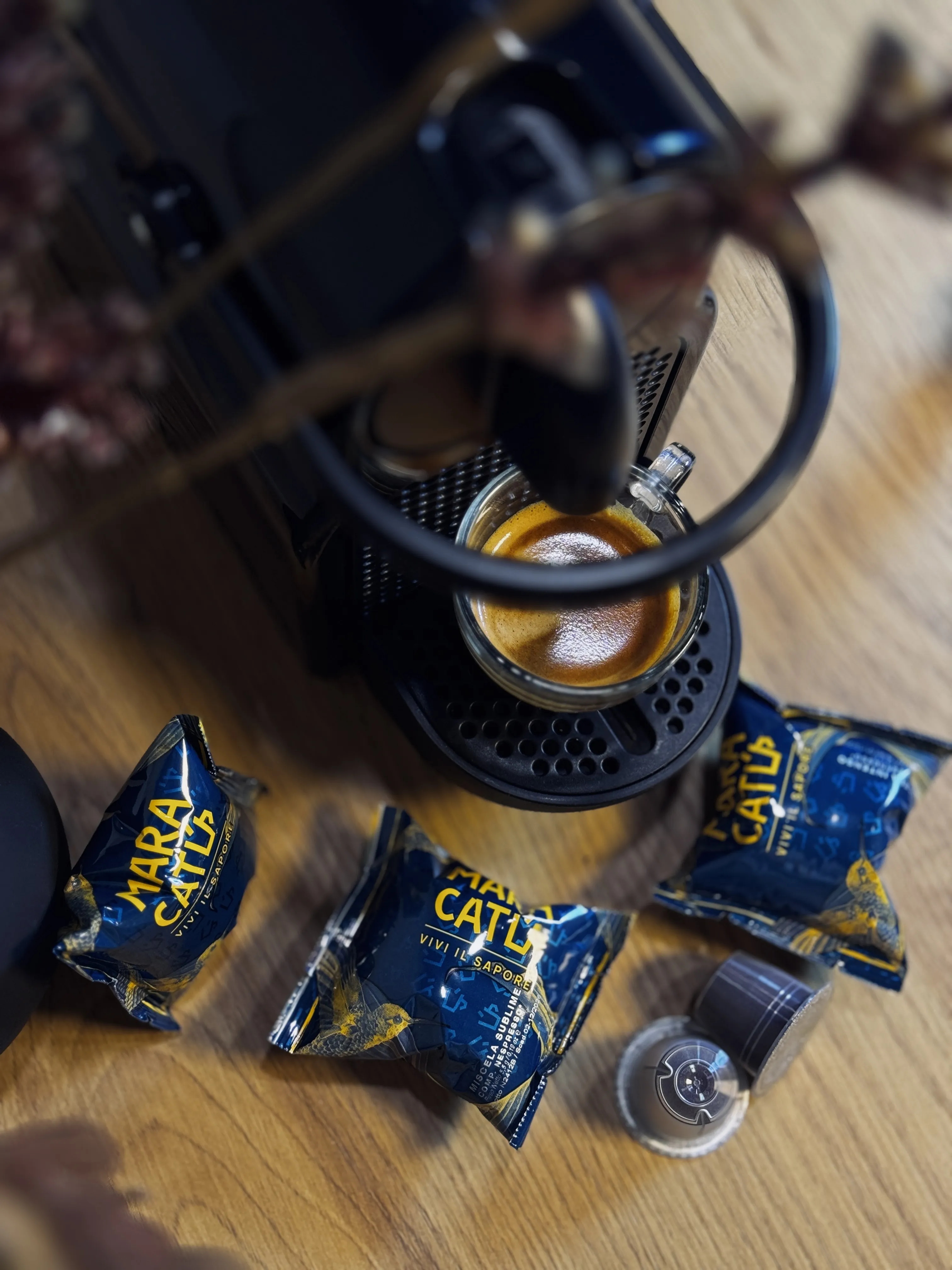
Anyone with a capsule machine will now find decaffeinated versions for all the common systems, from Nespresso® to Dolce Gusto®, from Lavazza A Modo Mio® to Caffitaly®: we keep the compatibilities in our section devoted to the systems.
The same goes for paper pods: among our ESE 44 pods decaf holds a steady place.
The advice we give most gladly is to keep both options in the cupboard: decaf for when real coffee calls, barley for the evenings when all you want is something warm.
Serving sizes and the rhythm of the day
The amount of caffeine depends on the serving size more than people assume. An espresso contains less of it than a large mug of filter coffee, for the simple reason that the volume is smaller.
Spending the day with a mug beside the keyboard means taking in caffeine continuously, while the small cup concentrates the pleasure into a few sips and closes the account there.
A rhythm that works for many looks like this: the boldest coffees in the morning, when the body welcomes them best, an espresso after lunch, and from the afternoon onwards small or already decaffeinated formats.
It is worth remembering that the intensity number printed on capsule boxes describes taste and body, not caffeine content: we covered this in our guide to the intensity scale.
The blend helps as well. Among our beans and ground coffee there are gentle profiles and lighter roasts that suit the afternoon better than the most assertive blends.
None of these habits demands sacrifice: the point is to move the cups around the day, not to take them away.
Coffee and rest can live together
The message close to our heart is a calm one: there is no need to choose between coffee and a good night.
Knowing your rhythm, moving the last caffeinated cup earlier and entrusting the evening to decaf or barley is, in most cases, enough to protect your rest without taking anything from the taste.
Every habit is personal, and what serves one customer may disappoint another: this is why we suggest gradual changes, one variable at a time, with a few days of patience.
It is also worth remembering that the evening coffee is often more ritual than need for energy: the warmth, the aroma, the moment at the table. That ritual can be kept whole by changing only what sits in the cup.
If you would like to put together a balanced cupboard, with a bold coffee for the morning and a gentle solution for the evening, we will gladly help you choose.
Our team knows the products and the compatibilities of the various systems: get in touch and we will suggest a combination suited to your machine and your evenings.
Image: coffee on a wooden table, HungryHuy, CC BY 2.0 (Wikimedia Commons).
Popular products
All products
More


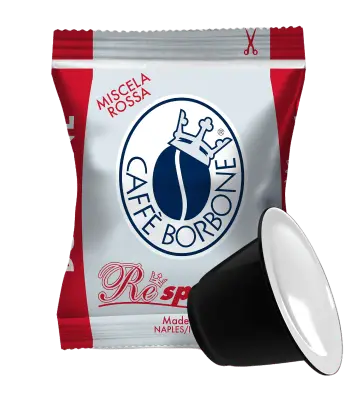 100 Capsules BORBONE Respresso RED Blend Nespresso Compatible
21,90 €


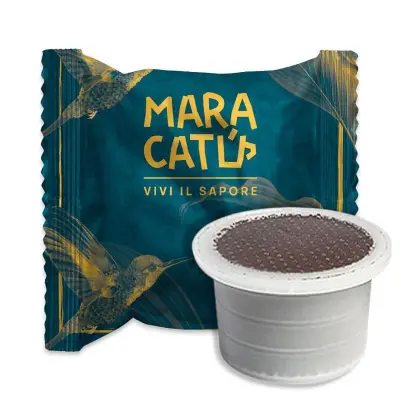 100 Maracatú Coffee Capsules Gran Crema Uno System Compatible
19,90 €
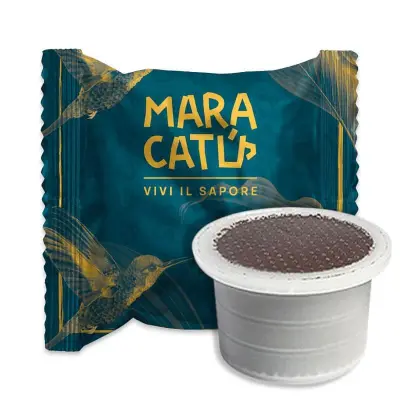 100 Capsules Maracatú Decaffeinated Uno System Compatible
23,90 €
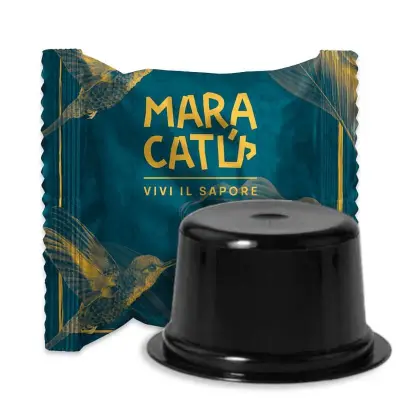 80 Maracatú Coffee Capsules Gran Crema Lavazza Blue In Black Compatible
18,90 €




More on this topic
More

Coffee Capsules Guide: How to Choose Your Perfect Taste
Read article


5 myths about capsule coffee
Read article
How to properly store coffee and coffee capsules: expert advice
Read article

Are you a reseller? Access the Maracatú B2B price list in just a few steps!
Read article

Capsule systems compared: Nespresso, Dolce Gusto, A Modo Mio, ESE and Caffitaly — which to choose
Read article

How to descale your coffee machine: a practical guide from over 15 years in coffee
Read article

Caffè Borbone: a guide to the Rossa, Nera, Blu, Oro and Dek blends
Read article

The coffee intensity scale: what the numbers on capsules really mean
Read article

The origins of coffee: myths, legends and the road to the Italian cup
Read article
Coffee roasting: the levels, and how each one changes the cup
Read article

Espresso: how the Italian classic was born
Read article

Water and the taste of coffee: the ingredient nobody talks about
Read article