





Coffee in the Kitchen: Sweet and Savoury Recipes with Moka and Espresso
Coffee as an ingredient: three rules before starting
Coffee leaves the cup more and more often: in the cream of a tiramisù, in a granita, in a chocolate cake, even on grilled meat. In the kitchen it behaves like a spice: bitterness, roasted notes and a dark colour that change the character of a dish.
Before the recipes, three rules that apply to all. First: cooking coffee should be as good as the coffee in the cup. Sugar, cream and cold all mute the aroma, and a coffee that is flat to begin with disappears completely in a dessert.
Second: in almost every preparation the coffee must be cooled first. Hot coffee melts creams and softens biscuits too much.
Third: no stale coffee. The remains of a moka pot left on the hob since morning have lost their aroma and gained only bitterness. Coffee for cooking is best brewed on purpose, shortly before use.
Here we look at coffee as an ingredient. Drinks, from cocktails to affogato, are in our post on coffee in cocktails, and shakerato and cold brew have their own guide to cold coffee.
Which coffee to cook with: moka, espresso or ground coffee
Moka coffee is the practical choice wherever volume is needed: the tiramisù dip, a granita, a cake in which coffee replaces part of the liquid. Ground coffee for the moka pot is in our coffee beans and ground coffee section.
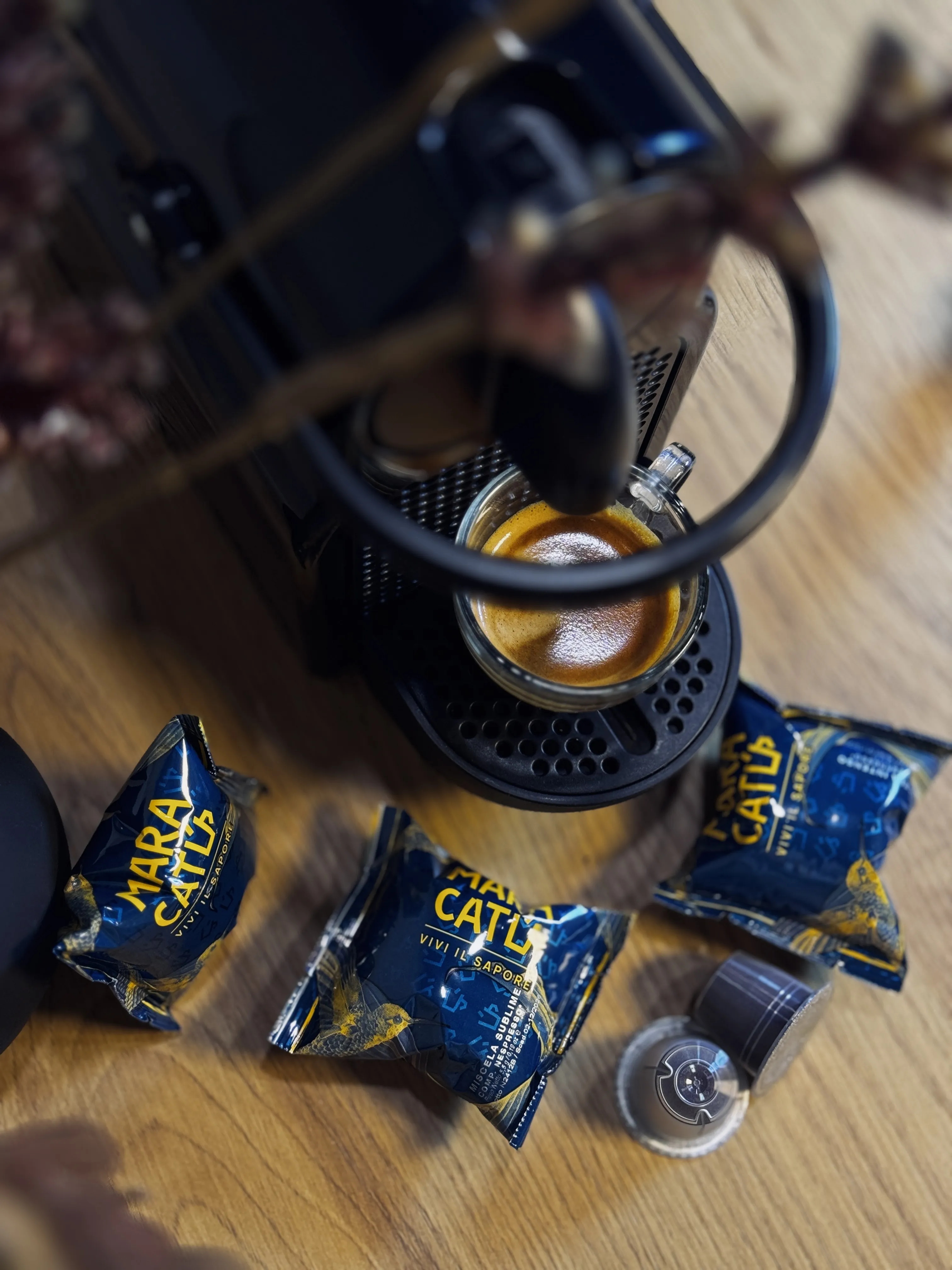
Espresso is right when a lot of flavour has to fit into very little liquid: a mascarpone cream, a semifreddo, a sauce. No professional machine is needed: ESE 44 mm pods give a consistent espresso, and so does an intense capsule for the Bialetti system or for the machine already at home.
Then there is ground coffee used dry, like a spice: a pinch in a biscuit dough, a spoonful in a marinade for meat. Here the coffee stays in the dish, so it needs a fine grind and a small quantity.
On the blend, our advice is simple: choose an intense coffee, medium-dark roasted, with some robusta. A delicate, floral arabica that shines in the cup is no longer noticeable in a dessert.
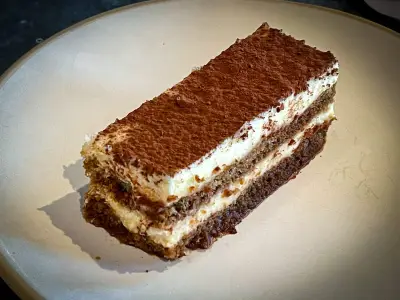
Tiramisù done properly
Tiramisù was born in north-eastern Italy in the second half of the twentieth century, and Veneto and Friuli Venezia Giulia still argue over who invented it. The structure is shared: savoiardi (sponge fingers) dipped in coffee, a mascarpone cream with eggs and sugar, alternating layers and unsweetened cocoa on top.
The coffee is the ingredient that decides everything. Brew it in a moka pot, let it cool completely and sweeten it only slightly, if at all: the cream is already sweet. How sugar changes coffee is covered in our post on coffee and sugar.
For a family-sized dish, a few small cups of moka coffee are usually enough. Use an intense blend: after hours in the fridge next to mascarpone, a light coffee leaves no trace.
The most common mistake is the dipping. A sponge finger should pass through the coffee quickly, a moment on each side, and go straight into the dish: it keeps absorbing moisture from the cream as the dessert rests. A soaked biscuit falls apart and the tiramisù ends up with a wet bottom.
Resting in the fridge is part of the recipe: a few hours is the minimum, overnight is better. Dust the cocoa only just before serving, otherwise it absorbs moisture and darkens. For decoration, chocolate-coated coffee beans from our sweets and sugar section are a classic.
Granita, semifreddo and panna cotta: coffee in cold desserts
Coffee granita belongs to the Sicilian tradition, and to Messina in particular, where it is served with whipped cream and eaten with a soft brioche. It is also one of the simplest desserts: moka coffee sweetened while still hot, cooled, and placed in a shallow container in the freezer.
The work is breaking up the crystals with a fork roughly every half hour, until the mixture turns into a coarse snow. The grainy texture is intentional. Here too the coffee must be intense: cold dulls the aroma.
In a coffee semifreddo, the coffee goes into the base of custard and whipped cream before freezing. Espresso works best here: little water and plenty of flavour, because the base is already rich in fat and sugar.
Coffee panna cotta is made in two ways: by dissolving an espresso in the hot cream before adding the gelatine, or by steeping a few spoonfuls of coarsely ground coffee in the cream and straining it carefully.
For serving, small glasses and glass cups show off the layers; our accessories and cups section has several options.
Coffee in baking: biscuits, cakes and chocolate
In baking, coffee plays two roles. The first is discreet: a small amount of espresso in a chocolate cake does not taste of coffee, but makes the chocolate deeper and less flat. Coffee and cocoa share many roasted notes and reinforce each other.
In practice, replace part of the liquid in the recipe, water or milk, with the same amount of cooled coffee. A couple of small cups in a cake batter is plenty, without anyone recognising the ingredient.
The second role is the leading one: coffee biscuits, a loaf cake, a buttercream or mascarpone cream for filling. Both liquid coffee, as concentrated as possible, and finely ground coffee worked into a shortcrust dough work here.
The heat of the oven drives off part of the volatile aromas. Coffee comes through more clearly in uncooked fillings than in a baked batter: for batters, start with a coffee more intense than seems necessary.
The savoury side and a few practical tips
Coffee also has a savoury side, less familiar in Italy but well established elsewhere. The best known is the barbecue rub: finely ground coffee mixed with salt, pepper, brown sugar and paprika, massaged into beef before grilling or slow cooking. Once cooked it does not taste of coffee: it forms a dark crust and deepens the meat's roasted notes.
The second use is a spoonful of espresso in a dark sauce for red meat, in a stew or in a chili. It goes in towards the end; taste and stop early: it should add depth, not make itself recognisable.
A few practical rules. Coffee brewed for cooking keeps in the fridge, in a closed container, for a day or two at most; after that it loses aroma and turns slightly sour. Coffee used as a spice should be ground shortly before use: once ground, it ages quickly.
Flavoured coffees are best avoided, unless that added flavour is exactly what the dessert calls for.
If in doubt about which blend or format suits a recipe, get in touch: the Maracatú team is happy to advise.
Popular products
All products
More


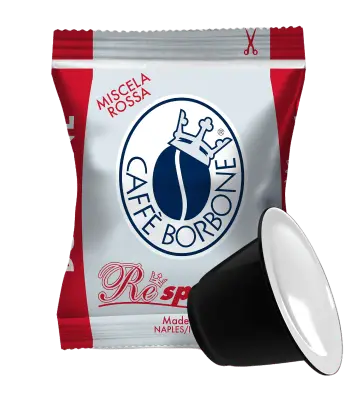 100 Capsules BORBONE Respresso RED Blend Nespresso Compatible
21,90 €


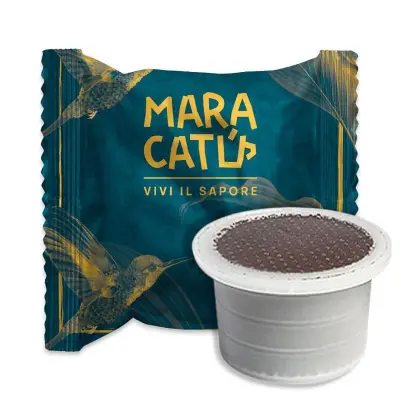 100 Maracatú Coffee Capsules Gran Crema Uno System Compatible
19,90 €
 100 Capsules Maracatú Decaffeinated Uno System Compatible
23,90 €
 80 Maracatú Coffee Capsules Gran Crema Lavazza Blue In Black Compatible
18,90 €

More on this topic
More

Coffee Capsules Guide: How to Choose Your Perfect Taste
Read article

5 myths about capsule coffee
Read article
How to properly store coffee and coffee capsules: expert advice
Read article

Are you a reseller? Access the Maracatú B2B price list in just a few steps!
Read article
Capsule systems compared: Nespresso, Dolce Gusto, A Modo Mio, ESE and Caffitaly — which to choose
Read article
How to descale your coffee machine: a practical guide from over 15 years in coffee
Read article
Caffè Borbone: a guide to the Rossa, Nera, Blu, Oro and Dek blends
Read article
The coffee intensity scale: what the numbers on capsules really mean
Read article

The origins of coffee: myths, legends and the road to the Italian cup
Read article
Coffee roasting: the levels, and how each one changes the cup
Read article
Espresso: how the Italian classic was born
Read article
Water and the taste of coffee: the ingredient nobody talks about
Read article