





Decaffeinated coffee: how it is made and what changes in the cup
Everything is decided on the green bean
The first misunderstanding is about timing. Caffeine is not removed from roasted coffee but from the green bean, before it ever reaches the roaster.
The reason is practical. In a green bean the caffeine can still travel with moisture, whereas after roasting it sits locked inside a dry, porous structure alongside every aromatic molecule. Removing it at that stage would take the rest with it.
The process always begins the same way: the beans are swelled with water or steam until they nearly double in volume. Only then does the caffeine become extractable and the real work start.
The first commercial decaffeination dates from the early twentieth century, when the German Ludwig Roselius developed a solvent-based process. The methods have changed several times since, but the starting point has not.
What separates a good decaf from a mediocre one comes down to this: taking the caffeine out while leaving the sugars, acids and aroma precursors inside, since those are what roasting turns into flavour.
The three methods in use, and how to spot them on the label
There are essentially three widespread processes, and they differ in what carries the caffeine away.
The first works with selective solvents, usually ethyl acetate or dichloromethane. The solvent binds to the caffeine and is then driven off with steam and heat. When the ethyl acetate comes from fermented sugarcane, as it often does in Colombia, the label will say sugarcane or natural. It is the most common method at industrial scale.
The second uses water alone. The beans give everything up to a bath; activated carbon filters hold back the caffeine while the aromas stay in the liquid, which is then returned to the beans. The name you will most often see is Swiss Water. No solvent is involved, and the cup is almost always the cleanest of the three.
The third uses carbon dioxide taken above its critical point, into a state between gas and liquid. In that form it passes through the beans and captures caffeine extremely selectively, leaving nearly everything else intact. It needs complex plant and is typical of large volumes.
On quality packaging the method is almost always declared. Where nothing is stated, in practice it is usually the first.
Why decaf always looks darker
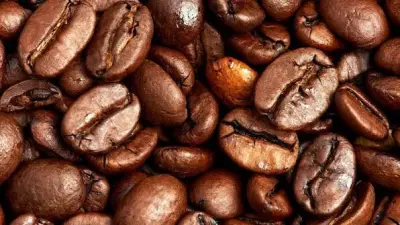
Anyone comparing two bags from the same roaster spots it at once: decaffeinated beans look darker, even when the stated roast level is identical.
This is not a stylistic choice. The water stage changes the structure of the bean and reduces its surface sugars, so during roasting the browning reaction starts earlier and moves faster. The roaster has to use different curves, and not everyone does so with equal care.
A decaffeinated bean is also more brittle. It fractures more easily in the grinder and tends to produce a higher share of fine dust, which slows extraction in an espresso machine.
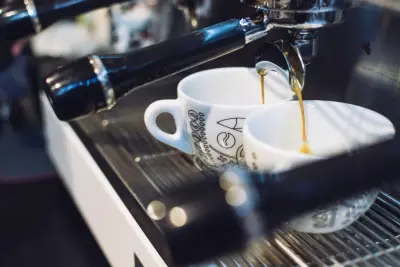
The practical consequence concerns anyone adjusting a grinder: with decaf it is almost always worth opening one step coarser than with regular coffee. If the shot runs slow and the coffee tastes bitter, this is usually the culprit rather than the blend.
How much caffeine is actually left
Decaffeinated does not mean caffeine-free, and the difference matters to anyone particularly sensitive.
European regulation sets a precise threshold: roasted coffee may be called decaffeinated if caffeine does not exceed 0.1 per cent of the dry matter. For instant coffee the limit is higher, at 0.3 per cent.
Translated into a cup, what remains is a very small amount, on the order of a few milligrams against the several dozen in a normal espresso. For the great majority of people this is irrelevant. Anyone who reacts even to minimal doses, or who is following medical advice, should take it into account and discuss it with their doctor rather than with us.
One detail that often escapes notice: residual caffeine also depends on the format. A long coffee extracts for longer and brings slightly more into the cup than a short espresso, decaf included.
How to choose it and how to store it
Three pointers that in our experience make the difference.
Check the method on the label. If you want the cleanest profile, Swiss Water and carbon dioxide preserve aroma best. Ethyl acetate from sugarcane is a good compromise and easy to find.
Look at the roast date, not only the expiry. A decaffeinated bean is more porous and ages faster than a regular one, so a pack that is months old loses more than a caffeinated coffee would.
Buy smaller quantities more often. It is the least welcome advice and the most effective, because with a product that oxidises quickly freshness counts for more than the blend.
At home the usual rule applies: airtight container, away from light and heat, never in the fridge. Decaf exists both among whole-bean and ground coffees and in capsule and pod systems, where single-dose packaging has already solved the storage problem.
When it makes sense to choose it
The obvious case is the evening, when you want the ritual without paying for it in sleep. It is not the only one, nor even the most common among our customers.
Many use it for the second or third coffee of the day, keeping the caffeinated ones for the morning. Others choose it during pregnancy or on medical advice. Others simply because caffeine, past a certain point, takes away their clarity instead of adding to it.
Advice we give often: drink it in the same format as your normal coffee, not lengthened. Decaf has a slightly shorter structure, and diluting it highlights exactly what it lacks.
And if the first attempt disappoints, try a different method before giving up altogether. The gap between an industrial decaf and a water-processed one is wider than the gap between two caffeinated blends.
For a suggestion on which to try first, contact us. The Maracatú team will gladly help.
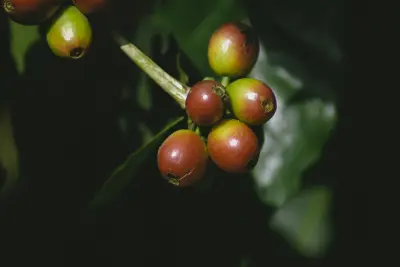
Image: ripening coffee cherries, Matthew T Rader, CC BY-SA 4.0 (Wikimedia Commons).
Popular products
All products
More


 100 Capsules BORBONE Respresso RED Blend Nespresso Compatible
21,90 €


-webp_sm.webp)
-webp_sm.webp)
 100 Maracatú Coffee Capsules INTENSO Uno System Compatible
19,90 €
 100 Maracatú Coffee Capsules Gran Crema Uno System Compatible
19,90 €
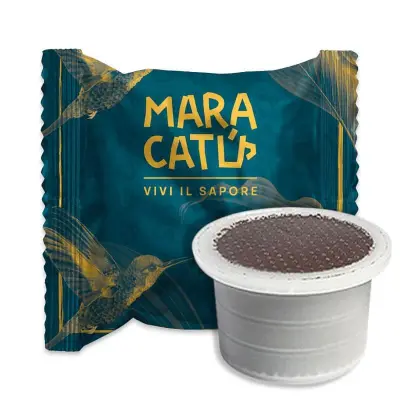 100 Capsules Maracatú Decaffeinated Uno System Compatible
23,90 €
 80 Maracatú Coffee Capsules Gran Crema Lavazza Blue In Black Compatible
18,90 €
 16 Coffee Capsules Nescafè Dolce Gusto Espresso ARDENZA
4,99 €
More on this topic
More

Coffee Capsules Guide: How to Choose Your Perfect Taste
Read article

5 myths about capsule coffee
Read article
How to properly store coffee and coffee capsules: expert advice
Read article

Are you a reseller? Access the Maracatú B2B price list in just a few steps!
Read article
Capsule systems compared: Nespresso, Dolce Gusto, A Modo Mio, ESE and Caffitaly — which to choose
Read article
How to descale your coffee machine: a practical guide from over 15 years in coffee
Read article
Caffè Borbone: a guide to the Rossa, Nera, Blu, Oro and Dek blends
Read article
The coffee intensity scale: what the numbers on capsules really mean
Read article
The origins of coffee: myths, legends and the road to the Italian cup
Read article
Coffee roasting: the levels, and how each one changes the cup
Read article
Espresso: how the Italian classic was born
Read article
Water and the taste of coffee: the ingredient nobody talks about
Read article