





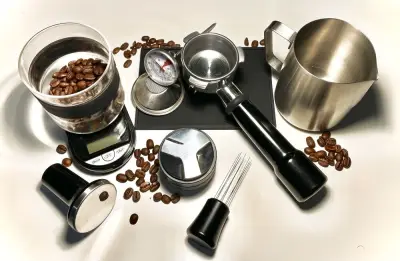
The coffee accessories worth having at home, and those you can skip
Order of importance first, shopping second
We have been selling coffee for over fifteen years, and the question about accessories almost always arrives at the same moment: after the machine has been bought, when the cup is not yet what was hoped for.
A useful answer starts with a hierarchy. What weighs on the final result, in this order, is the freshness of the coffee, the quality of the water, the dose and the grind, and only then the tools.
In practice that means a container which seals properly matters more than an elaborate tamper, and a water filter moves the flavour further than a scale accurate to a hundredth of a gram.
Arranged that way, the accessories that earn space in a kitchen are few, and they differ by system: capsules and pods ask for different things than a moka pot.
The sections below separate them by system, and the closing one lists those that, in our experience, end up in a drawer after a fortnight.
The airtight container, the most underrated of all
Ground coffee loses the most delicate part of its aroma within days once exposed to air. Whole beans hold out longer, but they are not immune either.
There are four enemies and they are always the same: oxygen, moisture, light and heat. An opaque container that genuinely seals keeps all four out; an open pack folded over on the worktop stops none of them.
The rule we repeat most often concerns volume: pick a container sized for two or three weeks of use, no larger. Half a container empty means half a container of air.
The fridge, by contrast, is the wrong place: coffee absorbs odours and every opening creates condensation. The freezer only makes sense for sealed stock that will not be reopened until it is used.
We have a dedicated guide on storing coffee and capsules, and the containers themselves sit in accessories and cups.
For capsule and pod users
With a closed system the coffee variable is already settled at the factory, so accessories serve two purposes only: keeping things tidy and keeping them clean.
The first useful object is a capsule holder. It is not decoration: a capsule left in a drawer alongside cutlery picks up moisture and odours, and the aluminium film scores easily. Drawer models also collect the spent ones. The section is capsule and pod holders.
The second is a cleaning routine for the brew unit. A blank water cycle before the first coffee of the day and one after the last clears out old coffee residue, the commonest cause of a rancid aftertaste in capsule machines.
The third, for anyone using paper pods, is a closed pod box: paper takes on moisture faster than aluminium, and a damp pod extracts badly. The formats are in ESE 44 mm pods.
What almost never helps is the universal adapter promising to fit one format into a machine designed for another. The outcome depends on pressure and chamber geometry, and in most cases it disappoints.
For the moka pot, for filter and for maintenance
The moka pot has exactly one indispensable accessory: a spare gasket. It hardens over time, steam starts escaping around the sides, and extraction degrades with no obvious cause. Replacing it once a year settles the matter.
The second is the plate filter, which oxidises and clogs. A clogged filter slows the rise and scorches the coffee in the final phase.
For filter and immersion brewing, the object that shifts the most is a plain scale accurate to the gram. Laboratory precision is unnecessary: repeating the same dose every morning is what matters, because it is the only way to tell whether a change worked.
On maintenance, two items count more than all the rest: descaler and water filter, both in descalers and filters. Limescale does not only damage the machine, it alters the taste long before anything breaks.
The full procedure, with timings and warnings, is in our guide on descaling a coffee machine. It applies to capsule and pod machines alike.
What ends up in the drawer
An honest list of accessories has to say what to leave on the shelf as well, and our years behind the counter are long enough to allow it.
The dial milk thermometer. Useful for a week, after which the hand learns on its own to recognise the moment the pitcher becomes too hot to hold.
The decorative tamper that does not match the basket. If the diameter is wrong, the tamp stays uneven and the fault is worse than before.
The blade grinder. It does not grind, it shatters: it produces dust and coarse chunks at the same time, and no setting corrects that. On why grind size matters so much we wrote a dedicated guide.
Cups that are too thin or too cold. The cup is not an aesthetic detail, and we covered it separately in why the cup matters. Cups and glasses sit in accessories and cups, along with the rest of the kitchen kit.
For any doubt about which accessory a particular machine really needs, please get in touch. The Maracatú team is glad to help.
Popular products
All products
More


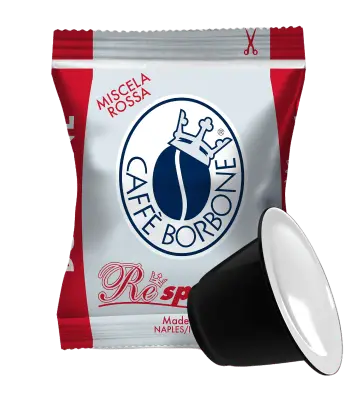 100 Capsules BORBONE Respresso RED Blend Nespresso Compatible
21,90 €


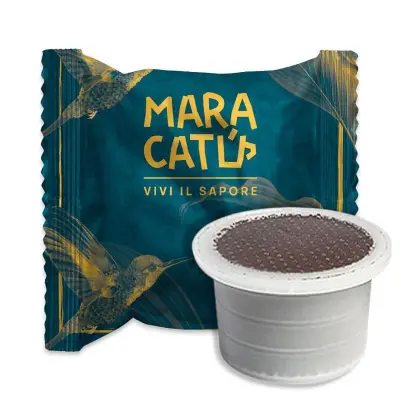 100 Maracatú Coffee Capsules Gran Crema Uno System Compatible
19,90 €
 100 Capsules Maracatú Decaffeinated Uno System Compatible
23,90 €
 80 Maracatú Coffee Capsules Gran Crema Lavazza Blue In Black Compatible
18,90 €

 16 Coffee Capsules Nescafè Dolce Gusto Espresso ARDENZA
4,99 €
More on this topic
More

Coffee Capsules Guide: How to Choose Your Perfect Taste
Read article


5 myths about capsule coffee
Read article
How to properly store coffee and coffee capsules: expert advice
Read article

Are you a reseller? Access the Maracatú B2B price list in just a few steps!
Read article

Capsule systems compared: Nespresso, Dolce Gusto, A Modo Mio, ESE and Caffitaly — which to choose
Read article

How to descale your coffee machine: a practical guide from over 15 years in coffee
Read article

Caffè Borbone: a guide to the Rossa, Nera, Blu, Oro and Dek blends
Read article

The coffee intensity scale: what the numbers on capsules really mean
Read article

The origins of coffee: myths, legends and the road to the Italian cup
Read article
Coffee roasting: the levels, and how each one changes the cup
Read article
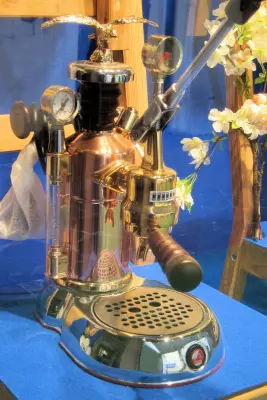
Espresso: how the Italian classic was born
Read article

Water and the taste of coffee: the ingredient nobody talks about
Read article