



Coffee and tiredness: when it really helps and when it does not
Coffee and tiredness: the cup for low-energy moments
Mid-afternoon, the screen in front of your eyes, the same line read for the third time. Your eyelids grow heavy and your thoughts turn to the coffee machine.
It is a scene we know well. For many of us, coffee is the first help we think of when our energy drops.
And it often works: after a few minutes we feel more awake and pick up what we were doing.
It is no coincidence that the coffee break is one of the most deeply rooted habits in days of work and study.
At other times, though, the cup does not seem to be enough, or it leaves us jittery without taking the tiredness away.
The difference depends largely on the kind of tiredness and on the moment when we drink the coffee.
In this guide we look at what caffeine does when we are tired, in which situations it can help and in which it is better to choose another route.
We will also find out how to tell a short night, the afternoon dip and lasting tiredness apart, and which alternatives to consider when caffeine is not the right choice.
This is general information that does not replace medical advice: tiredness that is intense or lasts a long time always deserves a conversation with a health professional.
What coffee does when we are tired
We often say that coffee gives us energy. Strictly speaking, however, that is not the case.
The energy the body needs comes from food, and a cup of espresso without sugar provides very few calories.
Added sugar or milk change the calorie count, but they are not the reason why we feel more awake after a coffee.
What caffeine does is different: it temporarily reduces the perception of tiredness and increases the feeling of alertness.
The need for rest, however, remains. When the effect wears off, the tiredness makes itself felt again.
That is why caffeine can help us get through a difficult moment, but it does not replace sleep.
The effect, moreover, is not immediate. It is generally felt gradually after drinking the coffee and lasts for some hours, with considerable differences from one person to another.
People who drink coffee every day may also notice a less marked effect than those who drink it rarely.
Stopping suddenly after a long period of daily drinking, on the other hand, can bring headaches and a feeling of tiredness for a few days.
If you would like to understand better how caffeine works and why everyone clears it at a different pace, you can read our article on caffeine and sleep.
Finally, there is the part that does not depend on caffeine: getting up, walking the few steps to the kitchen, waiting for the coffee to be ready. This short interruption can also help us feel better.
For those who work from home, we have gathered some suggestions in our guide on how to organise your coffee break.
Not all tiredness is the same
To understand when coffee can help, it is useful to ask first of all where the tiredness comes from.
Sometimes it depends on what we have been doing in the last few hours.
There is mental tiredness: after hours spent on the same task, attention tends to drop.
Here coffee can lend a hand, but often what is needed most is a change of activity for a few minutes.
Then there is physical tiredness. After intense effort the body needs rest, water and nourishment: coffee can accompany recovery, but it does not replace it.
Those who do sport can find more on the relationship between caffeine and physical activity in our article on coffee and cycling.
There are also less obvious causes. Skipping a meal or staying for a long time in a closed room, for example, can contribute to the feeling of fatigue.
In these cases the cup of coffee may cover up the signal without dealing with its source.
At other times, though, tiredness has to do with sleep and the time of day. These are the situations in which we most often think of coffee, and it is useful to learn to tell them apart.
A short night, the afternoon dip or lasting tiredness: how to tell them apart
When tiredness depends on sleep or on the time of day, we can distinguish three frequent situations, which call for different responses.
Let us start with sleepiness after a short night. We usually recognise it straight away: we know we slept little, and the urge to close our eyes may stay with us from the morning onwards.
In this case coffee can help us stay alert for a few hours, but it does not make up for the rest we missed.
In the morning a cup of coffee can accompany waking up, though it does not replace breakfast. If this moment of the day interests you, you can read our article on coffee at breakfast.
The most useful response, in any case, is to catch up on sleep as soon as possible, starting the following evening.
Those who have the chance can also allow themselves a short rest during the day.
Some studies have looked at combining a coffee with a short rest straight afterwards, observing in certain cases a reduction in sleepiness. The results, however, concern specific situations and do not apply in the same way to everyone.
The early-afternoon dip is a different matter. Many people notice a drop in attention after lunch, sometimes even after a good night’s rest.
It differs from the sleepiness of a short night because it arrives at a particular time of day and tends to ease by itself as the afternoon goes on.
When possible, it can be useful to keep the simpler tasks for this time and leave those that require more concentration for other moments.
For those in the habit of an espresso at the end of lunch, the cup falls precisely in this phase and can accompany it.
Finally, there is tiredness that lasts. It does not arrive at a particular hour and does not go away after a good night’s sleep: it may stay with us for days or weeks.
Here coffee is not the right tool. There may be many causes and, if the lack of energy continues despite adequate rest, it is advisable to talk to your doctor.
Telling these three situations apart helps us understand when a cup of coffee can be a help and when something else is needed.
When coffee is not enough or not the right choice
There are situations in which another cup is not the most useful answer.
The first is the late afternoon or evening. Caffeine taken in the hours close to bedtime can interfere with sleep, and a disturbed night often means more tiredness the next day.
A cycle can form in this way: we sleep little, drink more coffee to compensate and in the evening struggle to fall asleep.
To break it, it may help to bring the last coffee of the day gradually forward.
The second concerns the amount. Beyond a certain threshold, different for each person, caffeine can cause nervousness, agitation and a faster heartbeat, without taking the tiredness away.
The third is driving. If sleepiness arrives while we are at the wheel, a coffee may help for a short stretch, but the safest choice is to stop and rest.
In none of these cases should coffee be regarded as a remedy.
When we want the ritual of the break without more caffeine, we can choose a decaffeinated coffee. The process greatly reduces the caffeine but does not remove it completely.
In our section on coffee systems and among the ESE 44 mm pods decaffeinated options are also available, to be chosen according to compatibility with your machine.
Another possibility is orzo, or barley coffee, which is naturally caffeine-free. It does contain gluten, however, and is not suitable for those who have to avoid it.
Ginseng coffee is often associated with the idea of energy, but many preparations contain soluble coffee, and therefore caffeine, as well as sugar. It should not be credited with special properties: it is a drink to choose for its taste, reading the label.
We have described these two drinks in our guide to ginseng, orzo and chocolate in capsules.
Small habits for low-energy moments
Putting these observations together, we can draw out a few simple habits to try.
The first is to ask yourself, before making another cup, what kind of tiredness it is. Often the answer already suggests what to do.
The second is observing your own reactions. Everyone has a different sensitivity, and what is the right amount for one person may be too much for another.
The third is remembering that sleep, regular meals, water and a little exercise remain the basis of everyday energy.
The fourth is keeping more than one option at home: your favourite coffee for the morning and a decaffeinated one for when you fancy an extra cup.
Taste matters too. A blend we like makes the break a moment to look forward to, and not just a way of staying awake.
In our whole bean and ground coffee section you will find various blends for the moka pot and the espresso machine, to choose according to your preferences.
It is worth remembering that a more intense taste does not necessarily mean more caffeine: the content depends on the blend, the dose and the brewing method.
To sum up, coffee can be a good help when tiredness is passing, as after a short night or during the early-afternoon dip.
It does not replace rest, however, and drunk too late or in excessive amounts it can make recovery harder.
After all, the next time your eyelids grow heavy in the middle of the afternoon, the question to ask is a simple one: did I get too little sleep, is it the usual after-lunch dip, or have I been short of energy for days?
And when the answer leads to a good cup of coffee, it is worth enjoying it unhurriedly.
If you are looking for a blend for your breaks, a decaffeinated coffee or the system best suited to your rhythm, contact us: the Maracatú team is always happy to help you choose.
Popular products
All products
More


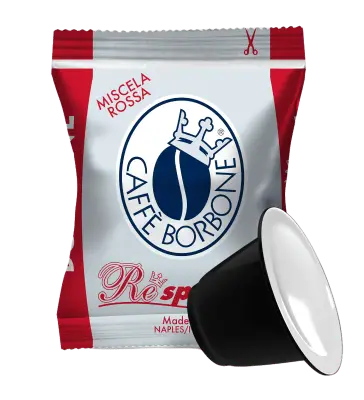 100 Capsules BORBONE Respresso RED Blend Nespresso Compatible
21,90 €


 100 Maracatú Coffee Capsules Gran Crema Uno System Compatible
19,90 €
 100 Capsules Maracatú Decaffeinated Uno System Compatible
23,90 €



More on this topic
More

Coffee Capsules Guide: How to Choose Your Perfect Taste
Read article


5 myths about capsule coffee
Read article
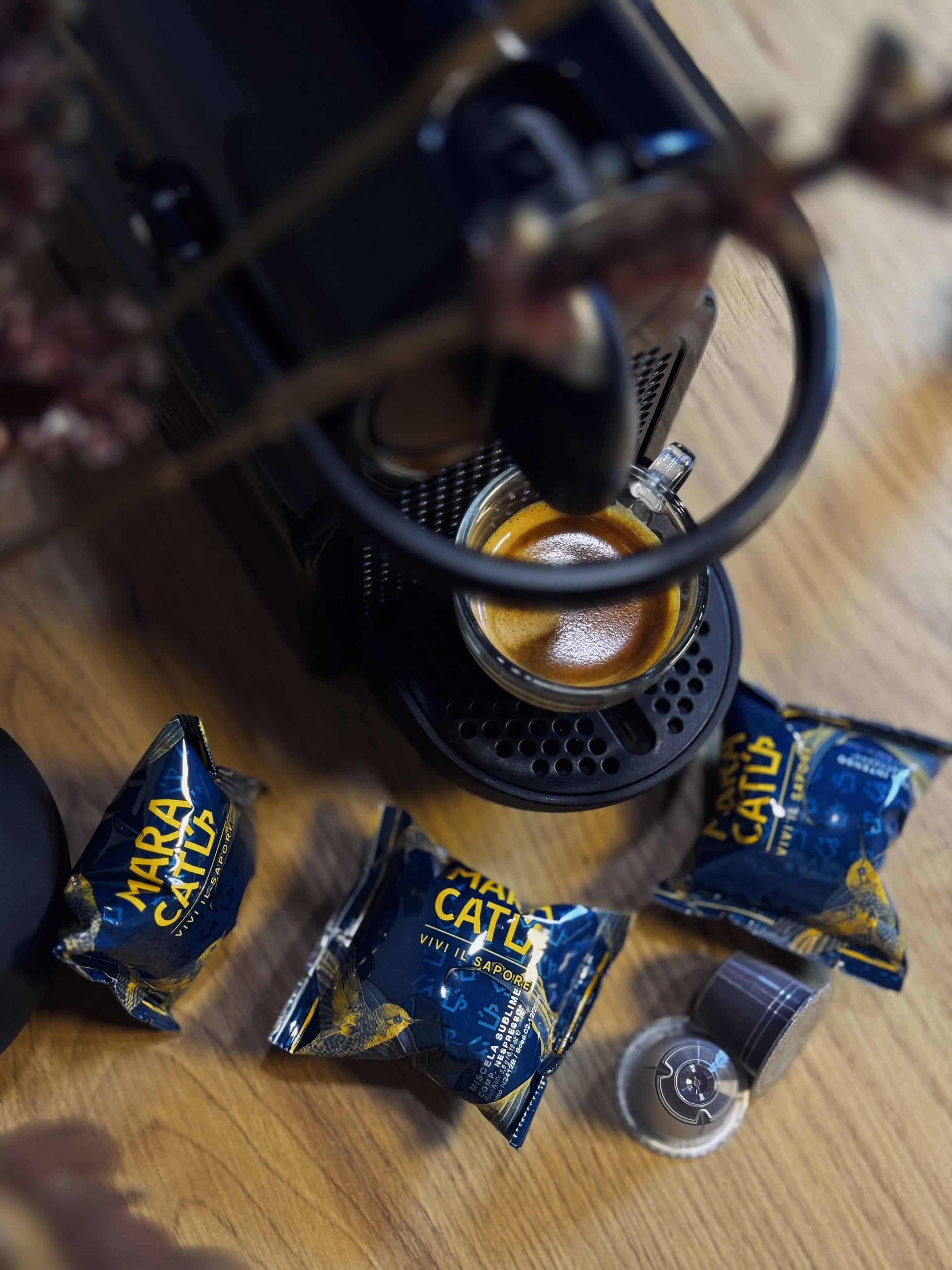
How to properly store coffee and coffee capsules: expert advice
Read article

Are you a reseller? Access the Maracatú B2B price list in just a few steps!
Read article

Capsule systems compared: Nespresso, Dolce Gusto, A Modo Mio, ESE and Caffitaly — which to choose
Read article

How to descale your coffee machine: a practical guide from over 15 years in coffee
Read article

Caffè Borbone: a guide to the Rossa, Nera, Blu, Oro and Dek blends
Read article

The coffee intensity scale: what the numbers on capsules really mean
Read article

The origins of coffee: myths, legends and the road to the Italian cup
Read article

Coffee roasting: the levels, and how each one changes the cup
Read article
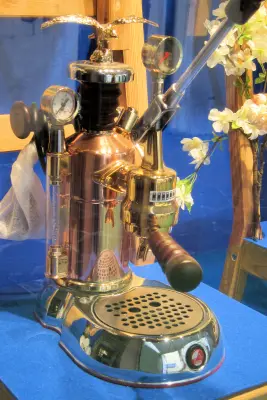
Espresso: how the Italian classic was born
Read article

Water and the taste of coffee: the ingredient nobody talks about
Read article