





Coffee grind size: how to choose the right one
The detail that matters more than the blend
Customers often tell us they changed blend three times and still did not find the cup they had in mind. Almost always the blend was not the problem.
Grind size decides how much of the coffee surface meets the water, and for how long. It is the one parameter you can correct in seconds, and more than any other it separates a full cup from an empty one.
Roasting decides the character of the bean. Grinding decides how much of that character actually reaches the cup.
What happens when the bean is broken up
A whole bean offers water very little surface. Grinding it increases that surface enormously, and with it the speed at which substances pass into the drink.
Hence a simple rule that holds for every method: the shorter the contact with water, the finer the grind must be. Espresso works in about twenty five seconds and wants a fine powder. A French press soaks the coffee for minutes and wants a coarse grind.
When that balance breaks, you taste it immediately. Too coarse and the water runs through without taking enough: the coffee is watery, sharp, short on aroma. Too fine and the water struggles, stays longer than it should and takes what is better left behind: it turns bitter and drying.
The right grind for each method
Moka pot. Medium grind, a touch finer than filter. A very common mistake is using espresso powder in a moka: the pot builds pressure, the coffee struggles up and arrives burnt. Level the powder, never tamp it.
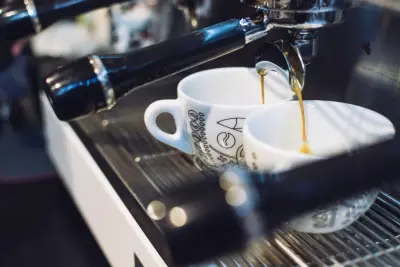
Espresso. Fine grind, and the margin here is genuinely narrow. If the shot runs fast and the crema is pale, the grind is too coarse. If it drips and tastes burnt, it is too fine. Adjust in small steps, never in jumps.
French press. Coarse and even. Too fine and the powder passes the mesh and settles at the bottom of the cup.
Filter and V60. Medium grind, similar to granulated sugar. Evenness matters most here: particles of very different sizes extract at different speeds and the cup loses clarity.
Our beans and ground coffee section carries both routes, and the espresso machines section covers home setups.
How to tell the grind is wrong
You do not need a trained palate. Two signs are enough, and anyone can read them.
Time. On an espresso machine, a shot that runs out in seconds or takes almost a minute is telling you about the grind before the taste does.
The crema. Pale and vanishing quickly usually means too coarse. Dark with a lighter patch in the middle often means too fine.
A third sign concerns the moka pot: if it whistles and spits, or the coffee comes out in bursts and very dark, the grind is almost always too fine or it was tamped.
The practical advice is to change one thing at a time and taste. Adjust grind, dose and temperature together and you no longer know what worked.
Grinding at home or buying it ground
Grinding fresh is the most direct way to gain aroma, because the surface just exposed to air is the one that loses its smell fastest. People who switch to this habit notice it within days.
That said, pre ground coffee is not a fallback. For the everyday moka, for the office, or for anyone who does not want another step in the morning, a well sealed pack used regularly gives very good results. Consistency counts more than the ritual.
If several methods share one kitchen, the simplest route is to keep beans for espresso and suitable ground coffee for the moka, instead of hunting for a compromise that satisfies neither.
If you are unsure which grind suits your machine, get in touch. The Maracatú team will gladly help.
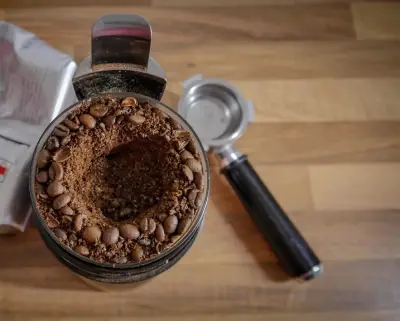
Image: grinder with beans and ground coffee, portafilter. rawpixel, CC0.
Popular products
All products
More


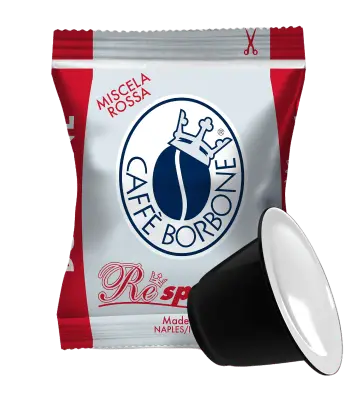 100 Capsules BORBONE Respresso RED Blend Nespresso Compatible
21,90 €


-webp_sm.webp)
-webp_sm.webp)
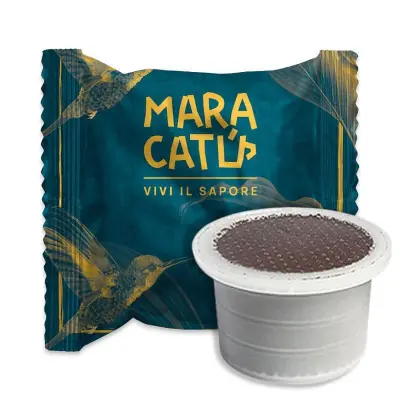 100 Maracatú Coffee Capsules INTENSO Uno System Compatible
19,90 €
 100 Maracatú Coffee Capsules Gran Crema Uno System Compatible
19,90 €
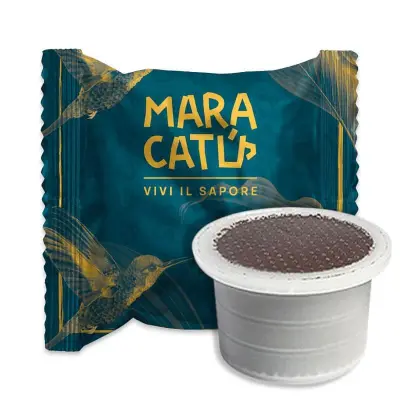 100 Capsules Maracatú Decaffeinated Uno System Compatible
23,90 €
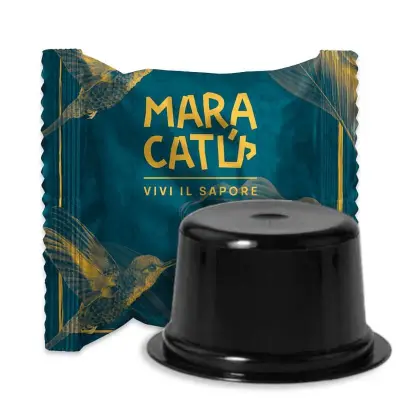 80 Maracatú Coffee Capsules Gran Crema Lavazza Blue In Black Compatible
18,90 €
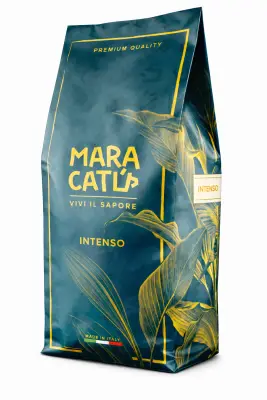
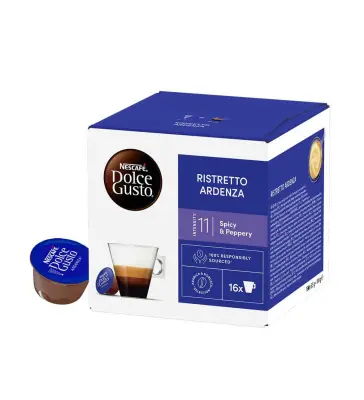 16 Coffee Capsules Nescafè Dolce Gusto Espresso ARDENZA
4,99 €
More on this topic
More

Coffee Capsules Guide: How to Choose Your Perfect Taste
Read article

5 myths about capsule coffee
Read article
How to properly store coffee and coffee capsules: expert advice
Read article

Are you a reseller? Access the Maracatú B2B price list in just a few steps!
Read article

Capsule systems compared: Nespresso, Dolce Gusto, A Modo Mio, ESE and Caffitaly — which to choose
Read article
How to descale your coffee machine: a practical guide from over 15 years in coffee
Read article
Caffè Borbone: a guide to the Rossa, Nera, Blu, Oro and Dek blends
Read article
The coffee intensity scale: what the numbers on capsules really mean
Read article

The origins of coffee: myths, legends and the road to the Italian cup
Read article
Coffee roasting: the levels, and how each one changes the cup
Read article
Espresso: how the Italian classic was born
Read article
Water and the taste of coffee: the ingredient nobody talks about
Read article