






The chemistry of coffee: what happens in the cup
What a bean contains
We have been working with coffee for more than fifteen years, and one of the most common questions about taste stems from a misunderstanding: the belief that bitterness comes mainly from caffeine. In reality, it does not.
A roasted coffee bean holds a complex structure of carbohydrates, fibre, lipids, proteins, acids and numerous aromatic compounds. During brewing, water extracts only a portion of these substances, and only that portion actually reaches the cup.
Caffeine accounts for a relatively small share of the bean's weight and is just one of the substances that shape the perception of bitterness. A large part of the taste we associate with coffee is in fact born in the chemical transformations that take place during roasting.
Among the compounds found in green coffee are chlorogenic acids, which change during roasting and contribute, together with many other substances, to the aromatic profile and to the perception of bitterness and acidity.
The lipids naturally present in coffee also add to the structure and mouthfeel of the drink. Like many other aromatic components, they can undergo oxidation during storage, gradually altering the character of the product.
In our whole bean and ground coffee these differences become clear when you compare blends: what changes is the entire balance of body, acidity, sweetness, bitterness and aroma, well beyond the declared intensity.
Roasting is a transformation, not mere heating
A green bean has aromatic characteristics very different from those of the coffee we know. Most of the scents and flavours we associate with the cup develop precisely during roasting.
One of the fundamental processes is the Maillard reaction, which involves sugars and amino acids and drives the formation of numerous aromatic compounds. It is a family of reactions we also find in other foods exposed to heat, such as the crust of bread.
Many other chemical and physical transformations take place at the same time during roasting, progressively changing the colour, structure and aromatic profile of the bean.
At high temperatures the so-called first crack also occurs, a moment recognisable by the characteristic popping of the beans. From this stage onwards, times and temperatures are carefully managed by the roaster according to the profile they wish to achieve.
Lighter roasts generally preserve more of the coffee's acidity and original aromatic character. Moving towards darker roasts, the roasted, cocoa and caramelised notes become more evident, while some origin-related characteristics gradually fade.
To explain how the different roast levels shape the final result, we have written a dedicated guide.
Extraction is a matter of balance
When water comes into contact with ground coffee, it begins to dissolve many of the substances held in the bean. Not all of them are extracted with the same ease and speed, and it is precisely the balance of extraction that determines much of what ends up in the cup.
Broadly speaking, some highly soluble compounds are extracted quickly, while others need more time. This is why extraction time, temperature, grind size, dose and water volume have to work together.
An under-extracted coffee can taste overly acidic, lacking in sweetness and thin in structure. That does not necessarily mean the blend is wrong: it may simply be a matter of adjusting the brewing parameters.
An over-extracted coffee, on the other hand, can show excessive bitterness and an astringent, rather unpleasant sensation.
Grind size is one of the main tools we have to influence extraction: changing the particle size changes the contact surface between water and coffee and, with it, the way extraction unfolds. We cover this in more depth in our grinding guide.
Crema: what it really is
The crema on an espresso is not milk foam and, above all, it is not in itself a guarantee of quality.
It is a complex structure that forms during extraction under pressure and contains tiny gas bubbles, mainly carbon dioxide, dispersed in the liquid phase together with various coffee compounds.
Carbon dioxide develops during roasting and partly remains trapped inside the beans, to be released gradually over the following period. This is why the time elapsed since roasting can also affect how the crema forms and how stable it is.
The pressure typical of espresso preparation favours the formation of this characteristic creamy surface, which we do not find in the same way in filter brewing methods.
The colour, thickness and persistence of the crema can offer some clues about the extraction, but they should always be judged alongside other factors, such as the blend, freshness, grind size and brewing method.
Robusta generally tends to produce a more abundant and longer-lasting crema than Arabica, which is one more reason why it is often used in blends intended for Italian espresso.
With Nespresso® compatible capsules and other capsule systems, the dose and grind are already set by the producer, which makes it easier to obtain a consistent result from one preparation to the next.
Water is the invisible ingredient
A cup of coffee consists almost entirely of water, and water does far more than fill the cup: its characteristics directly influence the extraction and the final taste.
The amount and composition of the minerals in the water, including calcium and magnesium, can change the way the various coffee compounds are extracted and perceived.
Water with too low a mineral content can produce an unbalanced result, while excessively hard water can noticeably alter the taste and encourage limescale build-up inside the machine.
Water temperature is just as essential. Different temperatures change the speed at which the substances in the coffee are extracted, which is why the machine should work within a suitable range and maintain good thermal stability.
We have dedicated a full article to this subject, water and the taste of coffee, with some practical tips for home use.
Three practical conclusions
The first: if the coffee tastes too acidic or thin, it may be under-extracted. When we can adjust the parameters, it is worth trying a slightly finer grind or a longer extraction time, changing one element at a time.
The second: if the coffee tastes excessively bitter, dry or astringent, over-extraction may be at play. In that case we can try a slightly coarser grind or a shorter extraction time, also checking that the water temperature is correct.
The third: freshness matters. As time passes, coffee inevitably changes: some aromatic compounds fade, lipids can oxidise and carbon dioxide is gradually released. All of this can alter the aroma, body and behaviour of the coffee during extraction.
With capsules, many parameters such as dose and grind are set directly by the producer, which helps make preparation simpler and more repeatable. What remains for us, above all, is the pleasure of choosing the profile closest to our taste. If you would like to understand what the numbers on the packaging mean, you can read our guide to the intensity scale.
If you are unsure which profile or blend to choose for your machine, please get in touch: the Maracatú team is always happy to help.
Popular products
All products
More


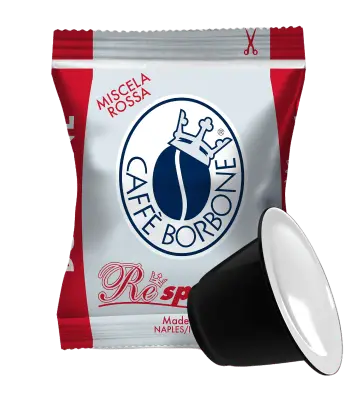 100 Capsules BORBONE Respresso RED Blend Nespresso Compatible
21,90 €


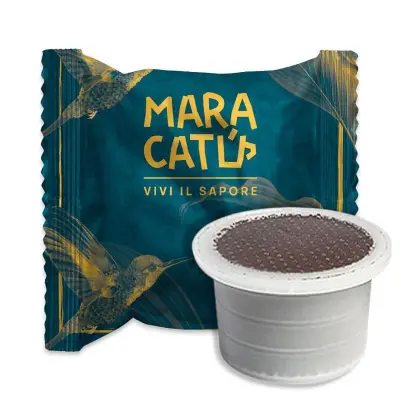 100 Maracatú Coffee Capsules Gran Crema Uno System Compatible
19,90 €
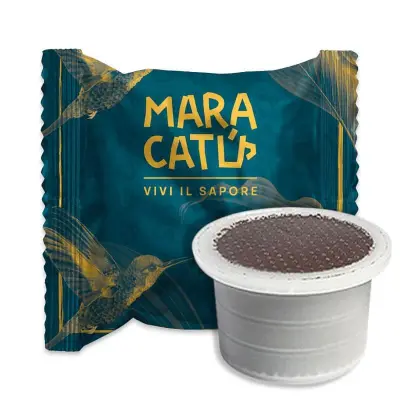 100 Capsules Maracatú Decaffeinated Uno System Compatible
23,90 €
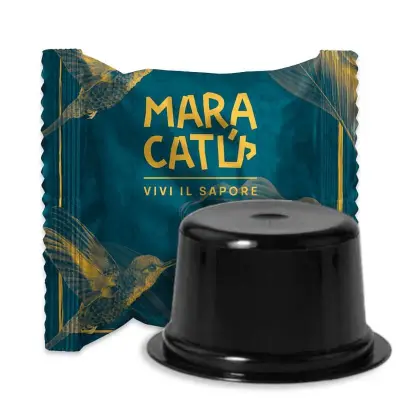 80 Maracatú Coffee Capsules Gran Crema Lavazza Blue In Black Compatible
18,90 €

More on this topic
More

Coffee Capsules Guide: How to Choose Your Perfect Taste
Read article


5 myths about capsule coffee
Read article
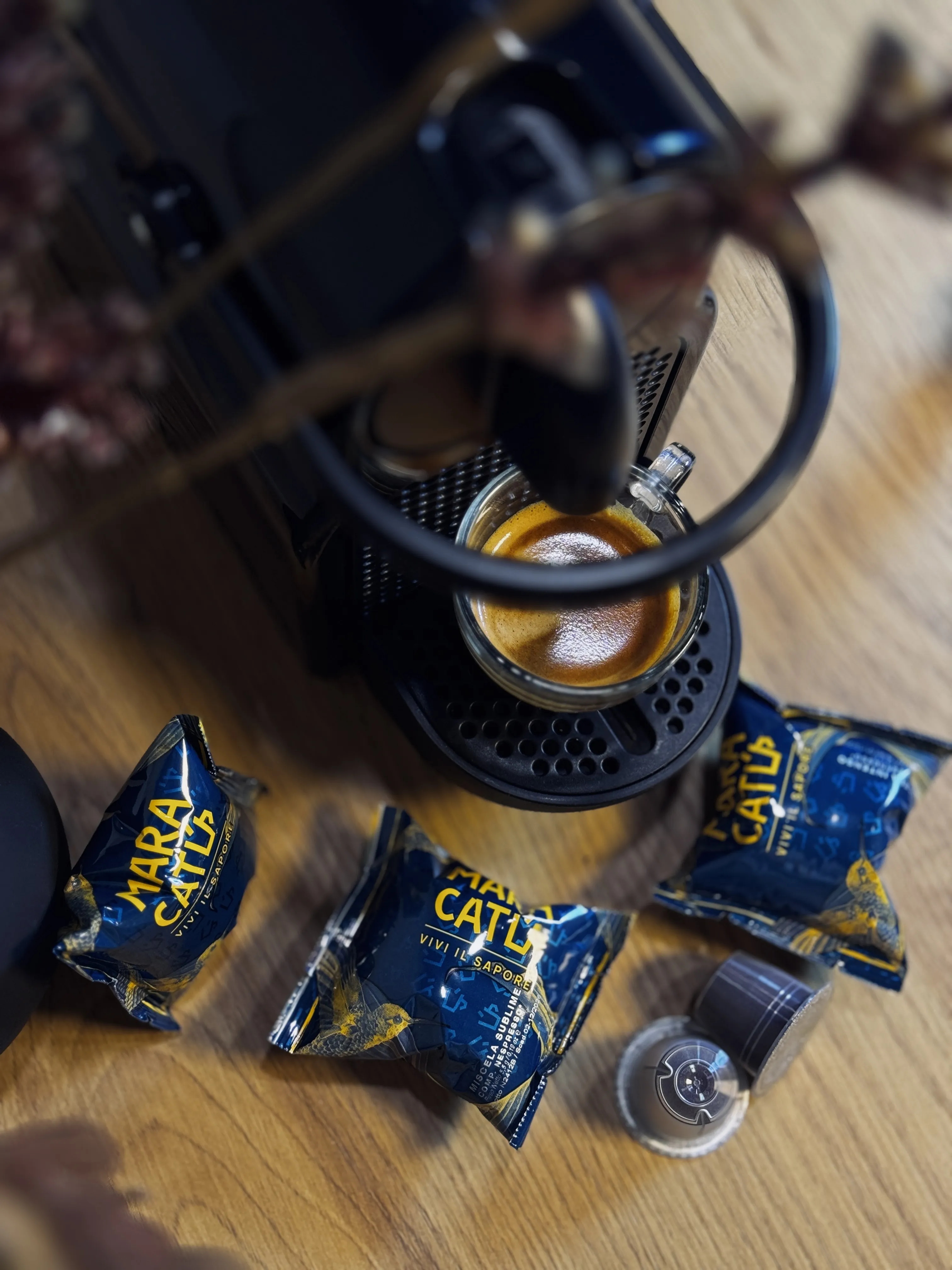
How to properly store coffee and coffee capsules: expert advice
Read article

Are you a reseller? Access the Maracatú B2B price list in just a few steps!
Read article

Capsule systems compared: Nespresso, Dolce Gusto, A Modo Mio, ESE and Caffitaly — which to choose
Read article
How to descale your coffee machine: a practical guide from over 15 years in coffee
Read article
Caffè Borbone: a guide to the Rossa, Nera, Blu, Oro and Dek blends
Read article
The coffee intensity scale: what the numbers on capsules really mean
Read article

The origins of coffee: myths, legends and the road to the Italian cup
Read article
Coffee roasting: the levels, and how each one changes the cup
Read article
Espresso: how the Italian classic was born
Read article

Water and the taste of coffee: the ingredient nobody talks about
Read article