


The scent of coffee: aromas, the sense of smell and aromatherapy at home
The scent of coffee: a pleasure that begins before the first sip
You open a new pack, pour the beans into the grinder and, before the moka pot is even on the hob, the scent has already filled the kitchen.
For many of us this is the first pleasure of the day: we smell coffee even before we drink it.
Scent is also one of the reasons why a cup seems more or less good to us. Much of what we call taste, in fact, comes through the nose.
And yet we usually pay little attention to the sense of smell. We can say whether a coffee is bitter or sweet, but we find it harder to describe its aroma.
The good news is that training your nose takes no special tools: a little curiosity and a few extra seconds in front of the cup are enough.
In this guide we look at where the scent of coffee comes from, why freshly ground coffee smells stronger and how to smell a cup with more attention.
We will also talk about the coffee beans we often find in perfume shops and about a few simple ideas for enjoying the aroma of coffee at home.
Where the aroma comes from: roasting and volatile compounds
Before roasting, the green coffee bean has a vegetal, almost grassy smell, very far from the one we know.
It is during roasting that heat transforms the substances inside the bean and gives rise to most of the scents we associate with the cup.
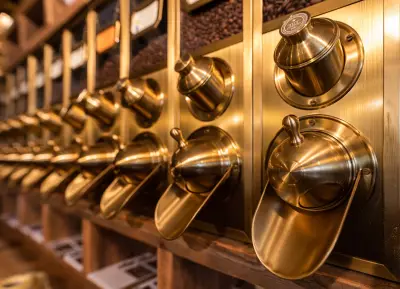
We have described this step in our guide to coffee roasting, where we also look at how the different levels change the taste.
The substances responsible for the scent are called volatile compounds: they evaporate easily, spread through the air and so reach our nose.
A great many have been identified in roasted coffee, and people often speak of hundreds. The scent we recognise comes from all of them together.
This is why the aroma of coffee is hard to describe in a single word. To find their way, tasters usually divide it into a few families of notes:
Roasted, with hints that may recall freshly baked bread, cereals or the crust of a cake.
Cocoa and chocolate, frequent in blends with a fuller taste and in darker roasts.
Nuts, such as hazelnut and almond, among the easiest notes to recognise.
Caramel, which recalls cooked sugar and a feeling of sweetness.
Floral and fruity notes, more delicate, often found in lighter roasts.
Which notes prevail depends on the variety, the origin of the beans, the processing and the level of roasting.
In general, Arabica is often associated with more complex aromatic profiles, while Robusta can give bolder notes and a greater sense of body.
In our coffee beans and ground coffee section you will find blends with different characters: comparing two of them is a good way to start noticing the differences.
Why freshly ground coffee smells stronger
Anyone who has ground coffee at home at least once knows it: that is the moment when the scent is at its strongest.
The explanation is simple. The whole bean is a compact structure that holds a good part of the aromatic substances inside it.
When we grind it, the bean breaks into a great many particles and the surface in contact with the air increases enormously.
The volatile compounds are thus released all at once, and this is what we perceive as an intense scent.
For the same reason, however, ground coffee tends to lose its scent more quickly than whole beans.
This is why, when possible, it can be worth grinding the coffee just before preparing it, in the amount you need.
If you are thinking of trying, in our guide on how to choose a coffee grinder you will find the differences between manual and electric models.
Ready-ground coffee remains a practical and very popular choice. In this case it is useful to close the pack well after each use.
In general, both beans and ground coffee keep better away from air, light, heat and humidity.
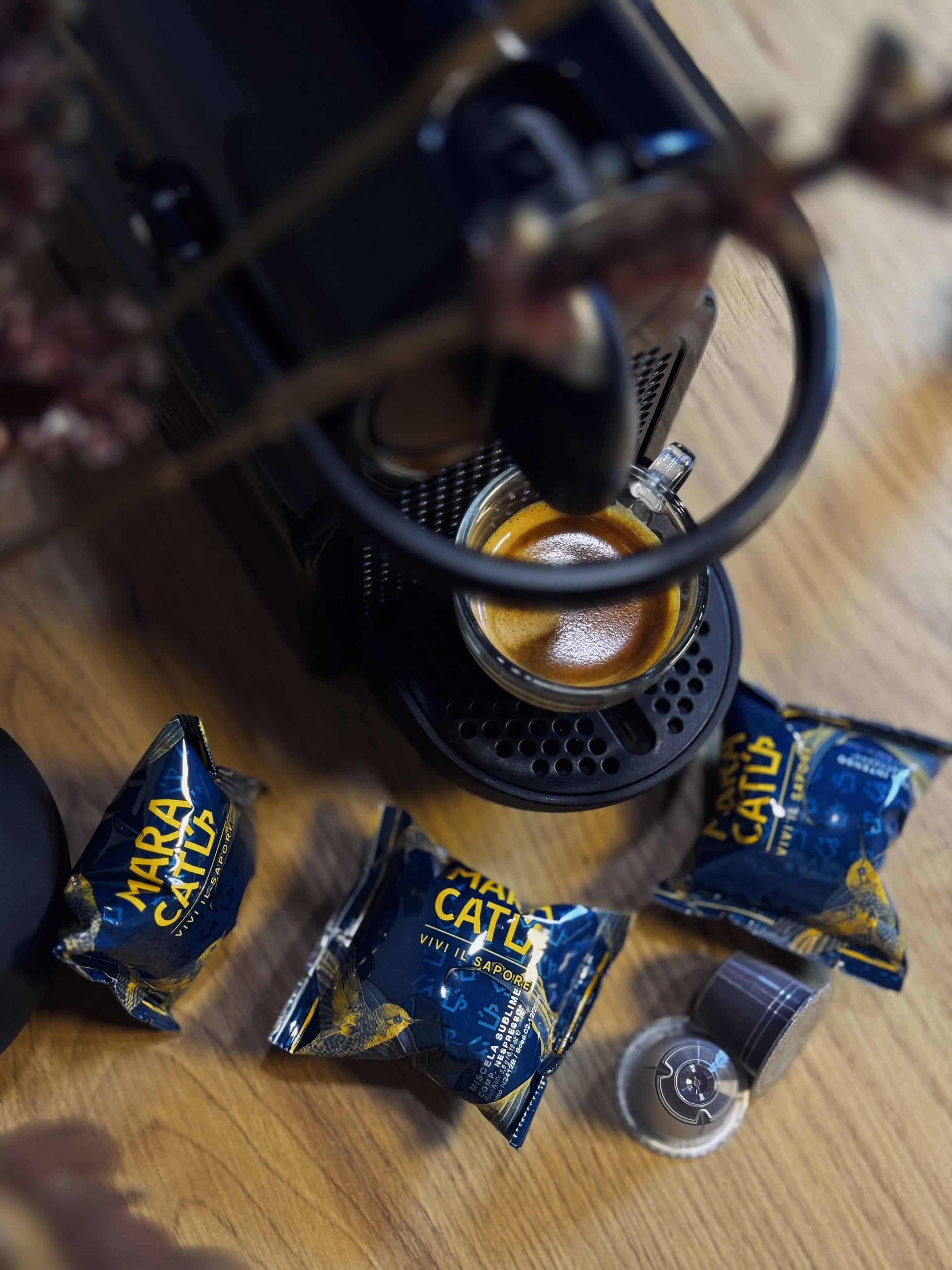
We have gathered more suggestions in our article on how to store coffee and capsules.
Capsules and pods follow a different logic: in capsule and pod systems the coffee is already dosed and sealed in packaging designed to protect the aroma until the moment of preparation.
Heat plays a part too. Hot water helps the aromas to be released, which is why a freshly prepared cup smells stronger than a coffee that has gone cold.
Smell and taste: how to smell a cup of coffee
When we drink a coffee, the tongue recognises above all a few basic sensations, such as bitter, sweet and sour.
Everything else, from chocolate to hazelnut, comes largely from the sense of smell. We notice it clearly when we have a cold and everything seems to have less flavour.
So why not take a few seconds to smell the cup before drinking? It is a simple way to enjoy coffee more, and you do not need to be an expert to do it.
You can start by bringing the cup close to your nose right after preparation, when the scent is at its most intense.
With espresso, many tasters stir the crema lightly with the spoon: in this way the aromas held beneath the surface are released more easily.
It is better to take two or three short sniffs, rather than a single very long one, and then try to give a name to what you smell.
No technical terms are needed. You can ask yourself whether the scent reminds you of something roasted, sweet or fruity, or of a food you know well.
After the first sip, you can try breathing out slowly through your nose: some aromas are perceived at precisely this moment, when the coffee is already in your mouth.
The cup plays its part too: if it has been warmed beforehand, the coffee stays hot for longer and keeps giving off its scent.
In our accessories and cups section you will find various options, from porcelain cups to small glasses.
There is also a curious aspect: the nose gets used to things quickly. After a while we stop noticing the scent of our own home, and we notice it again only when we come back after a few days.
The sense of smell is also closely linked to memory. A scent can take us back in an instant to our grandparents' kitchen or to a breakfast on holiday, rather like Proust's famous madeleine.
Perhaps this is also why the scent of coffee, for so many people, simply means home.
Coffee beans in the perfume shop: a widespread habit
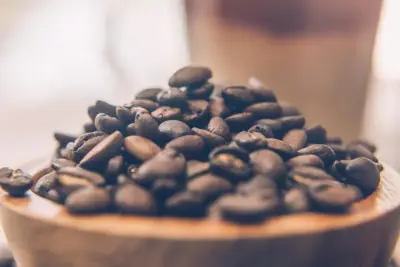
If you have ever tried a few perfumes in a shop, you may have noticed a small bowl full of coffee beans on the counter.
It is not there by chance. The idea is to smell the beans between one fragrance and the next, to give the nose a short break before trying the following one.
The starting point is real: after smelling several perfumes in a row, the sense of smell tires and the fragrances begin to seem all alike.
It is the same adaptation that makes us stop noticing the scent of our own home.
Coffee has an intense scent, very different from that of fragrances, and smelling it gives the feeling of starting afresh.
It should be said, however, that it is more a widespread habit than a proven method.
It is not certain that the beans work better than a simple pause, and after all coffee too is one more smell for the nose to process.
Some people in fact prefer other, equally simple solutions: stepping away from the shelf for a moment, breathing some fresh air or smelling a neutral fabric, such as the sleeve of their own jumper.
The same advice applies when we taste coffee. If you want to compare two blends, you can allow yourself a short pause and a sip of water between the first and the second cup.
In any case, that little bowl reminds us of one thing: the scent of coffee is so recognisable that it has become a point of reference even among dozens of essences.
The scent of coffee at home: small ideas for every day
Aromatherapy, strictly speaking, means the use of essential oils obtained from plants. Here we use the word more simply, to talk about the pleasure of a nice scent at home.
No particular health benefits should be attributed to the scent of coffee. It remains, however, a small everyday pleasure that many people associate with a moment's break.
The simplest way to enjoy it is not to rush the preparation: you can open the pack, grind the beans or insert the pod, and pause for a few seconds to smell.
If you have a corner dedicated to coffee, you can place a small bowl of beans next to the cups, just as in the perfume shop.
The scent will be delicate and will tend to fade as the days go by, so it is useful to replace the beans from time to time.
It is best to think of them as a decorative element: after a long time in the open air, they are no longer suitable for preparing a good cup.
Then there are those who like to scent the other rooms as well. In our home fragrances section you will find reed diffusers with different fragrances, from fruity ones to warmer, more enveloping ones.
A small suggestion: if you like to smell the aroma of the cup clearly, you can place the diffusers away from the coffee corner, so that the two scents do not overlap.
Those who are sensitive to intense smells may prefer light fragrances and well-aired rooms. It is advisable to follow the instructions on the pack and to keep diffusers away from children and pets.
After all, it does not take much to enjoy the scent of coffee: a freshly opened pack, a warm cup and a few seconds of attention.
And the next time the kitchen fills with that aroma, before the moka pot is even on the hob, you will know that the pleasure of coffee has already begun.
If you would like advice on a blend with a more intense or more delicate scent, on a grinder or on the accessories best suited to your habits, contact us: the Maracatú team is always available to help you choose.
Popular products
All products
More


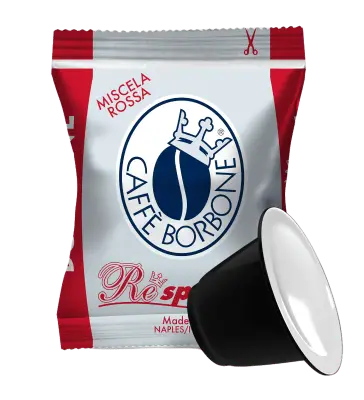 100 Capsules BORBONE Respresso RED Blend Nespresso Compatible
21,90 €


 100 Maracatú Coffee Capsules Gran Crema Uno System Compatible
19,90 €
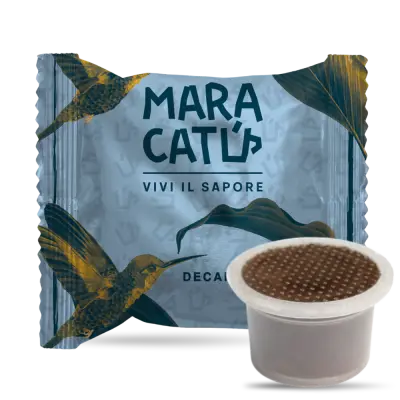 100 Capsules Maracatú Decaffeinated Uno System Compatible
23,90 €

More on this topic
More

Coffee Capsules Guide: How to Choose Your Perfect Taste
Read article


5 myths about capsule coffee
Read article
How to properly store coffee and coffee capsules: expert advice
Read article

Are you a reseller? Access the Maracatú B2B price list in just a few steps!
Read article

Capsule systems compared: Nespresso, Dolce Gusto, A Modo Mio, ESE and Caffitaly — which to choose
Read article

How to descale your coffee machine: a practical guide from over 15 years in coffee
Read article
Caffè Borbone: a guide to the Rossa, Nera, Blu, Oro and Dek blends
Read article

The coffee intensity scale: what the numbers on capsules really mean
Read article

The origins of coffee: myths, legends and the road to the Italian cup
Read article
Coffee roasting: the levels, and how each one changes the cup
Read article
Espresso: how the Italian classic was born
Read article

Water and the taste of coffee: the ingredient nobody talks about
Read article