





Coffee roasting: the levels, and how each one changes the cup
The step that decides more than origin does
When a customer is unhappy with their coffee, the first guess is almost always the same: the wrong blend, or the machine. In our experience the explanation often lies elsewhere, in the roast.
Before roasting, the green bean does not smell of coffee at all. It smells vegetal, almost grassy, and carries none of the aromas we associate with the cup. Everything we recognise, cocoa, dried fruit, caramel, a clean bitterness, is created during roasting.
That is why two coffees of the same origin can taste entirely different, and why every roaster treats its roast profile as the most guarded part of the job.
What happens to the bean during the roast
The bean enters the drum green and damp. In the first minutes it loses water and changes colour, from green to yellow and then to light brown. This is a drying phase, with no meaningful aroma yet.
Then the reactions that matter begin. The sugars and amino acids in the bean react with each other and generate hundreds of new aromatic compounds, the same kind of transformation that gives fresh bread or seared meat its smell.
At a certain point there is a sharp snap: the bean expands and its outer skin gives way. Roasters call this the first crack, and it is the moment coffee becomes drinkable. If roasting continues, a second, denser and duller crack follows: from there oils surface and the profile shifts towards roasted notes and bitterness.
All of this happens in a handful of minutes. The difference between a balanced roast and a burnt one is measured in tens of seconds.
Light, medium, dark: what actually changes in the cup
Light roast. The bean stays denser and paler, acidity is pronounced, and origin notes, floral, citrus, fruity, remain recognisable. It is the profile preferred for filter methods. In espresso it demands more care, because the acidity can turn sharp.
Medium roast. This is the balance point: acidity softens, caramel and dried fruit appear, body increases. It works well both in a moka pot and in espresso, and it is the safest choice when you do not know the drinker's taste.
Dark roast. Acidity almost disappears, leaving cocoa, spice and a decided roasted note. The body is full and the crema more stable. This is the profile most people identify with coffee from an Italian bar.
None of the three is better in absolute terms. What changes is the goal: a light roast showcases origin, a dark roast showcases consistency and structure.
Why the Italian tradition roasts longer
The Italian preference for a longer roast is not an affectation: it follows directly from the extraction method.
Espresso works with very little water, at high pressure, in twenty-five to thirty seconds. Under those conditions a very acidic coffee comes out unbalanced, while a longer-roasted bean quickly gives up body, roasted sweetness and a dense crema. A dark roast, in other words, is the technical answer to a fast method.
There is a practical reason too. A firmer roast makes the result less sensitive to small variations in grind, dose and temperature. For a bar serving hundreds of coffees a day, that consistency is worth a great deal.
The same principle carries over to capsules and pods, where the parameters are fixed at the factory and the room for adjustment is minimal.
How to recognise a good roast
Several signals can be read without instruments.
The colour should be uniform. If a handful of beans contains some much darker and some much paler, the roast was uneven, and in the cup it will read as bitterness and acidity sitting side by side.
The surface should not be glossy with oil, except in deliberately very dark profiles. A heavy oily film indicates a roast pushed past its useful point, and those oils go rancid quickly.
The smell must not resemble ash. A burnt or charred-wood aroma is the clearest sign that the bean was taken too far.
Bitterness should be clean and short. A bitterness that lingers and turns astringent usually points to a roasting problem, not a blend problem.
One last thing, often overlooked: the date. Roasted coffee does not improve with age. We suggest always checking the roast or best-before date on the pack, because even an excellent roast loses most of what made it good after too many months.
How to choose the right profile for you
The most useful criterion is not the roast level in itself, but the combination of roast and brewing method.
If you brew in a moka pot, a medium or medium-dark roast is almost always the most balanced choice: the extraction is long, and too light a roast would tend to taste acidic.
With an espresso machine, a dark profile gives the crema and body most people are looking for. If instead you enjoy tasting origin notes, try a medium roast and accept a little more acidity.
With capsules and pods the choice has already been made by the producer; there it is better to go by the blend description and the intensity marking.
Our range of whole-bean and ground coffee holds several different profiles, from the balanced to the decidedly strong. We suggest starting with a single pack and changing one variable at a time: first the roast, then perhaps the grind.
If you would like advice tailored to your machine and your habits, please contact us, the Maracatú team is always available.
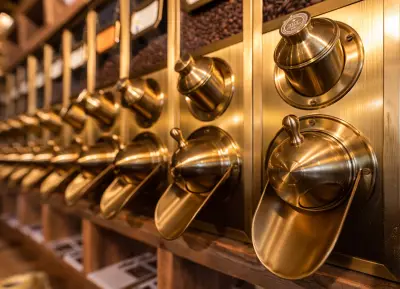
Image: brass dispensers in a coffee roastery, Dietmar Rabich, CC BY-SA 4.0 (Wikimedia Commons).
Popular products
All products
More


 100 Capsules BORBONE Respresso RED Blend Nespresso Compatible
21,90 €


-webp_sm.webp)
-webp_sm.webp)
 100 Maracatú Coffee Capsules INTENSO Uno System Compatible
19,90 €
 100 Maracatú Coffee Capsules Gran Crema Uno System Compatible
19,90 €
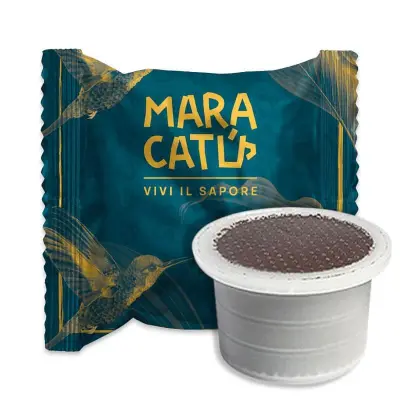 100 Capsules Maracatú Decaffeinated Uno System Compatible
23,90 €
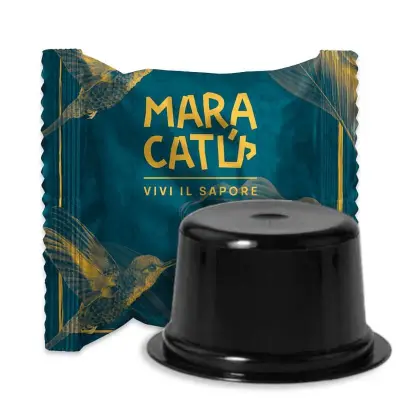 80 Maracatú Coffee Capsules Gran Crema Lavazza Blue In Black Compatible
18,90 €
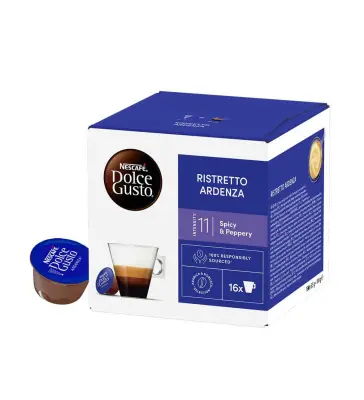 16 Coffee Capsules Nescafè Dolce Gusto Espresso ARDENZA
4,99 €
More on this topic
More

Coffee Capsules Guide: How to Choose Your Perfect Taste
Read article

5 myths about capsule coffee
Read article
How to properly store coffee and coffee capsules: expert advice
Read article

Are you a reseller? Access the Maracatú B2B price list in just a few steps!
Read article
Capsule systems compared: Nespresso, Dolce Gusto, A Modo Mio, ESE and Caffitaly — which to choose
Read article
How to descale your coffee machine: a practical guide from over 15 years in coffee
Read article
Caffè Borbone: a guide to the Rossa, Nera, Blu, Oro and Dek blends
Read article
The coffee intensity scale: what the numbers on capsules really mean
Read article
The origins of coffee: myths, legends and the road to the Italian cup
Read article
Espresso: how the Italian classic was born
Read article
Water and the taste of coffee: the ingredient nobody talks about
Read article