






Cappuccino at home: how to froth milk like a barista
It is not the coffee, it is the milk
When someone writes to us about a cappuccino that will not come out right, they usually talk about the coffee. They changed blend, checked the machine, tried a different roast. Nine times out of ten the coffee was already fine.
A cappuccino is half milk, and the part you actually see, the part that decides whether the cup looks like it came from a bar, is all milk work. It is also the part almost nobody tries to improve, because it looks like a professional's move.
It is not. You need to understand what you are aiming for, then repeat it a few times.
What well made foam actually is
Cappuccino foam is not hot chocolate foam. It should not be a stiff cap of bubbles floating on the coffee.
What you want is a fine, glossy cream with bubbles too small to see, as dense as liquid paint. The technical name is microfoam, and you can spot the difference by eye: move the cup, and if the surface stays glossy and compact, the milk is well textured. Large bubbles that pop, and foam separating from the liquid beneath, mean it is not.
There is a more honest test: taste. Well steamed milk is sweet, because heat converts part of the sugars and makes them noticeable. Overheated milk tastes boiled and covers the coffee instead of carrying it.
With a steam wand and without
With a steam wand. Start with a cold pitcher and cold milk, filled roughly halfway, because the volume grows. Open the steam for a moment to clear condensate, then place the tip just under the surface: that light hiss is air going in. A few seconds are enough. Then lower the pitcher just enough for the milk to start spinning, and from there you are only heating. Stop when the base of the pitcher is hot but you can still keep your hand on it.
Without a steam wand. An electric frother gives consistent results and only asks that you respect the maximum mark. A manual pump frother works well with milk that is already warm, with steady strokes and not for too long. A French press does the job too: warm milk, not boiling, and around twenty pumps.
In every case, finish by tapping the pitcher on the worktop and swirling it: large bubbles break and the cream turns glossy again.
Our espresso machines section covers setups with a wand, and accessories and cups covers frothing separately.
Which milk works best
It is not fat that foams but protein, which builds the structure around the air bubbles. Fat gives the soft mouthfeel and makes the foam more stable.
So whole milk is the easiest to work with and the most forgiving. Semi skimmed foams too, with lighter and shorter lived foam. UHT milk works without trouble, but like any other it should be cold from the fridge: starting with lukewarm milk leaves very little margin before it overheats.
Among plant drinks behaviour varies a lot. Versions made for coffee, usually labelled barista, are formulated precisely to foam and not to split against the acidity of coffee. Standard versions tend to produce coarse foam that collapses quickly.
Putting the cup together
An Italian cappuccino sits in a cup of about one hundred and fifty millilitres: one espresso and the rest milk, with a layer of cream a little over a centimetre. In large mugs the coffee disappears and what remains is a milk drink with a memory of coffee.
Order matters. Espresso first, into a warm cup, then the milk poured straight away while the cream is still glossy: wait even a minute and the foam separates in the pitcher and arrives in lumps. Pour slowly into the centre, holding the pitcher high, and lower it only at the end if you want to draw.
One last detail that helps more than it seems: the coffee underneath has to be right. If the espresso is bitter because the grind is too fine, milk softens it but does not save it.
If you are unsure what suits your machine, get in touch. The Maracatú team will gladly help.
Image: milk poured from a pitcher into a cup. StockSnap, CC0.
Popular products
All products
More


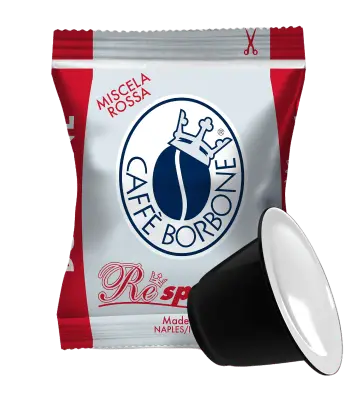 100 Capsules BORBONE Respresso RED Blend Nespresso Compatible
21,90 €


-webp_sm.webp)
-webp_sm.webp)
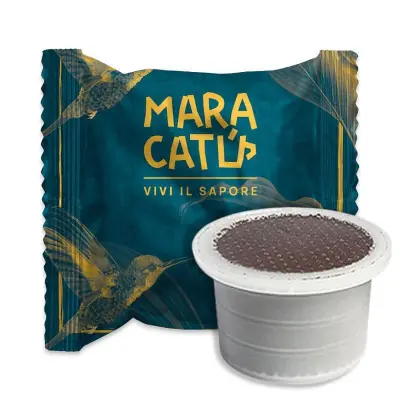 100 Maracatú Coffee Capsules INTENSO Uno System Compatible
19,90 €
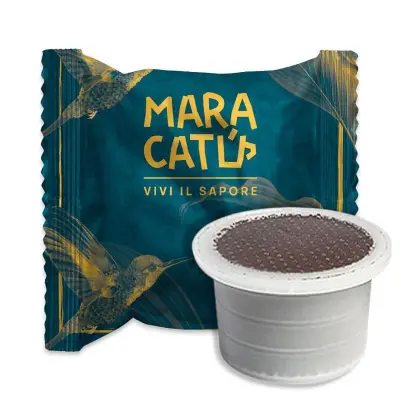 100 Maracatú Coffee Capsules Gran Crema Uno System Compatible
19,90 €
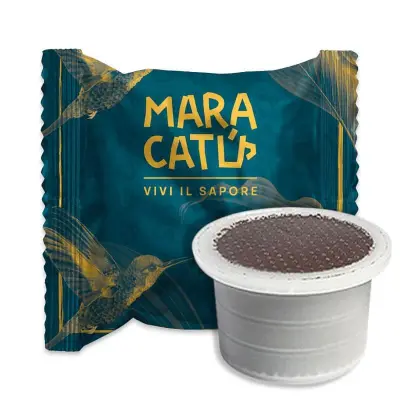 100 Capsules Maracatú Decaffeinated Uno System Compatible
23,90 €
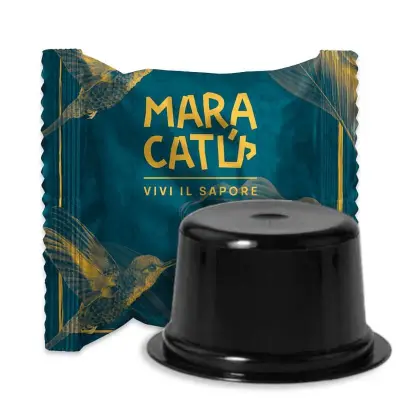 80 Maracatú Coffee Capsules Gran Crema Lavazza Blue In Black Compatible
18,90 €

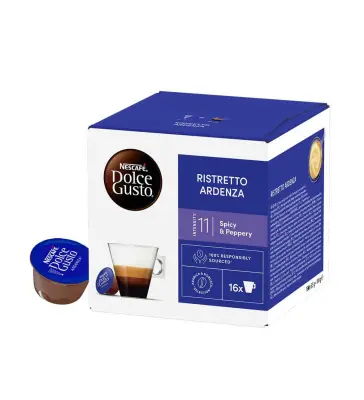 16 Coffee Capsules Nescafè Dolce Gusto Espresso ARDENZA
4,99 €
More on this topic
More

Coffee Capsules Guide: How to Choose Your Perfect Taste
Read article


5 myths about capsule coffee
Read article
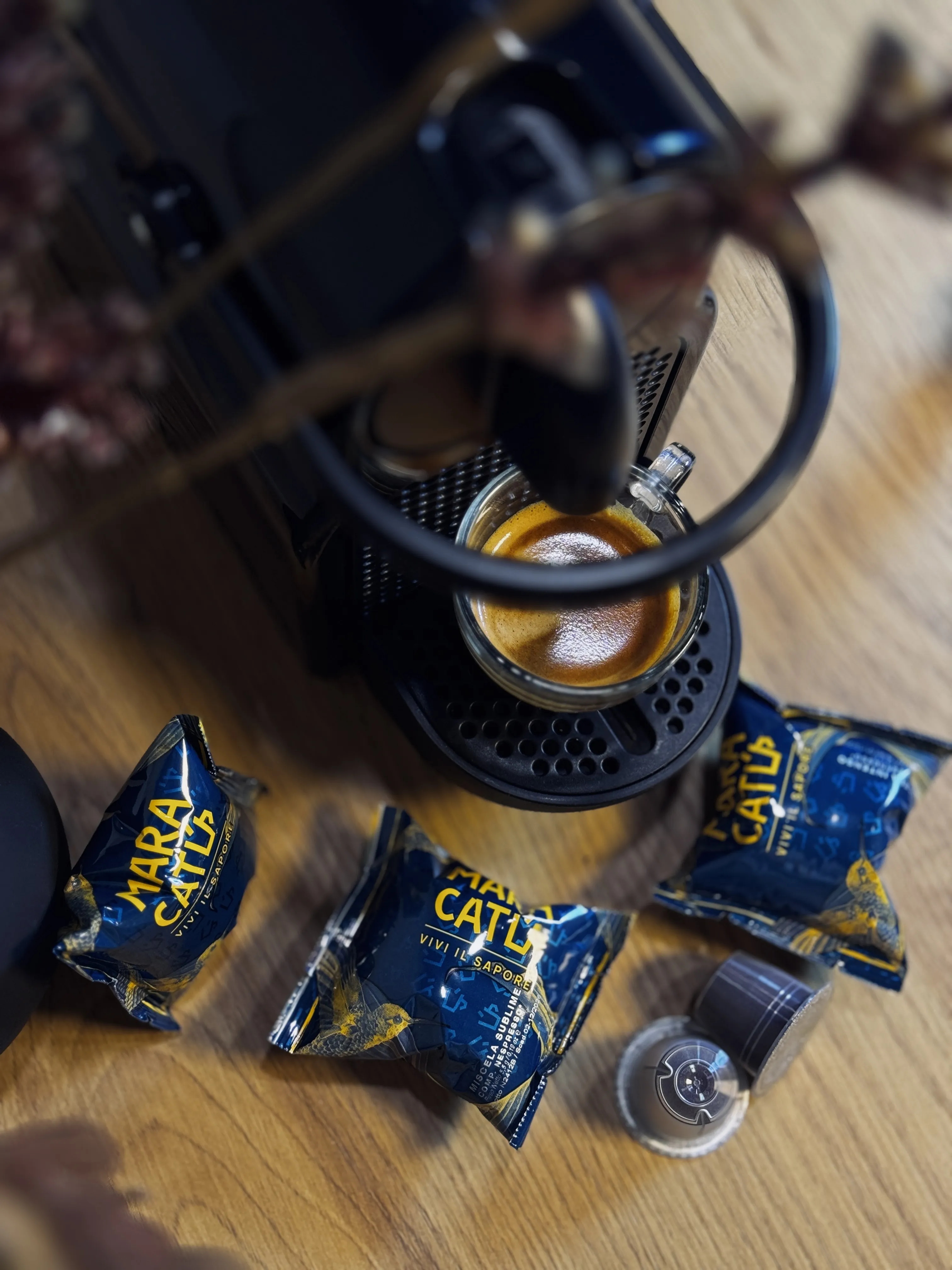
How to properly store coffee and coffee capsules: expert advice
Read article

Are you a reseller? Access the Maracatú B2B price list in just a few steps!
Read article

Capsule systems compared: Nespresso, Dolce Gusto, A Modo Mio, ESE and Caffitaly — which to choose
Read article

How to descale your coffee machine: a practical guide from over 15 years in coffee
Read article

Caffè Borbone: a guide to the Rossa, Nera, Blu, Oro and Dek blends
Read article

The coffee intensity scale: what the numbers on capsules really mean
Read article

The origins of coffee: myths, legends and the road to the Italian cup
Read article
Coffee roasting: the levels, and how each one changes the cup
Read article
Espresso: how the Italian classic was born
Read article

Water and the taste of coffee: the ingredient nobody talks about
Read article