





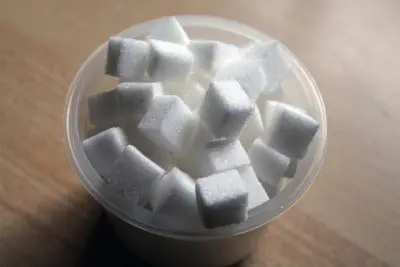
Coffee and sugar: the story of a pairing
Two goods that travelled together
We have been selling coffee for over fifteen years, and the question about sugar keeps returning: does it ruin coffee or complete it. The answer needs a step back.
Coffee and sugar reached Europe at almost the same time and along similar trade routes. Both were colonial goods, expensive and regarded as exotic.
The pairing therefore arose from context rather than from a need of taste: whoever could afford one usually had the other, and the two were served together.
In eighteenth-century European coffee houses sugar also made an often badly roasted and worse stored product acceptable. It was a correction, not an addition.
Today the context has changed. Fresh, well-extracted coffee already has a sweetness of its own, coming from sugars caramelised during roasting.
What sugar does to taste
Sugar does not remove bitterness: it masks it. Sweet and bitter receptors compete, and the brain gives priority to sweetness.
The result is that notes sitting in the same perceptual area disappear as well: acidity flattens and fruity nuances become hard to distinguish.
The tactile sensation changes too. Dissolved sugar slightly increases viscosity, so the coffee seems fuller-bodied than it is.
This is why sugar works better on dark roasts and robusta blends, where bitterness leads and there is little to lose on the aromatic side.
On a light, acidic roast it extinguishes precisely what that coffee was selected for.
The reverse also holds: a small amount of sugar on a very intense espresso can make cocoa notes perceptible that dominant bitterness was hiding.
The threshold is personal and shifts with habit: anyone who reduces sugar gradually will, within weeks, perceive as sweet a coffee that once tasted sharp.
When you add it
In an Italian bar sugar goes into the freshly served cup and is stirred once. That is not a mannerism: it has a physical logic.
Hot coffee dissolves sugar quickly, and a short stir distributes it without breaking the crema, which stays covering the surface.
Stirring at length incorporates air and disperses the crema: the coffee cools sooner and loses part of its volatile aromas.
Those who love crema can try the Neapolitan variant: a teaspoon of sugar whipped with the first drops of coffee, then topped with the rest.
With cold coffee the situation changes entirely: sugar does not dissolve and a syrup is better, as explained in our guide to coffee cocktails.
White, cane, or none
Refined white sugar is almost pure sucrose: it adds sweetness and nothing else. It is the most neutral and the most predictable choice.
Raw cane sugar keeps traces of molasses, which bring caramel and liquorice notes. It works well with dark roasts, where it amplifies what is already there.
Honey and syrups change the acidity of the liquid as well as its sweetness, and deserve careful testing: they can shift the balance more than expected.
Calorie-free sweeteners do not behave like sugar: they lack mass, so they do not alter body, and some leave an aftertaste that adds to bitter coffee instead of cancelling it.
In our delights and sugar section we keep the Italian references that accompany coffee at the bar, from cane sugar to after-dinner specialities.
A final note on quantity: the standard sachet in an Italian bar is designed for a twenty-five millilitre cup, not a large mug, so in a long coffee it lands far sweeter.
When sugar signals a problem
There is a difference between adding sugar out of habit and adding it because the coffee, as it stands, is undrinkable.
If the same coffee needs more and more sugar, the problem usually lies elsewhere: the wrong grind, a machine due for descaling, or a product open for too long.
Bitter, astringent coffee almost always signals an over-long extraction or water that is too hot, and no amount of sugar puts that right.
A simple test: taste the same coffee after reducing the dose and coarsening the grind. If it improves, sugar was covering a technical fault.
On causes and remedies we have written the descaling guide, which is the first check to run.
How to test without prejudice
The most honest way to decide is a direct comparison, and it takes five minutes.
Make two cups of the same coffee, sweeten only the second, and drink the first in full before moving on. Order matters: sweetness dulls the palate.
Repeat the test with a light blend and a dark one. In most cases the difference between those two will be far larger than the difference between sugar and no sugar.
If coffee without sugar tastes flat, try reducing the water slightly instead of adding sweetness: dilution is often the real problem.
There is no single right answer, and it is normal to drink differently depending on the hour and the coffee chosen.
If you would like guidance on which blend will suit your habits, our team is always available: get in touch.
Anyone who wants to go further can try the same blend with different water: the perception of sweetness often changes more with water than with the spoon.
Popular products
All products
More


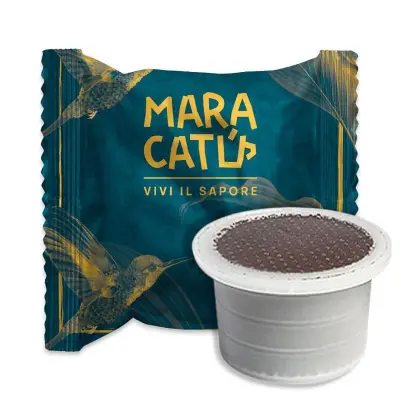 100 Maracatú Coffee Capsules Gran Crema Uno System Compatible
19,90 €


 100 Capsules Maracatú Decaffeinated Uno System Compatible
23,90 €
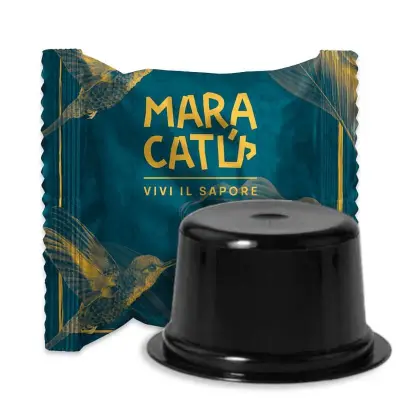 80 Maracatú Coffee Capsules Gran Crema Lavazza Blue In Black Compatible
18,90 €
More on this topic
More

Coffee Capsules Guide: How to Choose Your Perfect Taste
Read article

5 myths about capsule coffee
Read article
How to properly store coffee and coffee capsules: expert advice
Read article
Are you a reseller? Access the Maracatú B2B price list in just a few steps!
Read article
Capsule systems compared: Nespresso, Dolce Gusto, A Modo Mio, ESE and Caffitaly — which to choose
Read article
How to descale your coffee machine: a practical guide from over 15 years in coffee
Read article
Caffè Borbone: a guide to the Rossa, Nera, Blu, Oro and Dek blends
Read article
The coffee intensity scale: what the numbers on capsules really mean
Read article

The origins of coffee: myths, legends and the road to the Italian cup
Read article
Coffee roasting: the levels, and how each one changes the cup
Read article
Espresso: how the Italian classic was born
Read article
Water and the taste of coffee: the ingredient nobody talks about
Read article