





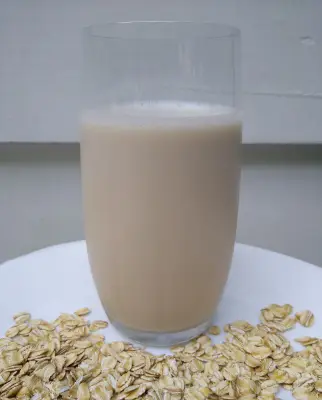
Coffee and plant milk: dairy-free cappuccino and macchiato
An increasingly frequent request
We have been selling coffee for over fifteen years, and lately one question keeps coming back: which plant milk behaves best with espresso.
The reasons vary: lactose intolerance, dietary choices, plain curiosity. We do not weigh them, every reason is valid; our job is the technical side.
The point is that oat, soy, almond and coconut are not a single product: they foam differently, tolerate heat differently and change the taste of the cup differently.
Cow's milk remains an excellent base for cappuccino: this guide takes nothing away from it, it simply adds alternatives.
Below we look at why some plant drinks foam better than others, which suits a cappuccino and which a macchiato, and how to get a stable result at home.
Why milk foams, and what changes with plants
Cappuccino foam is a network of proteins trapping air, with fats adding roundness. In cow's milk, caseins and whey proteins do this job very efficiently.
Plant drinks start from raw materials with less protein, or with proteins of a different kind, which is why the foam can turn out coarser or less stable.
Temperature matters too. Above 65 degrees many plant drinks separate or take on a cooked taste; the ideal zone sits between 55 and 60 degrees, much as it does for cow's milk.
Then there is the acidity of coffee: on contact with hot espresso some drinks, soy in particular, can curdle.
Barista versions exist to solve these three points: they carry more fat, often added protein, and acidity regulators that stabilise the foam and prevent curdling.
For an everyday cappuccino the barista version is therefore a sensible purchase, not a marketing flourish.
Oat, soy, almond, coconut: how they behave
Oat is now the most common choice in cafés, and not by accident. It has a sweet cereal taste that accompanies espresso without covering it, and in barista form it makes a fine, glossy foam, the closest to the classic one.
Soy holds the most protein and foams densely and steadily. Its taste is more present, with a legume note that all but disappears under darker roasts; the regular version can curdle in very hot coffee.
Almond brings a recognisable nutty aroma and a light body. The foam collapses fairly quickly, so it works better in a macchiato than in a cappuccino, unless you choose a barista version.
Coconut has character: creamy thanks to its fats yet low in protein, with a soft, short-lived foam. It is at its best in sweet drinks and in cold ones.
None of the four is best in absolute terms: it depends on the drink you wish to prepare and the role you want the coffee to play.
A plant-based cappuccino at home
The basic technique does not change from cow's milk: a drink cold from the fridge, air introduced in the first seconds, then rotation only to tighten the foam. We covered it in detail in our guide to frothing milk.
With a steam wand it pays to introduce a little less air than usual: plant drinks tend to form large bubbles, and a shorter stretching phase gives a finer microfoam.
An electric frother is the simplest route: with barista oat and soy it delivers consistent results without practice.
Anyone using the Dolce Gusto® system has an extra shortcut: the milk-drink capsules, available in some ranges in plant-based form as well, prepare the creamy layer with no added equipment.
Among our accessories and cups you will find frothers, spouted jugs and cappuccino cups to complete a home setup.
One last precaution: please do not heat the drink twice. Proteins strained by the first pass will not survive a second, and the foam no longer forms.
Which coffee to choose for plant milk
A plant drink always brings a taste of its own, so the coffee needs enough body to carry through the foam.
Oat pairs well with blends containing a share of robusta and with medium or dark roasts: the cereal sweetness lifts their notes of cocoa and hazelnut.
Soy stands up to dark roasts, which push its legume note into the background; almond calls for an intense espresso, otherwise the nutty aroma takes over.
Coconut matches chocolatey profiles, while light, delicate roasts do better in coffee served on its own, with no foam to cover them.
With capsules, the number printed on the box is a useful reference: for a plant-based cappuccino it is worth going a few points higher than for the coffee you drink black. What that number really means is explained in our guide to the intensity scale.
In our range of beans and ground coffee and Nespresso® compatible capsules the profile notes state body and roast, precisely to make this pairing easier.
Getting started without mistakes
The quickest way to find your own balance is to change one variable at a time: first the plant drink, then the blend, finally the temperature.
A good starting point is a cappuccino with barista oat and a blend of medium intensity: from there you can move towards soy if you want more foam, or towards almond if aroma matters more to you.
Watch the temperature above all else: most disappointing plant-based cappuccinos come from an overheated drink, not from the wrong product.
If you would like tailored advice on pairing coffee with a plant drink, our team will be glad to help: get in touch and we will suggest a combination to try.
Popular products
All products
More


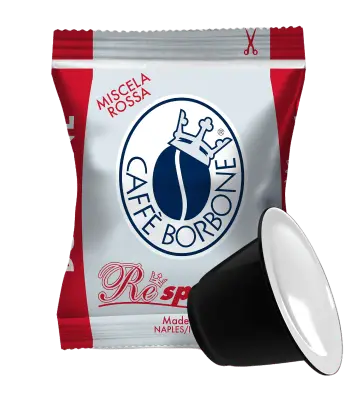 100 Capsules BORBONE Respresso RED Blend Nespresso Compatible
21,90 €


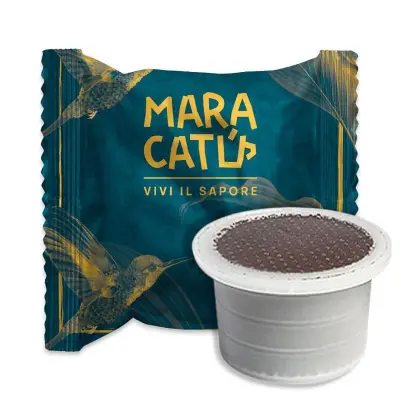 100 Maracatú Coffee Capsules Gran Crema Uno System Compatible
19,90 €
 100 Capsules Maracatú Decaffeinated Uno System Compatible
23,90 €
 80 Maracatú Coffee Capsules Gran Crema Lavazza Blue In Black Compatible
18,90 €
More on this topic
More

Coffee Capsules Guide: How to Choose Your Perfect Taste
Read article


5 myths about capsule coffee
Read article
How to properly store coffee and coffee capsules: expert advice
Read article

Are you a reseller? Access the Maracatú B2B price list in just a few steps!
Read article

Capsule systems compared: Nespresso, Dolce Gusto, A Modo Mio, ESE and Caffitaly — which to choose
Read article

How to descale your coffee machine: a practical guide from over 15 years in coffee
Read article

Caffè Borbone: a guide to the Rossa, Nera, Blu, Oro and Dek blends
Read article
The coffee intensity scale: what the numbers on capsules really mean
Read article

The origins of coffee: myths, legends and the road to the Italian cup
Read article
Coffee roasting: the levels, and how each one changes the cup
Read article

Espresso: how the Italian classic was born
Read article

Water and the taste of coffee: the ingredient nobody talks about
Read article