






Coffee at breakfast: Italian and foreign habits compared
A short breakfast, and why
We have been selling coffee for over fifteen years, and the difference between Italian and foreign customers shows most in the first cup of the day.
The classic Italian breakfast is short: a coffee, often standing, with something sweet. That is not laziness but a different structure of meals.
The traditional lunch is substantial, so the morning need not carry the whole day. Where lunch is light, breakfast becomes the solid meal.
Hence the choice of sweet over savoury: a cornetto accompanies bitter coffee better than a savoury dish would.
The practical consequence concerns the coffee itself. A cup drunk on an almost empty stomach is perceived as more intense, and the taste for a small serving grew from that.
It is worth adding that breakfast at the bar and at home are not the same thing: at the counter you drink standing and quickly, at home the cup accompanies a longer pause.
The cappuccino rule, explained
The belief that cappuccino is not drunk after eleven is real, but the reason is not a prohibition: it is digestion and habit.
Milk turns the drink into a small meal, and after a substantial lunch it sits heavily. Hence the switch to espresso or macchiato after midday.
It is not a written rule and nobody enforces it: bars serve cappuccino at any hour to whoever asks.
It does have a practical consequence for taste: a blend designed for the morning with milk is often roasted darker, because it must carry through the foam.
Anyone drinking cappuccino at home can therefore choose a different blend from the one used for afternoon espresso, and that is not extravagance.
On the technique for stable foam without professional equipment we have written a dedicated guide.
How breakfast works elsewhere
Comparison helps show that there is no right way, only different pairings of food and drink.
In Central Europe breakfast is savoury and substantial, and the drink is a long coffee taken over half an hour rather than thirty seconds.
In the Nordic countries filter coffee accompanies the whole morning, often across several cups and with a light roast that withstands repetition.
In the anglophone world breakfast has changed repeatedly, and tea, filter coffee and milk drinks in large mugs now coexist.
In Turkey and the Levant coffee is not a breakfast drink: it comes later, and the morning belongs to tea.
The useful lesson is simple: serving size and roast follow what you eat, not the other way round.
What to put beside the cup
Breakfast pairing follows a simple rule: the sweet should not overpower the coffee, or the cup becomes a side dish.
A plain or lightly filled cornetto works almost every time, because butter softens bitterness without adding competing aromas.
Dry dunking biscuits are the most traditional choice at home, and they hold up to a long coffee as well.
Hazelnut and pistachio spreads shift the balance: they call for a more intense coffee, or the sweetness covers everything.
In our delights and sugar section we keep the Italian specialities that accompany the first cup, from spreads to biscuits.
In the festive season breakfast stretches out, and panettoni and artisan products take the cornetto's place.
Coffee on an empty stomach
This is the question we hear most often in the shop, and it deserves a measured answer.
For most people a morning coffee without food causes no trouble, and the available research points to no harm in healthy individuals.
Those with reflux or gastritis, however, often report a worsening, and there the order matters: something solid first, then the cup.
The blend matters too. A very dark roast holds fewer chlorogenic acids but more bitter compounds, and tolerance is individual.
The simplest way to check is to change one variable at a time: first the order, then the quantity, finally the blend.
We do not replace medical advice: if the complaint recurs, discuss it with your doctor rather than with an article, this one included.
Building your own breakfast
If you would like to move towards the Italian way without copying it literally, three steps are enough.
First, reduce the quantity before changing the blend. Many discover that the coffee which seemed too strong was simply too plentiful.
Second, choose the sweet to suit the drink rather than the reverse, because the sweet has more room to vary.
Third, keep two blends at home if you drink both cappuccino and espresso: a darker one for milk and a more balanced one for the cup.
In our beans and ground coffee the profile notes exist precisely for this, to choose by time of day.
If you would prefer tailored advice, our team is always available: get in touch and we will suggest two references to try.
Popular products
All products
More


 100 Maracatú Coffee Capsules Gran Crema Uno System Compatible
19,90 €


 100 Capsules Maracatú Decaffeinated Uno System Compatible
23,90 €
 80 Maracatú Coffee Capsules Gran Crema Lavazza Blue In Black Compatible
18,90 €

More on this topic
More

Coffee Capsules Guide: How to Choose Your Perfect Taste
Read article


5 myths about capsule coffee
Read article
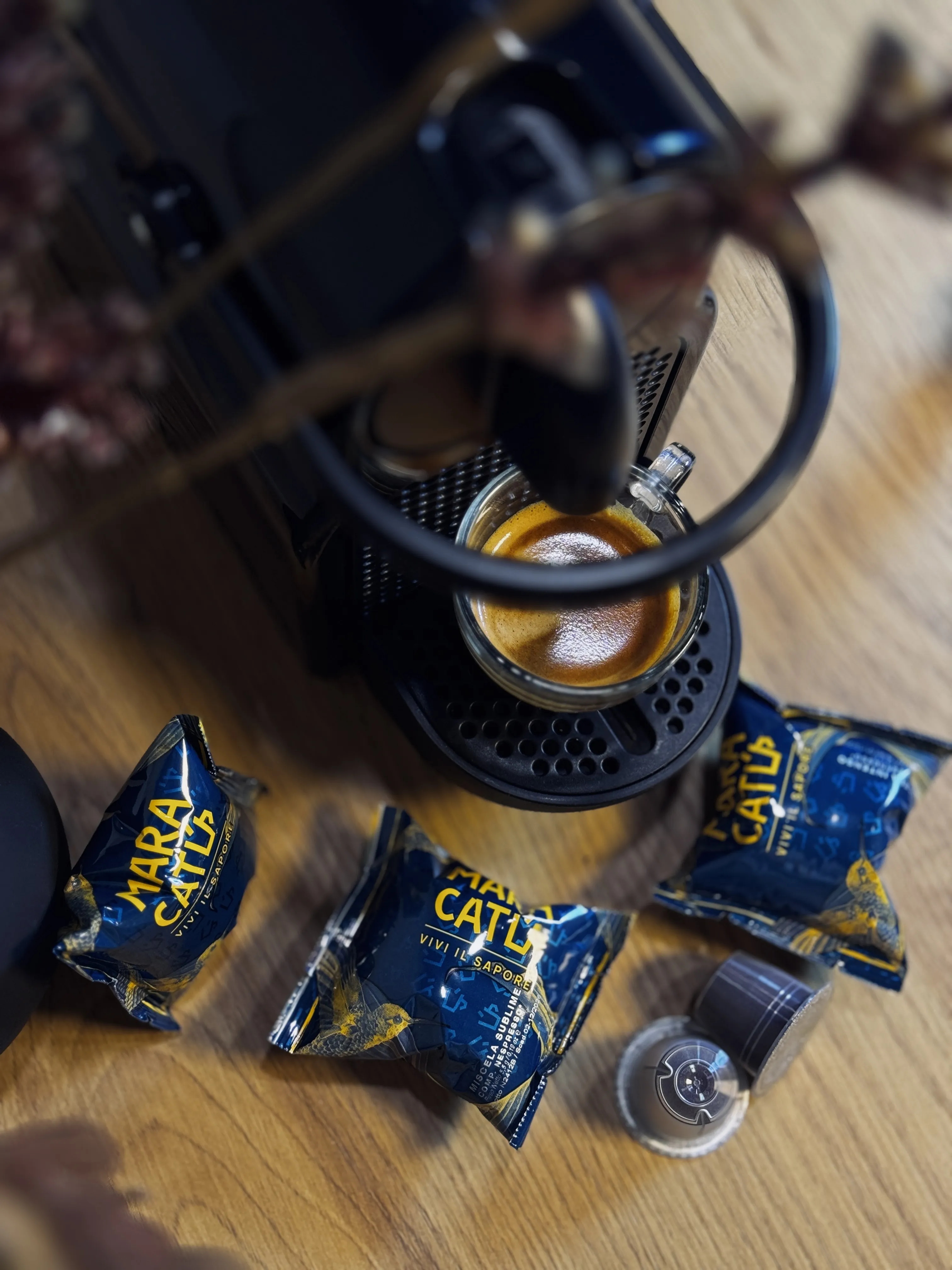
How to properly store coffee and coffee capsules: expert advice
Read article

Are you a reseller? Access the Maracatú B2B price list in just a few steps!
Read article
Capsule systems compared: Nespresso, Dolce Gusto, A Modo Mio, ESE and Caffitaly — which to choose
Read article

How to descale your coffee machine: a practical guide from over 15 years in coffee
Read article

Caffè Borbone: a guide to the Rossa, Nera, Blu, Oro and Dek blends
Read article

The coffee intensity scale: what the numbers on capsules really mean
Read article
The origins of coffee: myths, legends and the road to the Italian cup
Read article
Coffee roasting: the levels, and how each one changes the cup
Read article

Espresso: how the Italian classic was born
Read article

Water and the taste of coffee: the ingredient nobody talks about
Read article